


Editor's note: this story first appeared in the June 2026 issue of Chess Life magazine. This issue focuses on questions of mental health in chess.
Today, enjoy an article by Assistant Editor Rick Massimo on the dangers of staking your identity as a chessplayer on your rating. Check out the first two installments here and here.
Consider becoming a US Chess member for more content like this — access to digital editions of both Chess Life and Chess Life Kids is a member benefit, and you can receive print editions of both magazines for a small add-on fee.
Plus: Download a high-quality pdf of the three-part feature here, no membership required.
How easy it is to be a slave to your rating, and how to break free
Psychologists and statisticians alike agree that ratings are extremely accurate for their real purpose — a broad estimate, similar to a batting average, that can separate classes of players and generalize broadly. But they also caution against obsessing on them. Granted, that may be hard to avoid when your rating is stuck on something98 or you’re trying to nail down a title, but it’s far too easy to let your rating stand in for your chess identity.
Benjamin Portheault, a London-based performance coach for chessplayers, agrees: “This a really important sociological classification, whether you want it or not. People will not say, ‘I have a rating,’ ‘I have 2000.’ They will say ‘I am 2000,’ ‘I am a class A player,’ ‘a FIDE master,’ and so on.”
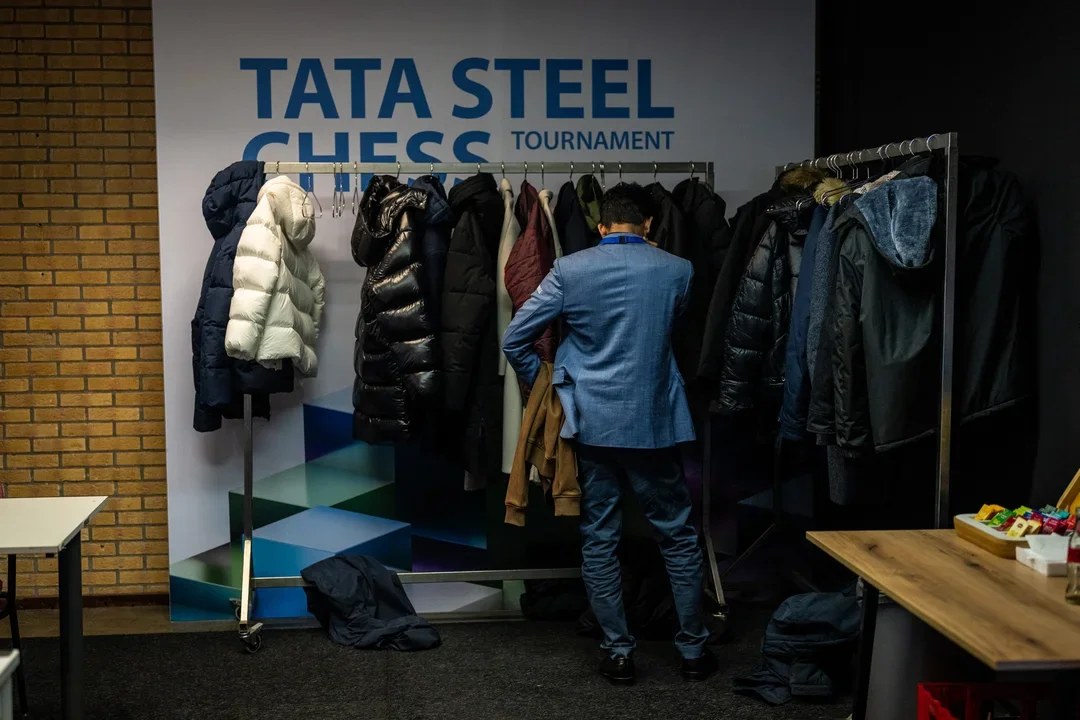
Scottish GM Jonathan Rowson writes, “From personal experience I can attest that it is not unusual for chess players to walk through a door in order of rating.”
Even Mark Glickman, chair of the US Chess Ratings Committee, agrees that the people who really understand how a rating system works are among the first people to caution against staking your identity and your enjoyment of the game on these numbers.
“If you want to be able to, for example, section tournaments and make sure players of similar ability are in the same section, that’s a reasonable use of ratings,” Glickman says. “Any kind of psychological aspect — you know, treating it like a measure of worth — is not really what it was intended to do.”
Keeping perspective
How soon after an event do you start looking to see how your rating has changed? How well do you remember the names of your past year’s worth of opponents, and how well do you remember their ratings?
Arpad Elo is of course considered the father of the rating system; he took it over from Kenneth Harkness in 1960. But even he warned against taking the numbers to heart.
Writing in ChessBase, Elmer Dumlao Sangalang, a family friend who corresponded with Elo often, said the professor at times “thought that what he had created with the rating system was some kind of Frankensteinian monster when he saw the young players so preoccupied with their ratings. They reminded him of racetrack habitués who go to the races and spend their time poring over the tout sheets at the betting windows — and never see a race.
“He was bothered by the inordinate importance being ascribed to the sporting aspect of chess. He regretted that his system contributed greatly to the prevailing opinion that regards chess as first and foremost a sport.”

In his book The Moves You Make, Rowson, who also holds a Ph.D. in education, writes that while players know intellectually that ratings are merely an estimate, they still stick in one’s consciousness. “[A] chess rating says nothing of our style of play, how acute our understanding of particular positions can be, nor quite how dangerous we can be on any given day,” Rowson writes. “Even so, we are typically self-conscious about ratings, because they are such a clear marker of our relative status in a world that we care about.”
That can be helpful to the extent that it fosters healthy ambition, Rowson thinks: “The young child learning the moves is no less worthy of love and respect than the world champion, but it is no bad thing that she is motivated to play less like herself and more like Magnus.”
But two chessplayers won’t talk long before the question “What’s your rating?” comes up. And when the answer comes, “you don’t make a moral judgment,” Rowson writes, “but some kind of domain-specific pecking order is firmly established.”
It’s all about group identity, Portheault says. “There is this deep yearning … and this rating is really this validation that you belong to a group of such-and-such skill. So losing the rating creates massive anxiety, because people really feel as if they are losing like a part of themselves.”
I often tell students [about] a final round large prize U2200 game where a draw tied for first and a win got clear first. One player was a teenager. The other was an adult who clearly needed the prize money.
Before the game even started, the adult’s hand was shaking during the handshake. It was obvious to me the teenager would win at that point. The adult’s voice cracked when he offered the draw. The kid played on and won.
Many chess games are lost emotionally before they are lost on the board. Chess is difficult enough without added pressure. I try to teach students to focus on the moves, not the off-the-board consequences. This isn’t boxing; when you lose, you won’t go home with a broken nose. And there are easier ways to earn money.
-Brian Karen
WIM Denise Bouah, a three-time South African women’s champion, chess coach and counseling psychologist specializing in sports psychology, says that keeping an eye on one’s rating is “a natural way to see things. I mean, what else do you measure your progress by? But it’s not something that you should get fixated on, because I think you can lose the joy of playing chess very easily.”
They both emphasize that your rating is the result of — well, your results, and that your results are the thing you can’t control.
Portheault points out that unless passing a rating milestone gains you a title, it probably won’t gratify you any more than any of the others you’ve already surpassed: “Something external can’t give us lasting satisfaction, because otherwise, all the stuff we wanted in the past, and that we got — they would have gotten us lasting satisfaction, and they didn’t.”
All that said, it’s easy to tell someone not to worry about their rating and “just play chess,” but Bouah and Portheault, as players themselves, know that’s not practical.
“That’s not really good advice, right?,” Portheault says. “It’s like saying, “Have you tried not worrying instead of worrying?’” He advises instead to “dive into” your rating fear: “Where is this coming from? Why do you play chess? … People can only answer for themselves. Once people can see the big direction of what they want to achieve and what they want out of chess, then they can overcome the bumps on the road and the rating losses and such.”
“Rating will sort itself out at the end,” Bouah says. “I tell chessplayers a lot that if you’re going to focus on the result, you’re going to skip on the things that you’re supposed to do to actually get the win. You should have a healthy perspective on where you are with your chess — why you are at that level. Because otherwise the comparisons will drive you mad.”


Categories
Archives
- October 2026 (24)
- September 2026 (26)
- August 2026 (28)
- July 2026 (36)
- June 2026 (32)
- May 2026 (30)
- April 2026 (33)
- March 2026 (27)
- February 2026 (24)
- January 2026 (24)
- December 2025 (27)
- November 2025 (29)
- October 2025 (39)
- September 2025 (27)
- August 2025 (29)
- July 2025 (43)
- June 2025 (25)
- May 2025 (24)
- April 2025 (29)
- March 2025 (29)
- February 2025 (20)
- January 2025 (24)
- December 2024 (34)
- November 2024 (18)
- October 2024 (35)
- September 2024 (23)
- August 2024 (27)
- July 2024 (44)
- June 2024 (27)
- May 2024 (31)
- April 2024 (51)
- March 2024 (34)
- February 2024 (24)
- January 2024 (26)
- December 2023 (29)
- November 2023 (26)
- October 2023 (37)
- September 2023 (27)
- August 2023 (37)
- July 2023 (47)
- June 2023 (33)
- May 2023 (37)
- April 2023 (45)
- March 2023 (37)
- February 2023 (28)
- January 2023 (31)
- December 2022 (23)
- November 2022 (32)
- October 2022 (31)
- September 2022 (19)
- August 2022 (39)
- July 2022 (32)
- June 2022 (35)
- May 2022 (21)
- April 2022 (31)
- March 2022 (33)
- February 2022 (21)
- January 2022 (27)
- December 2021 (36)
- November 2021 (34)
- October 2021 (25)
- September 2021 (25)
- August 2021 (41)
- July 2021 (36)
- June 2021 (29)
- May 2021 (29)
- April 2021 (31)
- March 2021 (33)
- February 2021 (28)
- January 2021 (29)
- December 2020 (38)
- November 2020 (40)
- October 2020 (41)
- September 2020 (35)
- August 2020 (38)
- July 2020 (36)
- June 2020 (46)
- May 2020 (42)
- April 2020 (37)
- March 2020 (60)
- February 2020 (38)
- January 2020 (45)
- December 2019 (34)
- November 2019 (35)
- October 2019 (42)
- September 2019 (45)
- August 2019 (56)
- July 2019 (44)
- June 2019 (35)
- May 2019 (40)
- April 2019 (48)
- March 2019 (61)
- February 2019 (39)
- January 2019 (30)
- December 2018 (29)
- November 2018 (51)
- October 2018 (45)
- September 2018 (29)
- August 2018 (49)
- July 2018 (35)
- June 2018 (31)
- May 2018 (39)
- April 2018 (31)
- March 2018 (26)
- February 2018 (33)
- January 2018 (30)
- December 2017 (26)
- November 2017 (24)
- October 2017 (30)
- September 2017 (30)
- August 2017 (32)
- July 2017 (27)
- June 2017 (32)
- May 2017 (26)
- April 2017 (37)
- March 2017 (28)
- February 2017 (30)
- January 2017 (27)
- December 2016 (29)
- November 2016 (24)
- October 2016 (32)
- September 2016 (31)
- August 2016 (27)
- July 2016 (24)
- June 2016 (26)
- May 2016 (19)
- April 2016 (30)
- March 2016 (37)
- February 2016 (27)
- January 2016 (33)
- December 2015 (25)
- November 2015 (23)
- October 2015 (16)
- September 2015 (28)
- August 2015 (28)
- July 2015 (6)
- June 2015 (1)
- May 2015 (2)
- April 2015 (1)
- February 2015 (3)
- January 2015 (1)
- December 2014 (1)
- July 2010 (1)
- October 1991 (1)
- August 1989 (1)
- January 1988 (1)
- December 1983 (1)