


Editor's note: this story first appeared in the June 2026 issue of Chess Life magazine. This issue focuses on questions of mental health in chess.
Today, enjoy an introduction by Assistant Editor Rick Massimo and an essay by GM Paul Van Der Sterren. Next week, keep an eye out for the two other pieces from this series.
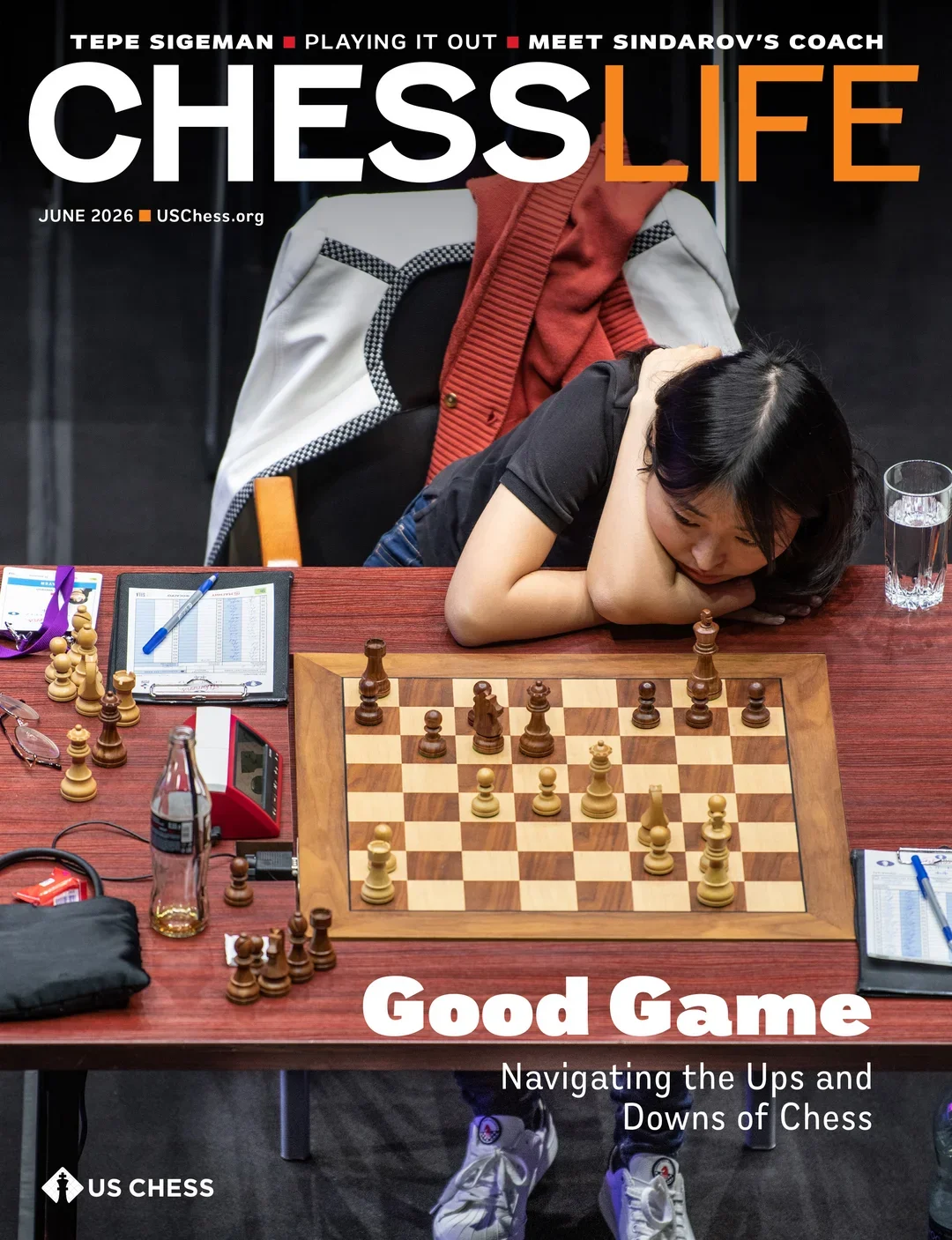
Consider becoming a US Chess member for more content like this — access to digital editions of both Chess Life and Chess Life Kids is a member benefit, and you can receive print editions of both magazines for a small add-on fee.
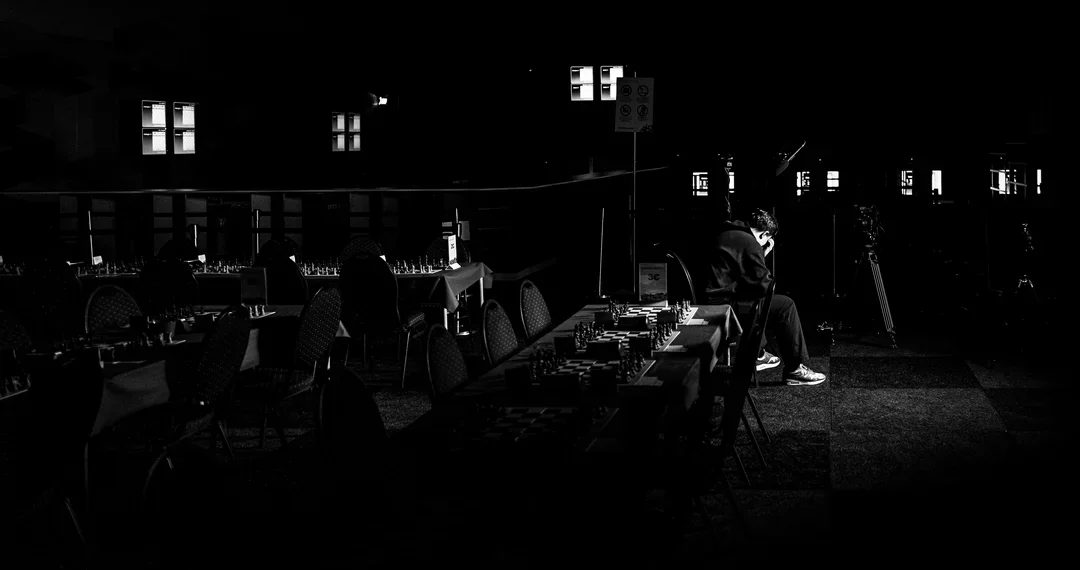
Good Game: Dealing with the emotional ups and downs of chess
Chess has a hold on all of us, but sometimes it can feel like a chokehold.
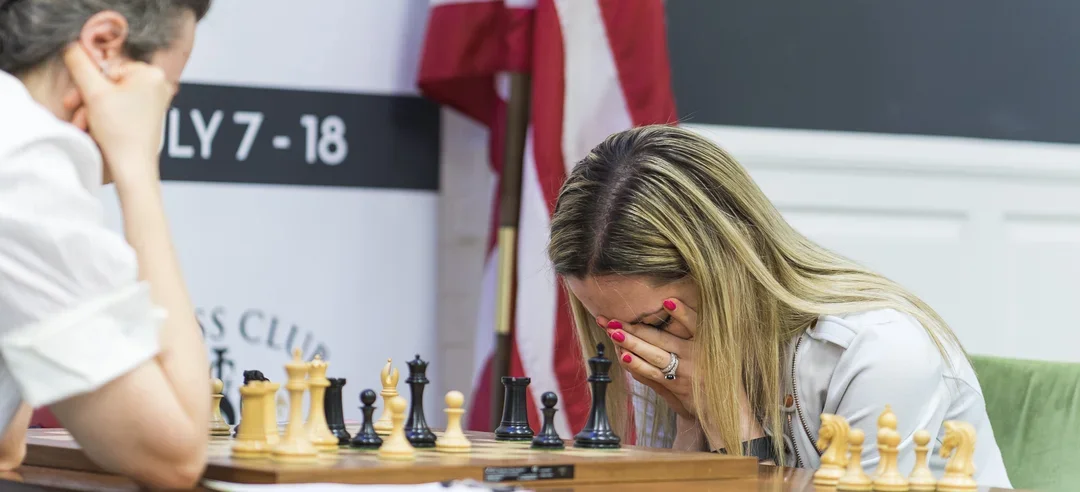
It’s a tough game: There’s no feeling like winning, but there’s also no feeling like resigning, or making a losing blunder, with other players, your friends, maybe even the entire internet watching.
No one likes losing, and they shouldn’t: The wins wouldn’t mean much if the losses didn’t mean anything. But the emotional bumps and bruises of chess hurt more at some times than others.
An obsession with the game itself can lead to an obsession with results and ratings, and that can leave players vulnerable when they run into a losing streak or a last-round disaster (both of which happen to us all). The effects can do more than just make a player unpleasant to be around for a while after a bad loss; it can lead to dangerous behavior and it can turn chess into just another thing in life to be nervous about.
Nate Shuman, who uses the mindfulness techniques he learned as a young player to help others (see page 36), says he’s had 6-year-old clients who need help keeping it together in the anxiety of tournament competition.
Chess Life editor John Hartmann says a player at his local club in Omaha, Nebraska, told him that he had come to recognize how much thinking about ratings, and the gap between him and the top players at the club, was getting in his head and affecting his play.
Melinda Matthews, US Chess’ Safe Play manager, says children and adults alike can lose perspective when the rough times come. She says children who have lashed out at opponents after a loss cite their fear of what their parents and/or coaches will think. She also related a case in which a player admitted to not taking their medicine because they thought it hurt their play. “The fact that they chose to lapse back into mental illness for a few rating points shows how compelling ratings and results can be,” she said.
What can players do before, during, and after a round to help them play without the fear, dread and obsession that can overcome the love of the game?
GM Paul van der Sterren, who wrote the book Mindful Chess, shares his insights on using mindfulness to play in the moment; national master Nate Shuman details how he burned out before he even hit his teens and now helps kids with the techniques he used to get out from under; two sports psychologists who specialize in chess (one a former champion herself) explain the hold that ratings and results can have on players — what to watch for and what to keep in mind. And pearls of wisdom from coaches are sprinkled throughout the next few pages.
To the extent that the player at Hartmann’s club was able to relax and play the person and the position, not the rating, his moves and enjoyment improved. His results followed suit, though that wasn’t the point.
“Chess psychology” is generally thought of as a way to play better and win more games; this month, we’re looking at psychology and mindset as a way not to play better but to enjoy the game more, to put it in perspective and to make each game as rich an experience as we all know chess can be.
-Rick Massimo
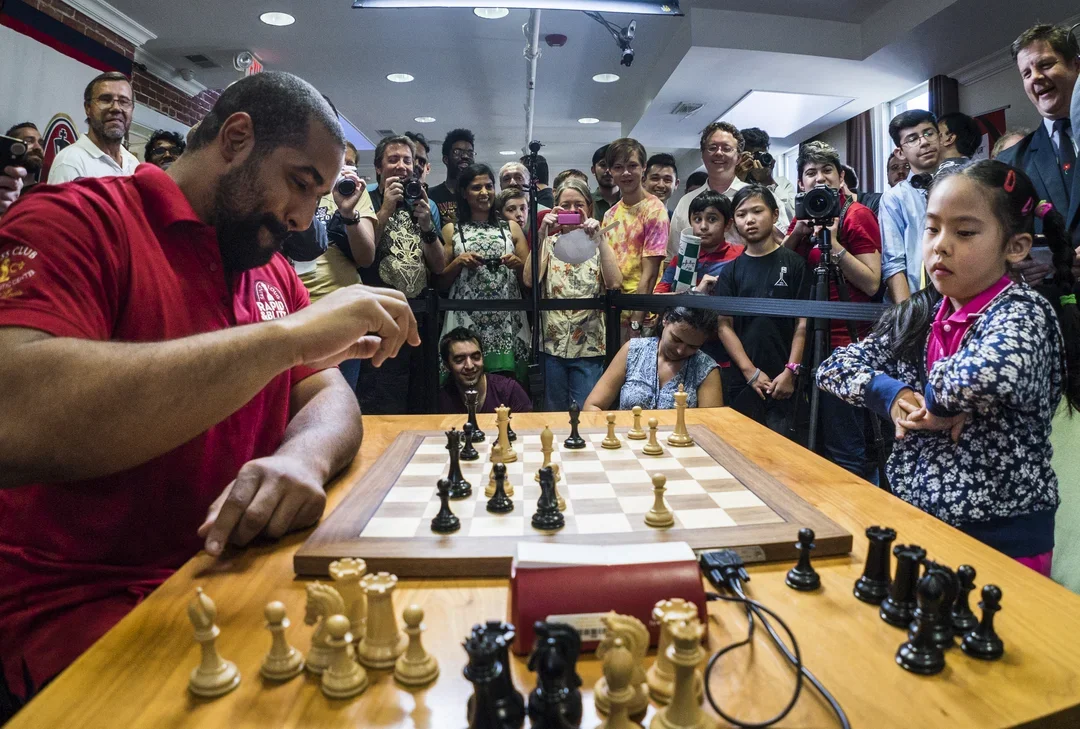
The Benefits of An Empty Mind: A grandmaster explains about rekindling the enjoyment of chess

What is it that we want from a game of chess?
It is a question rarely asked and almost never (truthfully) answered. It was certainly never asked of me during my years as a professional player, and when I finally put it to myself, I soon stopped playing chess and started writing about it instead. But let’s not get ahead of ourselves.
Perhaps the question is never asked because the answer seems so obvious. Chess is a fascinating game. Delving into it can be a richly rewarding experience. Isn’t that sufficient reason for wanting to play chess? Of course it is! So what’s the problem?
The problem is that many players at some point become disillusioned with chess. They find their stress levels are getting too high, the rewards for their efforts are too low and that in general the fun has gone out of it.
Stress has replaced enjoyment. Why does this happen, and is there something we can do about it?
It’s perfectly natural to encounter this problem. The balance between stress and enjoyment in chess is a peculiar one, because from the moment chess really starts to fascinate you, you want to exert yourself — you need to exert yourself! The beauty of chess reveals itself gradually with every step we take further into its depths. To discover the miracle of the underlying logic, the complexity and simplicity, the richness of the game — that journey holds endless fascination for us chessplayers. But the fuel needed to make this journey is mental exertion. Only by putting effort into it can chess be the truly rewarding experience it is meant to be.
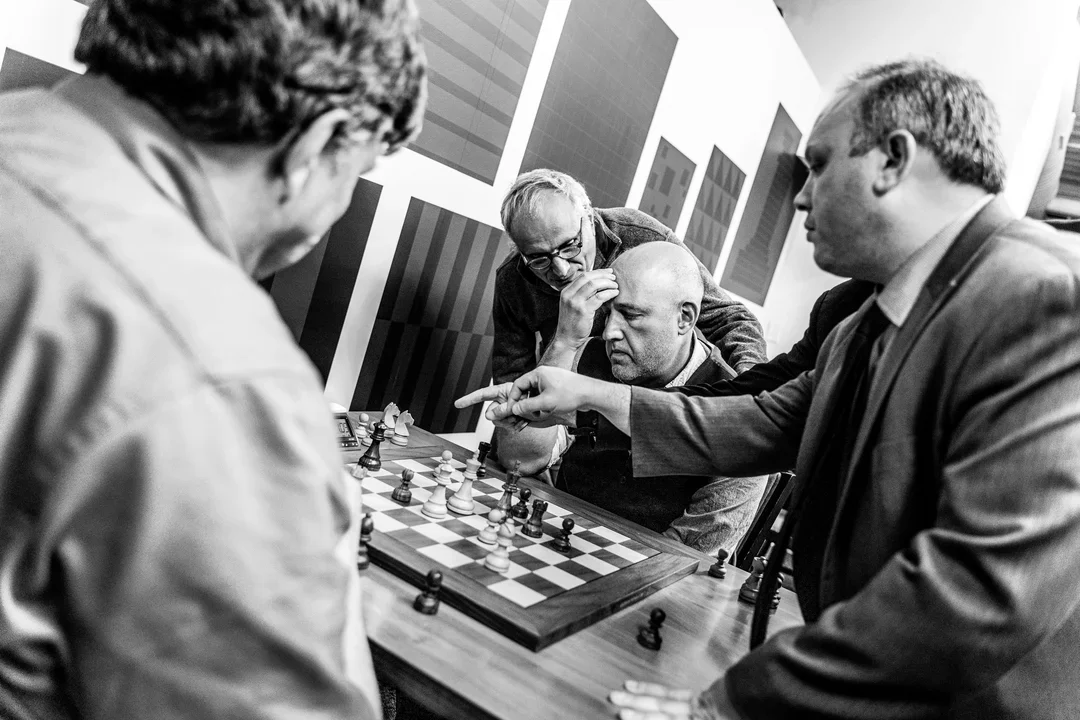
Unfortunately, exerting ourselves gets us into trouble when we cross the line into overexertion. This is dangerous territory. The problem is further compounded by the inescapable fact that chess is essentially a competitive game. The aim of the game is to win, to beat the opponent. The stronger the opponent, the more effort will be required. The positive of this is that a strong opponent may force us to discover new levels of strength in ourselves; the negative is the danger of reaching intolerably high stress levels.
If we were all computers, this wouldn’t be a problem: We would simply increase the power to the maximum and always perform at our very best. Winning or losing would be irrelevant. But a human chessplayer has to deal with emotions as well as with logic, deep calculation and planning. These emotional responses to the game provide both a further incentive to exert ourselves and a nasty trap.
Everybody loves to win; nobody likes losing, but winning and losing, satisfaction and disappointment, happiness and unhappiness, sunshine and rain, inevitably alternate in human life. There is no escaping the rainy days. Unfortunately, the average human mind is not equipped to handle the rainy days with the same composure as the sunny days. And when our enjoyment of chess becomes increasingly dependent on the sunny days, i.e., on winning, and losing becomes an unendurable ordeal, we have fallen into the trap. This will happen to the great majority of chessplayers, whatever their level, at some point in their lives.
Getting stuck in the morass of disenchantment after what may well have been a period of many years of enjoyment of the game (and your own prowess in it) is nothing to be ashamed of. Needless to say, though, when this happens you will want to go back to the sunny days, back to enjoying the game again.
So, what can you do? Having gone through a long career with many ups and downs myself, in which I have had to dig myself out of more holes than I care to admit, it has become clear to me that all the tricks and methods I have used over the years have one common denominator: Empty your mind.
A lot of advice can be given on things you should change or do better (and coaches and psychologists have plenty of tips for you to do that), but in most cases you are probably not doing anything wrong at all. What has gone wrong is that you have filled up your mind to bursting point. And that’s a clear signal for letting it all go. Empty your mind, whatever is in it.
The next question is of course: how to do this? In my book Mindful Chess (New in Chess, 2024) I have written extensively about my own experience with Insight Meditation and the benefits this may provide for a chessplayer. The basic technique here is to handle everything that goes on in your mind with the mental tools of “observing, noting and letting go.”
Although this may work to perfection for some, I am a bit hesitant here about recommending this practice to a general audience without offering the broader context in which this technique has its roots. However (and this is key!), the way of trying to empty your mind that works for you, can only be found by you anyway. All that I or anybody else can do is to give you some general advice, but whether this will work depends entirely on your own particular character and on the particular hole you have dug yourself in. You’re the only one who can do it. So work it out for yourself.
Play with confidence. The kids who end up playing games for first place are, for obvious reasons, kids I have a ton of confidence in. So I try to transmit the confidence I have in them to the kid. Kids seem to like this!
— Matan Prilleltensky
In my own experience with emptying my mind, the techniques vary from very simple things (taking a short walk before a game, sitting on a bench in a park, listening to the birds, reading a book) to huge operations such as moving house and long meditation retreats. Or facing a major health scare. Or falling in love. All these ways of emptying my mind (sometimes involuntarily!) helped me to completely forget whatever it was that had clogged it up. Afterward, I was almost always able to look at things with a fresh mind, the result being that I started to enjoy chess again, often to my own surprise. Invariably, my level of play would also improve, in some cases even amazingly so, for I can safely say that I have had my best results immediately after — perhaps even as a direct result of — my worst ones.
My peak period was in 1993, when I first won a Zonal Tournament, then the Dutch Championship, and then came second in the Interzonal, thus qualifying for the Candidates matches of 1994. This success story came directly after my worst-ever period, in 1992, when I practically started losing rating points the moment I sat down at a chessboard. I don’t remember now what it was that made me empty my mind back then — it’s not important anyway — but it worked to perfection.
Looking back over my career, I think it was the return of the enjoyment that always came first after a bad period. That was the real reward for whatever it was that had made me empty my mind. The return of the good results followed automatically. The enjoyment made the improvement happen.
Of course, it never lasted very long. After a while my mind would clog up again and, in a parallel movement, the tank of enjoyment would gradually empty as well. But that’s what time does; it’s a natural process. You shouldn’t put the blame on yourself, for it has nothing to do with you. No state of bliss can ever be permanent.
But once you have cracked the secret, you will always be able to do it again. When you have truly felt the liberating effect of an empty mind, if only for a nanosecond (it is an experience outside of time anyway), it will automatically become part of your mental makeup. That moment when you honestly admit to yourself “Yes, I really am down and out now,” and you can truly accept that this is reality and there are no two ways about it — it’s such a powerful encounter with what the author Eckhart Tolle calls “the power of now,” that the healing will start instantly, whether you want to or not. You simply don’t have anything to do with it.
We have thus arrived at the next and final level of our discussion, the spiritual one. First, we were talking psychology: Houston, we have a problem. How do we solve it? This is useful and necessary, but essentially it is no more than a technical discussion of psychology. But to see that a problem is not only a problem, but also a chance to get in touch with something deeper than the mere question of winning or losing, constitutes an existential insight.
Just for fun, I asked AI about this and it informed me that “winning brings happiness, but losing brings wisdom. This shift in focus allows a person to view loss as a necessary part of growth rather than a failure.” Though as artificial as it gets, this is very intelligent of AI and well put indeed.
But ultimately, this isn’t about words. Trying to talk rationally about a subject like this is like trying to hold running water in your hand: The essence of the running water is the movement, while water in your hand lies still. Likewise, words will always convey the reality of whatever they try to express, but with the essence of that reality taken out of it. So, with the firm disclaimer that what I have talked about here can never be talked about, I have talked about it anyway. Make of it what you will.
It is essential for players to get a good night’s sleep, practice mindfulness, stay hydrated, and keep sugar levels in check during tournaments. Stretching, breathing exercises, and short moments of meditation are also extremely helpful tools for managing anxiety and stress.
For young players especially, the emotional environment created by adults matters enormously. Parents and coaches should try to maintain a balanced approach to winning and losing — not becoming overly excited after victories or overly upset after defeats. Children are very sensitive to adult reactions. When a child loses a painful game, it is important to talk calmly with them, help them process the experience, and remind them that their value is not defined by a single result. When children feel emotionally supported, they recover faster, maintain confidence, and ultimately play better chess.
One phrase I often share with students is: “Chess is a journey of learning, resilience, and personal growth.”
— WIM Beatriz Marinello
Conclusion
Enjoying your chess is key. So make sure you do enjoy it! Everything else is of lesser importance. When the enjoyment is gone, emptying your mind is a sure way of bringing it back. You’ll be surprised! And if you find you really can’t enjoy chess anymore, no matter how adept you have become at emptying your mind, then perhaps your time has come to say goodbye. There is no disgrace in quitting. That’s what I did when my time as an active player was up and I have never regretted it.
On the contrary, the paradoxical truth is that quitting chess has brought the enjoyment back to me with a vengeance. Now that I am no longer a player, but “only” a follower, a fan, an occasional teacher and a writer about chess, I am enjoying the game as much and possibly more than when I was an active player.
Once chess has taken root in your brain, it will take care of itself. You can trust it to find its own way. Just be who you are, sit back, relax, and enjoy the ride.


Categories
Archives
- October 2026 (14)
- September 2026 (27)
- August 2026 (28)
- July 2026 (36)
- June 2026 (32)
- May 2026 (30)
- April 2026 (33)
- March 2026 (27)
- February 2026 (24)
- January 2026 (24)
- December 2025 (27)
- November 2025 (29)
- October 2025 (39)
- September 2025 (27)
- August 2025 (29)
- July 2025 (43)
- June 2025 (25)
- May 2025 (24)
- April 2025 (29)
- March 2025 (29)
- February 2025 (20)
- January 2025 (24)
- December 2024 (34)
- November 2024 (18)
- October 2024 (35)
- September 2024 (23)
- August 2024 (27)
- July 2024 (44)
- June 2024 (27)
- May 2024 (31)
- April 2024 (51)
- March 2024 (34)
- February 2024 (24)
- January 2024 (26)
- December 2023 (29)
- November 2023 (26)
- October 2023 (37)
- September 2023 (27)
- August 2023 (37)
- July 2023 (47)
- June 2023 (33)
- May 2023 (37)
- April 2023 (45)
- March 2023 (37)
- February 2023 (28)
- January 2023 (31)
- December 2022 (23)
- November 2022 (32)
- October 2022 (31)
- September 2022 (19)
- August 2022 (39)
- July 2022 (32)
- June 2022 (35)
- May 2022 (21)
- April 2022 (31)
- March 2022 (33)
- February 2022 (21)
- January 2022 (27)
- December 2021 (36)
- November 2021 (34)
- October 2021 (25)
- September 2021 (25)
- August 2021 (41)
- July 2021 (36)
- June 2021 (29)
- May 2021 (29)
- April 2021 (31)
- March 2021 (33)
- February 2021 (28)
- January 2021 (29)
- December 2020 (38)
- November 2020 (40)
- October 2020 (41)
- September 2020 (35)
- August 2020 (38)
- July 2020 (36)
- June 2020 (46)
- May 2020 (42)
- April 2020 (37)
- March 2020 (60)
- February 2020 (38)
- January 2020 (45)
- December 2019 (34)
- November 2019 (35)
- October 2019 (42)
- September 2019 (45)
- August 2019 (56)
- July 2019 (44)
- June 2019 (35)
- May 2019 (40)
- April 2019 (48)
- March 2019 (61)
- February 2019 (39)
- January 2019 (30)
- December 2018 (29)
- November 2018 (51)
- October 2018 (45)
- September 2018 (29)
- August 2018 (49)
- July 2018 (35)
- June 2018 (31)
- May 2018 (39)
- April 2018 (31)
- March 2018 (26)
- February 2018 (33)
- January 2018 (30)
- December 2017 (26)
- November 2017 (24)
- October 2017 (30)
- September 2017 (30)
- August 2017 (32)
- July 2017 (27)
- June 2017 (32)
- May 2017 (26)
- April 2017 (37)
- March 2017 (28)
- February 2017 (30)
- January 2017 (27)
- December 2016 (29)
- November 2016 (24)
- October 2016 (32)
- September 2016 (31)
- August 2016 (27)
- July 2016 (24)
- June 2016 (26)
- May 2016 (19)
- April 2016 (30)
- March 2016 (37)
- February 2016 (27)
- January 2016 (33)
- December 2015 (25)
- November 2015 (23)
- October 2015 (16)
- September 2015 (28)
- August 2015 (28)
- July 2015 (6)
- June 2015 (1)
- May 2015 (2)
- April 2015 (1)
- February 2015 (3)
- January 2015 (1)
- December 2014 (1)
- July 2010 (1)
- October 1991 (1)
- August 1989 (1)
- January 1988 (1)
- December 1983 (1)