


Three Disciplines, One Crown
Total Chess Tour puts its enigmatic slogan to the test for the first time at the Total Chess Pilot 2026 in Budapest, Hungary.
The “disciplines” are the three disparate time controls — blitz, rapid, and the trending 45+30 “fast classic” — combined into a single event. The “crown” is an $80,000 prize for the last player standing after three stages of competition.
A concept by Norway Chess, Total Chess aims to bring the best players in the world into competition to determine the FIDE World Combined Champion beginning with the 2027 season. To introduce the format ahead of the March 2027 tour debut, the Total Chess Pilot showcases the versatility promised by this innovative format.
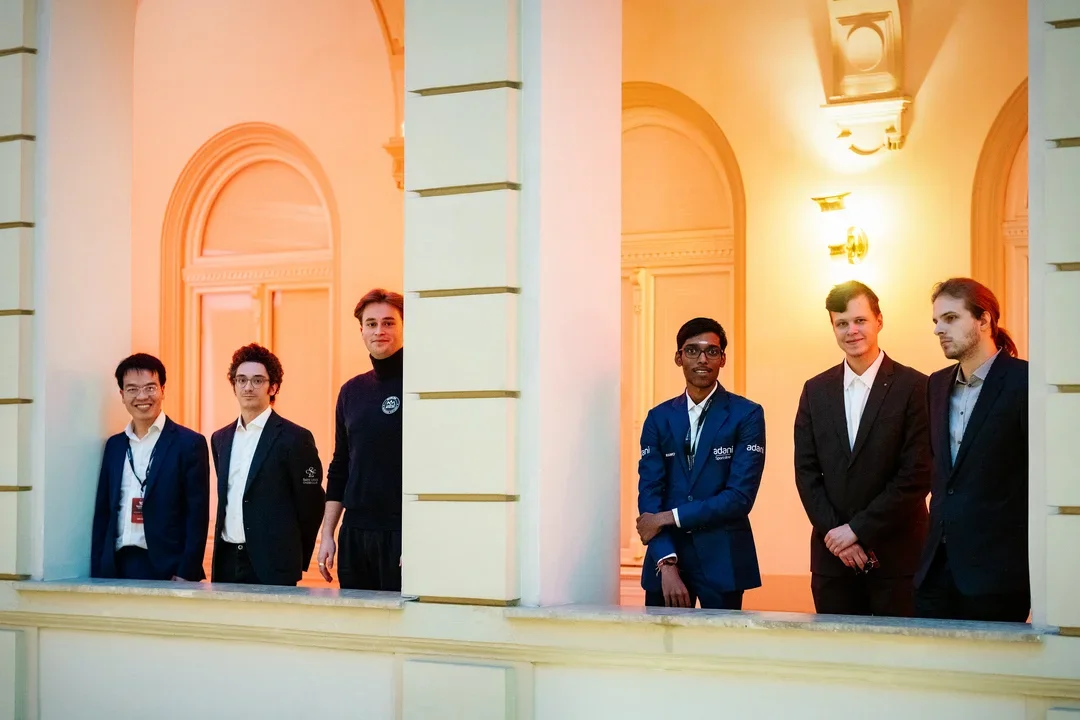
After the preliminary Blitz Swiss and the ten-round Group Stage, the four finalists — GMs Alireza Firouzja, Fabiano Caruana, Anish Giri, and Maxime Vachier-Lagrave — begin the knockout stage on Tuesday, Nov. 18 with the semifinal pairings of Giri – Vachier-Lagrave and Caruana – Firouzja.
The remaining 20 players from the Pilot’s field will also play knockout matches, with the runners-up of each group playing for fifth place, the third-place finishers of each group vying for ninth place, and so on. Thanks to the innovative format, all six of the knockout brackets will feature fan favorites, including GM Wesley So in a fight for 13th place, GM Magnus Carlsen playing for 17th, and GMs Praggnanandhaa Rameshbabu and Nodirbek Abdusattorov duking it out for 21st!
Today’s report provides a primer on the format, results from the Group Stage, and a preview of the semifinals and finals. We’ll also reflect a bit on what is working and what isn’t at the “fast classic” time control, looking at a game from each group winner as an example. There will also be plenty more highlights from the Group Stage in forthcoming worksheet features.
The Format
Play began on Tuesday, Nov. 10 with a nine-round pre-tournament Blitz Swiss. This one-day event, won by Carlsen with a 7/9 score, does not count for points in the two subsequent legs of play. That said, “pre-tournament” is a bit misleading, as this tournament both serves as first tiebreaker for the Group Stage and determines the seeding of the Knockout Stage.
From Nov. 11-15, players were split into groups of six for the double-round robin Group Stage. Curiously, this stage only used one time control: fast classic. With the shorter time control, players are able to play two games against the same opponent each day. To encourage fighting chess, players are awarded three points for each victory but only one point per draw.
After Monday’s rest day, the Knockout Stage begins Tuesday, Nov. 17 with the first of two two-day knockout matches. Importantly, all 24 players are included in this stage, but only the four group winners compete for first place. In event of a tie between two players in the Group Stage, the player who finished higher in the Blitz takes tiebreak priority.
Additionally, these standings determine the seeding of the knockout semifinals, pitting the top and bottom Blitz finishers against each other in one half of the bracket for each of the six brackets.

Unlike the Group Stage, all three disciplines are finally in play in the Knockout Stage. Each day of each match will consist of four blitz games, two rapid games, and, finally, one fast classic. Wins go back to being worth twice as much as a draw in this stage and are worth one, four, and eight points, respectively, for the blitz, rapid, and fast classic games.
Each day is an independent mini-match, meaning that if one player wins day one by a large margin but loses day two by a smaller margin, the match is still a one-one tie that will go to an Armageddon.
Also, “knockout” is again a bit misleading, as the two losers of each bracket’s semifinal matches will still play a two-day consolation match for third (or seventh, 11th, etc. …) place alongside the winners’ match on Nov. 19 and 20.
Pre-Tournament Blitz
Familiar names topped Tuesday’s blitz, with Carlsen taking clear first with a 7/9 score. Vachier-Lagrave finished second with 6½/9 and GM Levon Aronian was clear third with 6/9.
Five pairs of players ended up tied after the Group Stage, and the Blitz Swiss standings neatly ordered all but one of them. In that final tie, GM Hans Niemann qualified for the second knockout group ahead of GM Arjun Erigaisi after each player finished with a 5½/9 Blitz score.
According to the regulations, “Ties will be broken in the following lexicographic order: Buchholz, performance rating, and drawing of lots.”
Group Stage
In Group A, GM Alireza Firouzja won with15 points, a point ahead of GMs Jan-Krzysztof Duda and Jorden van Foreest. Uzbek GM Nodirbek Abdusattorov, who entered the event ranked fifth in the world, finished last in his group, losing 19 rating points (yes, these are FIDE-rated classical games!).

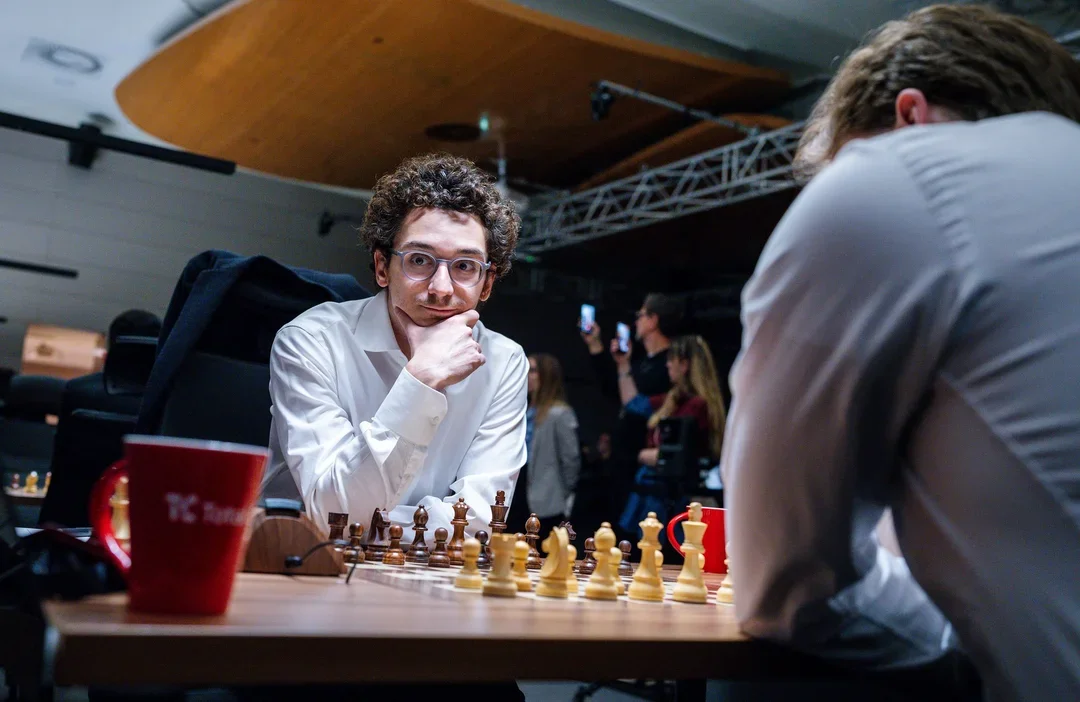
In Group B, GM Fabiano Caruana won with17 points, a full three points ahead of GM Liem Le. GM Praggnanandhaa Rameshbabu finished last, not winning a game and falling out of the world top 10.
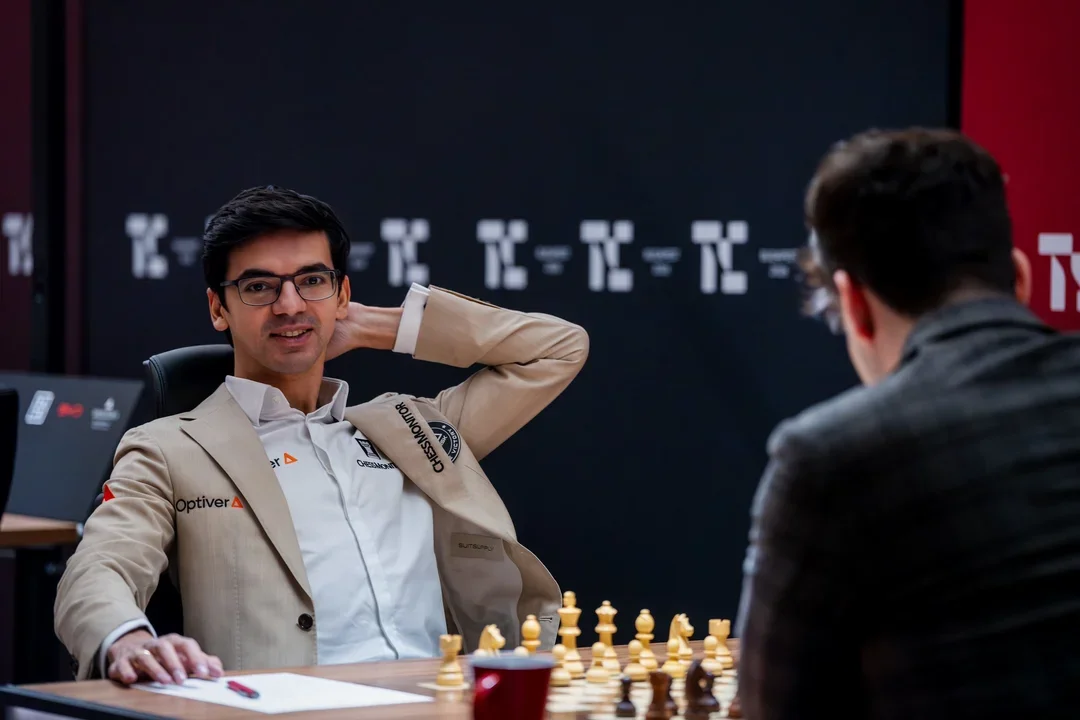
GM Anish Giri won Group C with 15 points, two points ahead of GMs Ian Nepomniachtchi and Hai Martirosyan. GM Magnus Carlsen finished fifth after failing to win a single game.
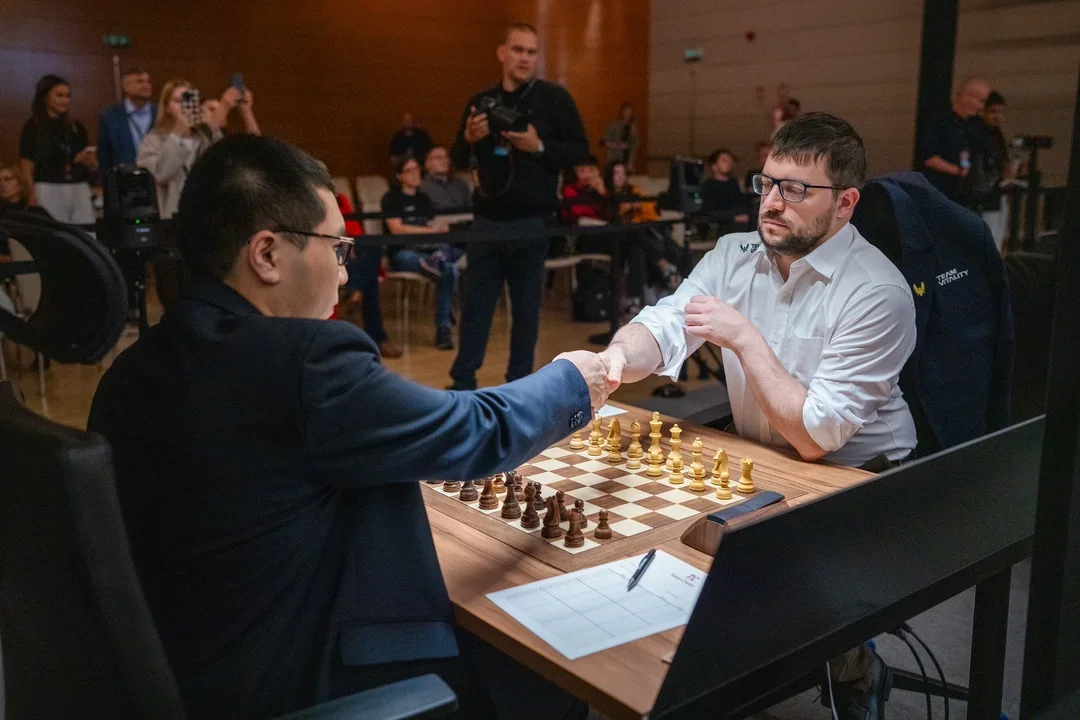
Finally, in Group D, GM Maxime Vachier-Lagrave won with 17 points, one point ahead of Niemann and Arjun 16. Only four players out of 24 won four games, with three of them coming from Group D. With a 5–1–4 score, Caruana and MVL had the best overall results.
“Time Trouble, Time Trouble, Plus More Time Trouble”
Despite the three disciplines promised, so far we have only seen a preliminary blitz tournament and five full days of fast classic. With plenty of time to evaluate the time control, early reviews appear mixed, at best.
GM Wesley So, who finished fourth in Group D, even entered the fray. In a post on X from Saturday, he wrote, “To call 45+30 games 'classical' without even adding additional time on move 40 is utterly ridiculous. All I see when watching the games here are time trouble, time trouble, plus more time trouble. Honestly, it feels more like blitz game than classical chess. Classical chess should give players enough time to demonstrate their calculation and positional understanding, not constantly force the issue into time scrambles.”
Certainly, a fair number of decisive games were decided on late-game miscalculations that players of this caliber would be unlikely to make in a traditional classical game. Take Firouzja’s win over GM Andrew Hong, for instance:
But not all errors can be blamed on time trouble. In Nepomniachtchi’s endgame collapse against Giri, the Russian still had 15 minutes on his clock when he spent one second on the losing move:
To be fair, Nepomniachtchi with “only” 15 minutes on his clock might be the equivalent of two minutes for most other chess players.
Looking at So’s own loss against Vachier-Lagrave, I think his critique of the time control again comes into focus. We pick up below in a position with a particularly unusual pawn structure creating tremendous imbalances despite the relatively small (and drawish) amount of material remaining.
To see the nuances of complex positions flattened into one-move calculation errors is indeed disappointing for some chess fans. But some games did point to the promise of the format, as well.
In Caruana’s win against Praggnanandhaa, the latter player found himself drifting tremendously over the next half-dozen moves, and borderline lost by move 18.
Caruana pounced on the mistake, and then Praggnanandhaa invested the bulk of his remaining seven minutes into searching for a defense that was not there, resigning a few moves later.
Praggnanandhaa erred so early in this game because he was caught under-prepared early and invested a dangerous amount of time and energy in trying to find a path forward. By the time he blundered on move 18, he was already in considerable psychological and practical trouble given the format.
There are two ways to look at this sort of game. One is that Praggnanandhaa was punished for taking a risk in the opening, ending up in a position that was much harder to navigate in a faster time control than it would have been in a standard game. The other is that Caruana was rewarded for taking Praggnanandhaa out of his preparation, leading to a more intuitive, creative style of play than the stale, theoretical muck we are used to.
“Knockout” Stage
All six knockout brackets are available here, with pairings determined by Pre-Tournament Blitz standings. Play begins at 8 a.m. CST on Tuesday, Nov. 17.
Storylines include:
- A potential Niemann – Nepomniachtchi grudge match in Knockout 2
- Two of the world’s top 10 — GMs Wesley So and Vincent Keymer — squaring off in a semifinal of Knockout 4
- GM Bibisara Assaubayeva’s shot against Carlsen in the Knockout 5 semifinal
- Two pre-tournament favorites — Praggnanandhaa and Abdusattorov — squaring off in a Knockout 6 semifinal
- The possibility of a brother-versus-sister Knockout 6 final (or consolation match) depending on Vaishali Rameshbabu’s result against GM Abhimanyu Mishra


Categories
Archives
- November 2026 (16)
- October 2026 (32)
- September 2026 (26)
- August 2026 (28)
- July 2026 (36)
- June 2026 (32)
- May 2026 (30)
- April 2026 (33)
- March 2026 (27)
- February 2026 (24)
- January 2026 (24)
- December 2025 (27)
- November 2025 (29)
- October 2025 (39)
- September 2025 (27)
- August 2025 (29)
- July 2025 (43)
- June 2025 (25)
- May 2025 (24)
- April 2025 (29)
- March 2025 (29)
- February 2025 (20)
- January 2025 (24)
- December 2024 (34)
- November 2024 (18)
- October 2024 (35)
- September 2024 (23)
- August 2024 (27)
- July 2024 (44)
- June 2024 (27)
- May 2024 (31)
- April 2024 (51)
- March 2024 (34)
- February 2024 (24)
- January 2024 (26)
- December 2023 (29)
- November 2023 (26)
- October 2023 (37)
- September 2023 (27)
- August 2023 (37)
- July 2023 (47)
- June 2023 (33)
- May 2023 (37)
- April 2023 (45)
- March 2023 (37)
- February 2023 (28)
- January 2023 (31)
- December 2022 (23)
- November 2022 (32)
- October 2022 (31)
- September 2022 (19)
- August 2022 (39)
- July 2022 (32)
- June 2022 (35)
- May 2022 (21)
- April 2022 (31)
- March 2022 (33)
- February 2022 (21)
- January 2022 (27)
- December 2021 (36)
- November 2021 (34)
- October 2021 (25)
- September 2021 (25)
- August 2021 (41)
- July 2021 (36)
- June 2021 (29)
- May 2021 (29)
- April 2021 (31)
- March 2021 (33)
- February 2021 (28)
- January 2021 (29)
- December 2020 (38)
- November 2020 (40)
- October 2020 (41)
- September 2020 (35)
- August 2020 (38)
- July 2020 (36)
- June 2020 (46)
- May 2020 (42)
- April 2020 (37)
- March 2020 (60)
- February 2020 (38)
- January 2020 (45)
- December 2019 (34)
- November 2019 (35)
- October 2019 (42)
- September 2019 (45)
- August 2019 (56)
- July 2019 (44)
- June 2019 (35)
- May 2019 (40)
- April 2019 (48)
- March 2019 (61)
- February 2019 (39)
- January 2019 (30)
- December 2018 (29)
- November 2018 (51)
- October 2018 (45)
- September 2018 (29)
- August 2018 (49)
- July 2018 (35)
- June 2018 (31)
- May 2018 (39)
- April 2018 (31)
- March 2018 (26)
- February 2018 (33)
- January 2018 (30)
- December 2017 (26)
- November 2017 (24)
- October 2017 (30)
- September 2017 (30)
- August 2017 (31)
- July 2017 (27)
- June 2017 (32)
- May 2017 (26)
- April 2017 (37)
- March 2017 (28)
- February 2017 (30)
- January 2017 (27)
- December 2016 (29)
- November 2016 (24)
- October 2016 (32)
- September 2016 (31)
- August 2016 (27)
- July 2016 (24)
- June 2016 (26)
- May 2016 (19)
- April 2016 (30)
- March 2016 (36)
- February 2016 (28)
- January 2016 (32)
- December 2015 (26)
- November 2015 (23)
- October 2015 (16)
- September 2015 (28)
- August 2015 (28)
- July 2015 (6)
- June 2015 (1)
- May 2015 (2)
- April 2015 (1)
- February 2015 (3)
- January 2015 (1)
- December 2014 (1)
- July 2010 (1)
- October 1991 (1)
- August 1989 (1)
- January 1988 (1)
- December 1983 (1)