


The Coolest Ticket in Town
Editor's note: this story first appeared in the November 2026 issue of Chess Life magazine. Consider becoming a US Chess member for more content like this — access to digital editions of both Chess Life and Chess Life Kids is a member benefit, and you can receive print editions of both magazines for a small add-on fee.
Seth Dousman has been writing his own story and changing the face of chess in the ATL at the same time

Walking into a chess club 20 years ago, you knew exactly what to expect: fluorescent lighting and a sterile atmosphere dominated by intense, solitary figures with chins resting between thumbs and index fingers (and sometimes scowling at you as a newbie as an added benefit). It was an environment that felt exclusionary to outsiders — a subculture that valued Elo over social connection.
Now meet Seth Dousman.
He doesn’t look like your grandfather’s chess organizer. He is tall and charismatic, with the easygoing energy of someone with a background in professional acting (he has a healthy imdb.com resume). But the most dramatic, attention-gathering element of his look is just beside his left eye: a small, sharply-inked rook tattoo.

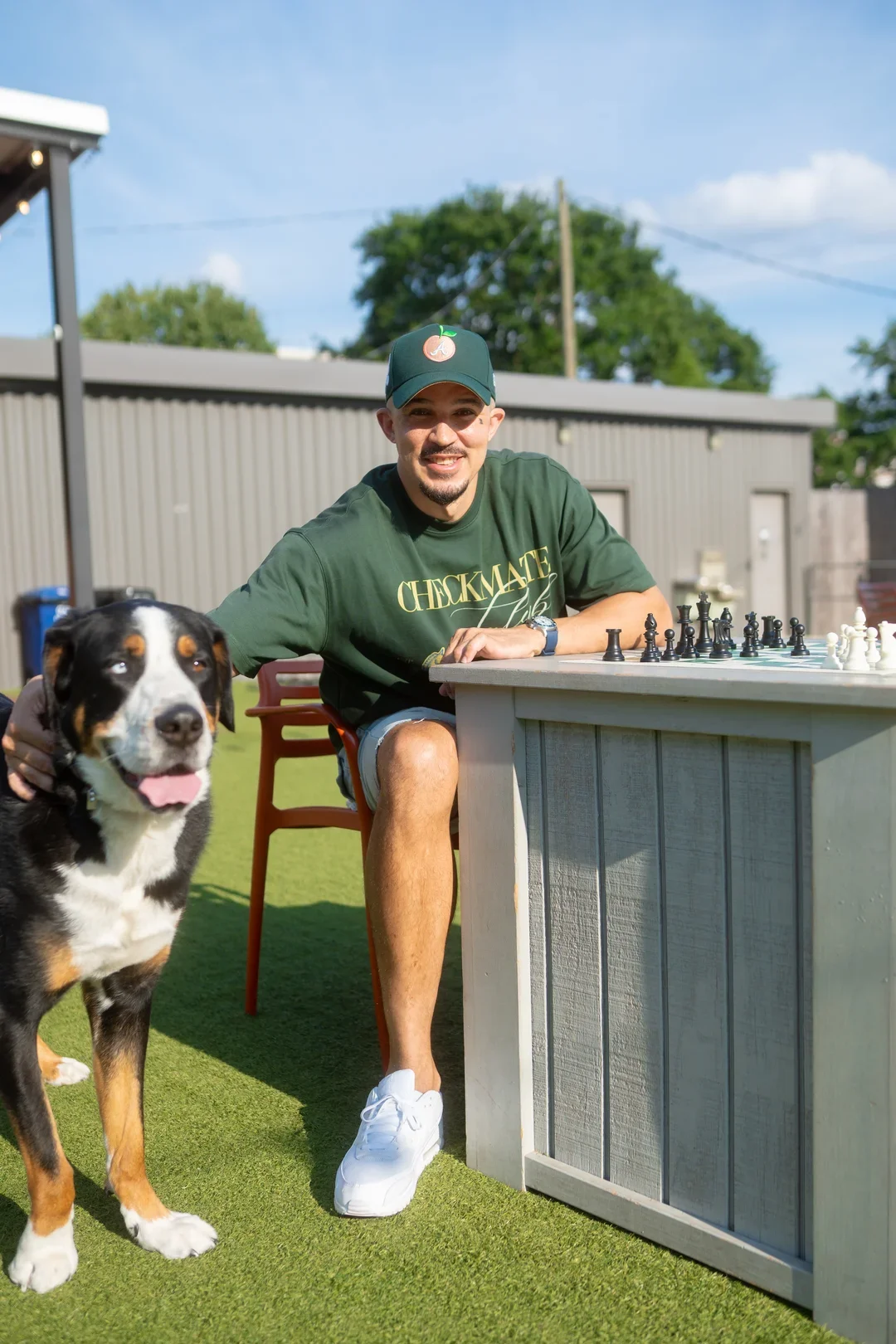
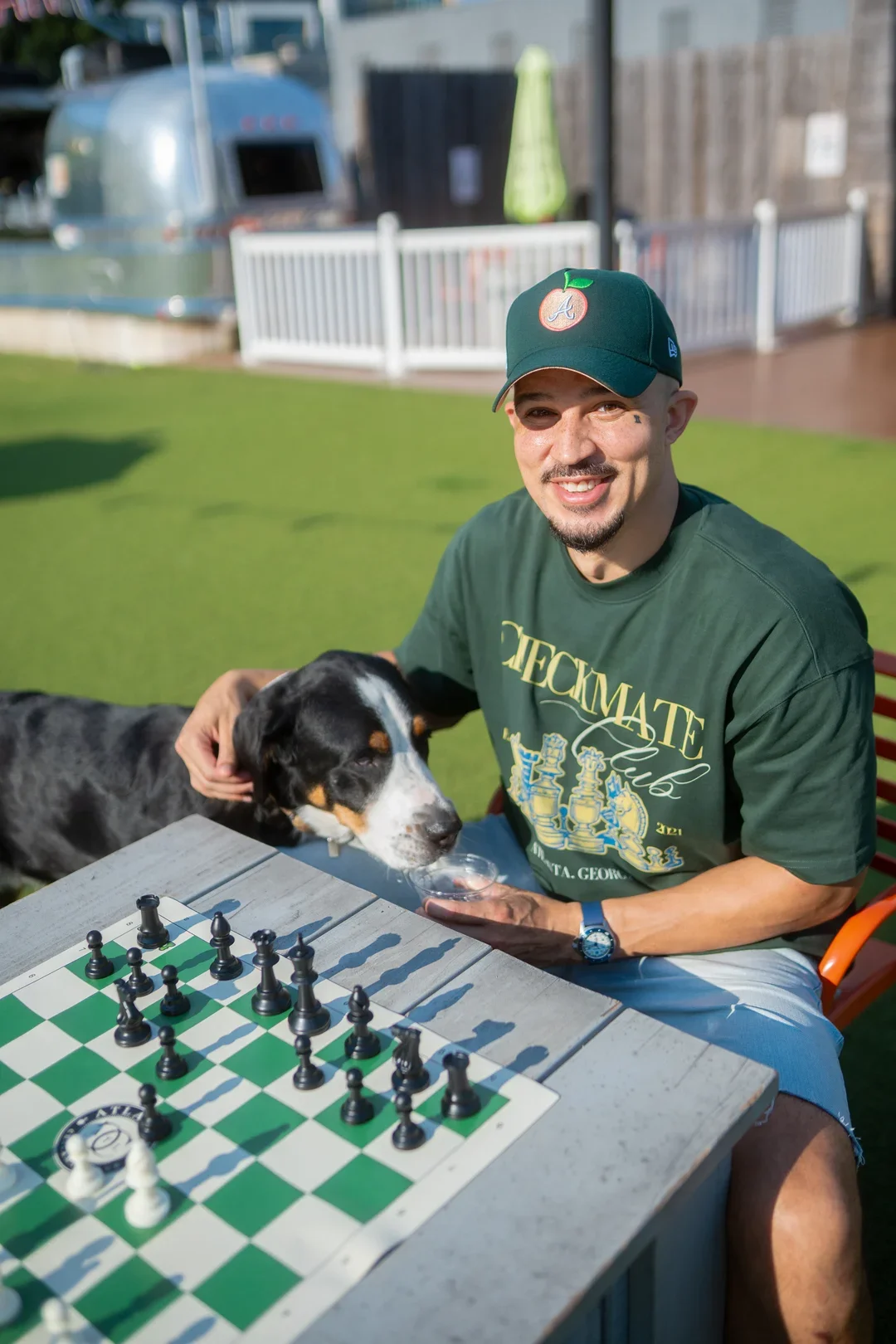
The face tattoo was born about three and a half years ago. Following a late-night session hanging out with a friend and watching a television show featuring heavily tattooed characters, Dousman found himself fixated on an idea. “I woke up the next morning on a Sunday, and I just couldn’t stop thinking about it,” Dousman recalls. “I knew that I wanted it, and it wasn’t just a silly, late-night idea with the buddies.”
Before committing to the idea, Dousman faced a critical hurdle: his mother’s upcoming 75th birthday. Determined not to ruin her milestone celebration, he sent her a series of text messages with concept photos, testing the waters. “She asked me, ‘Can’t you get it anywhere else?’ and I told her, ‘I want it here, Mom. It’s small, I can get it covered if I have to.’” Her final response ultimately greenlit a new chapter in his life: “You have my blessing, babe. Write your own story.”
The piece choice was decidedly personal. “To me, the way I look at the back row of a chessboard, your castle walls are protecting everything that’s important on the inside — your friends, family members, your parents,” he explains. “I view myself as a protector of those around me. The rook stays in its lane, minds its own business, and doesn’t really get fully involved in the game until later in the process unless it absolutely has to. That’s kind of just how I’ve been throughout my life.”
That protective, community-first philosophy would soon become the cornerstone of a cultural phenomenon. As the founder of the Atlanta Checkmate Club, Dousman’s unique outlook is reinventing how, where, and by whom our game is played.
Dousman’s adult rediscovery of chess arrived in 2020 when the world shut down. He had learned chess as a seventh-grader but had largely left the game behind. Dousman was texting a girl he was interested in, asking what she was doing. When she replied that she was watching the Netflix blockbuster The Queen’s Gambit, he looked it up, bought a physical chessboard on Amazon out of sheer curiosity, and invited her on a date. The date went well, but the unexpected byproduct was an addiction to chess.
“It just hit my brain completely differently as an adult,” Dousman says. “Suddenly, I was bringing my physical board everywhere — to bars, to friends’ houses. It used to be that my mental checklist before leaving the house was ‘phone, wallet, keys.’ It quickly became ‘phone, wallet, keys, chessboard.’”
One day, Dousman was getting his hair cut at The English Barber, a then-trendy, now-defunct shop in Atlanta that boasted a hybrid concept: a high-end craft-cocktail bar on one side, a fully operational barbershop on the other.
As Dousman sat in the chair, intensely focused on a casual blitz game on his smartphone, the barber — who also happened to be the owner of the shop — began looking over his shoulder. “He started shouting out tactical advice, telling me to move my knight or move my bishop,” Dousman laughs. “I told him, ‘Man, please don’t mess up my haircut; I’m trying to concentrate here!’”
The barber shop stopped cutting hair at 7 p.m., but the cocktail bar section remained open until 11. Seeing an unused space and a shared interest, Dousman pitched an idea to the owner: Why not host a casual chess night after hours?
On Jan. 12, 2021, the very first gathering consisted of exactly four people: Seth Dousman, his date, and two of the shop’s barbers, all huddled around a single physical board. Yet, by consistently showing up every single week, those four players laid the groundwork for the largest, most vibrant social chess club in Atlanta.
Dousman’s singular focus in life at that time was still professional acting, but the day-to-day reality of the industry had begun to take a heavy psychological toll.
“The acting industry is a brutal emotional roller coaster,” Dousman says. “The highs are incredibly high when you book a gig, but the lows are deeply discouraging. The hardest part is that you have absolutely zero control over your own destiny. You can give a flawless audition, but you might get rejected simply because a casting director thinks you look too tall next to the lead actress. You are constantly at the mercy of someone else granting you permission to do what you love.”
In the pandemic, the acting opportunities completely vanished, as did his secondary source of income as a bartender. Dousman utilized the downtime to engage in soul-searching, spending valuable time with family and working closely with a therapist. This period of personal growth coincided with his introduction to over-the-board chess.
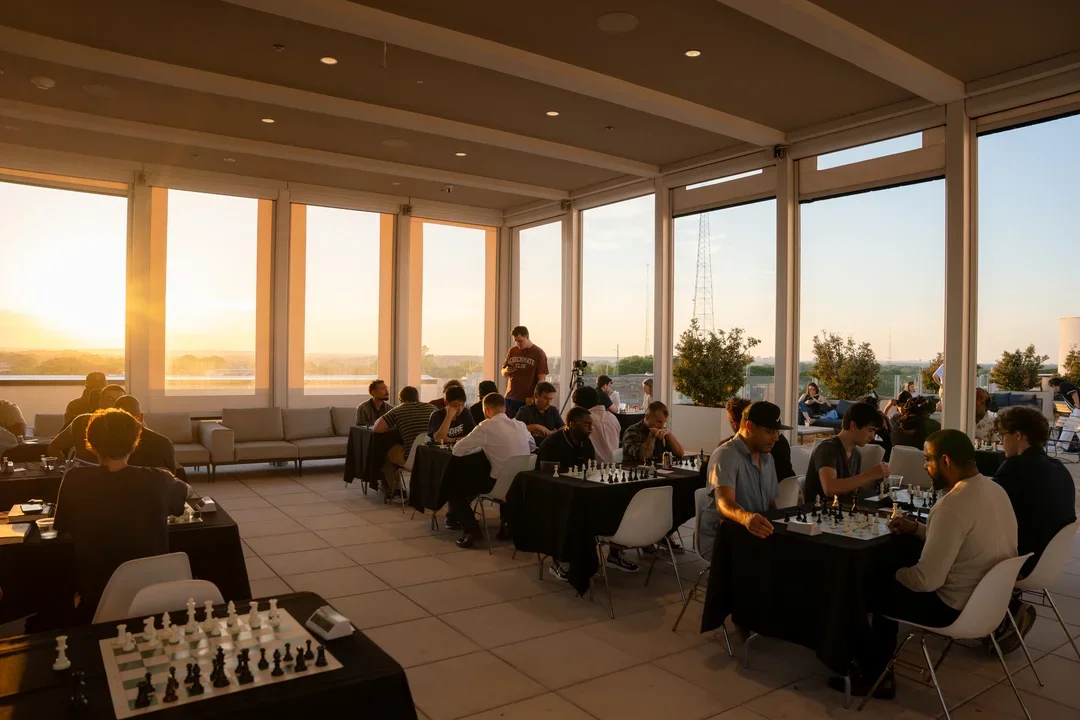
As the Atlanta Checkmate Club began to expand from its initial four-person roster, Dousman had a lightbulb moment regarding the nature of the game versus the nature of Hollywood. “With acting, I was always waiting around for someone to hand me a role,” he says. “But with this chess club that was building right in front of me, I finally found something where I could completely control my own destiny. It wasn’t in the hands of an elite casting director or an industry executive. Chess is beautifully meritocratic and pure: The energy, passion, and organizational work I put into building this community directly dictated the benefits and growth we reaped.”
A Blueprint for Success
For organizers in other cities looking to replicate the magic of the Atlanta model, the club’s success offers a few simple lessons for organizers looking to break the mold:
- The Space: The church basement is old news. Partner with local businesses that naturally encourage food, drink, and socialization.
- Hospitality: The primary role of the organizer shouldn’t be ruling on a threefold repetition claim; it should be acting as a welcoming host.
- Social Media Branding: Use platforms such as Instagram and Facebook not just to announce dates, but to highlight the faces, stories, and diversity of your community. Make chess look like the fun social event the public is craving.
Welcome In
Traditional chess environments, often characterized by silent, hyper-competitive, and occasionally exclusionary behavior, have long unnecessarily alienated casual women players, who are extremely underrepresented in the game. One of Dousman’s goals is to change that.
As documented a detailed online profile by Atlanta Magazine in January 2026, the Atlanta Checkmate Club has managed to elegantly flip this script, earning a reputation as a sanctuary for female players. Dousman has actively leaned into his self-described role as a “bouncer of bad vibes.” By treating chess night primarily as a warm hospitality event rather than a cutthroat battlefield, the club has attracted an increasing number of women.
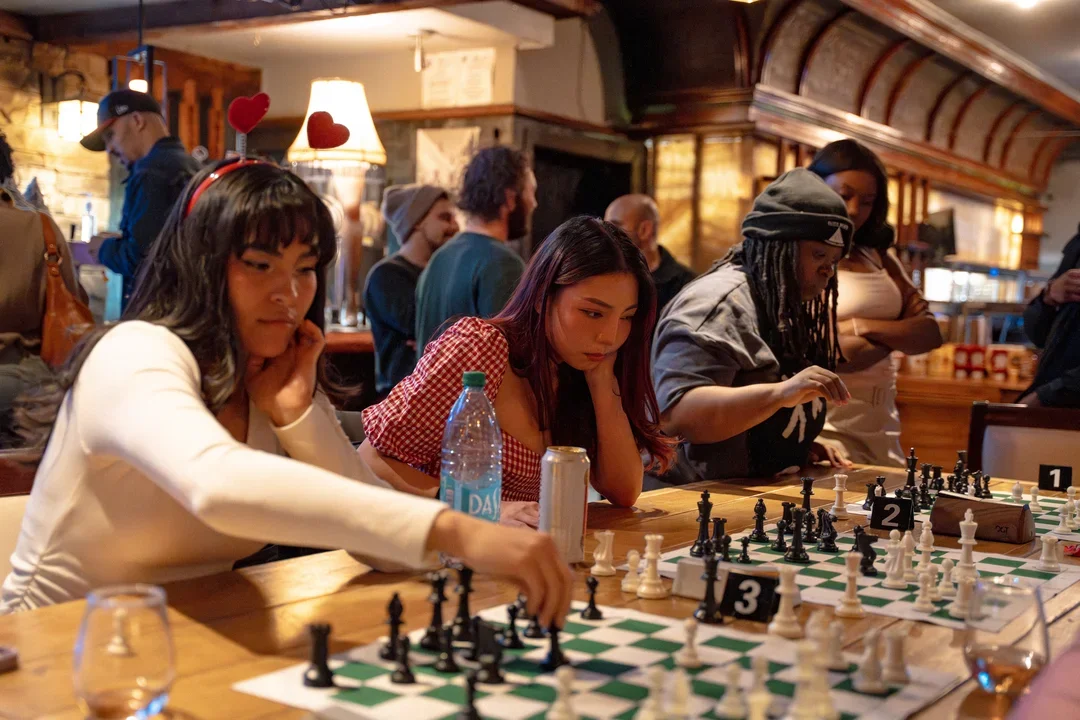
Among these is WIM Carolina Blanco, whose company Orthochess offers Invisalign braces and who has been actively involved promoting US Chess Women’s programs for many years now. Having competed in international chess events, Blanco is intimately familiar with the male-dominated atmosphere of traditional tournament halls and heavily praises the Atlanta Checkmate Club for establishing a culture that values mutual respect. Female players are permitted to play in an atmosphere where they feel secure, celebrated, and evaluated by their moves on the board rather than scrutinized because of their gender.
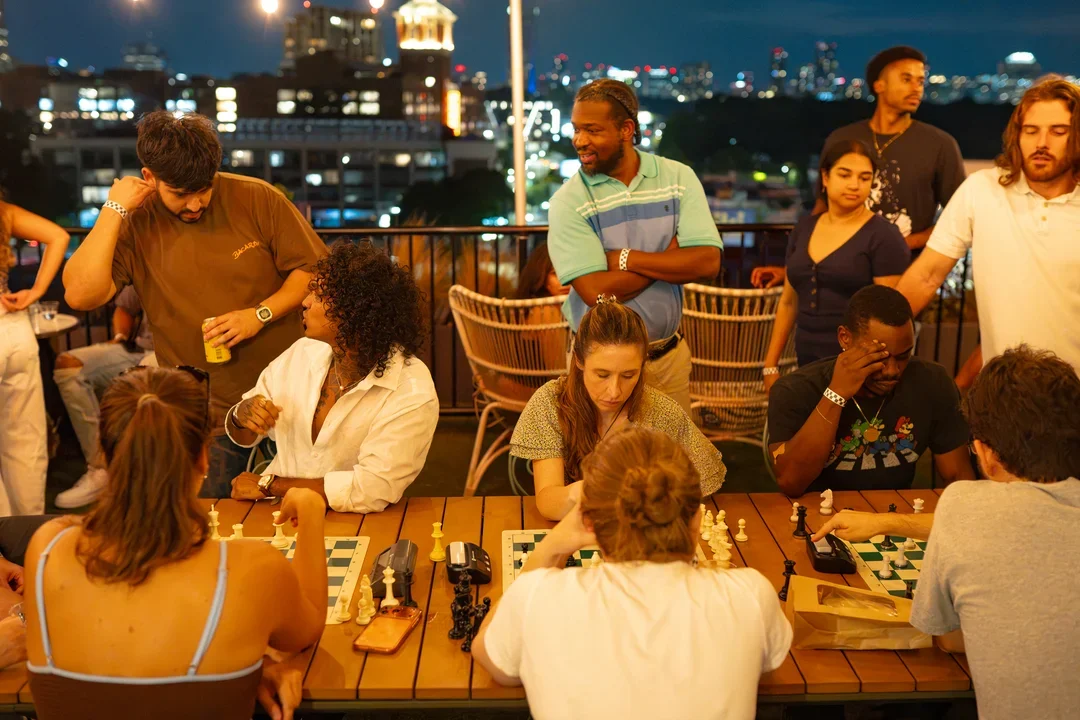
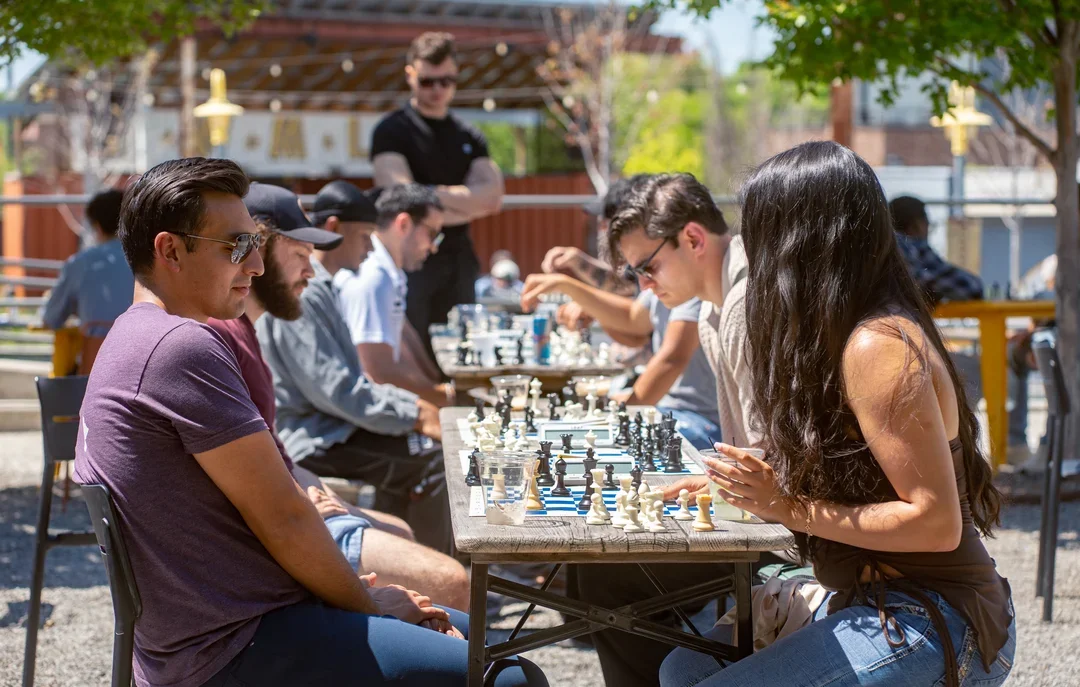
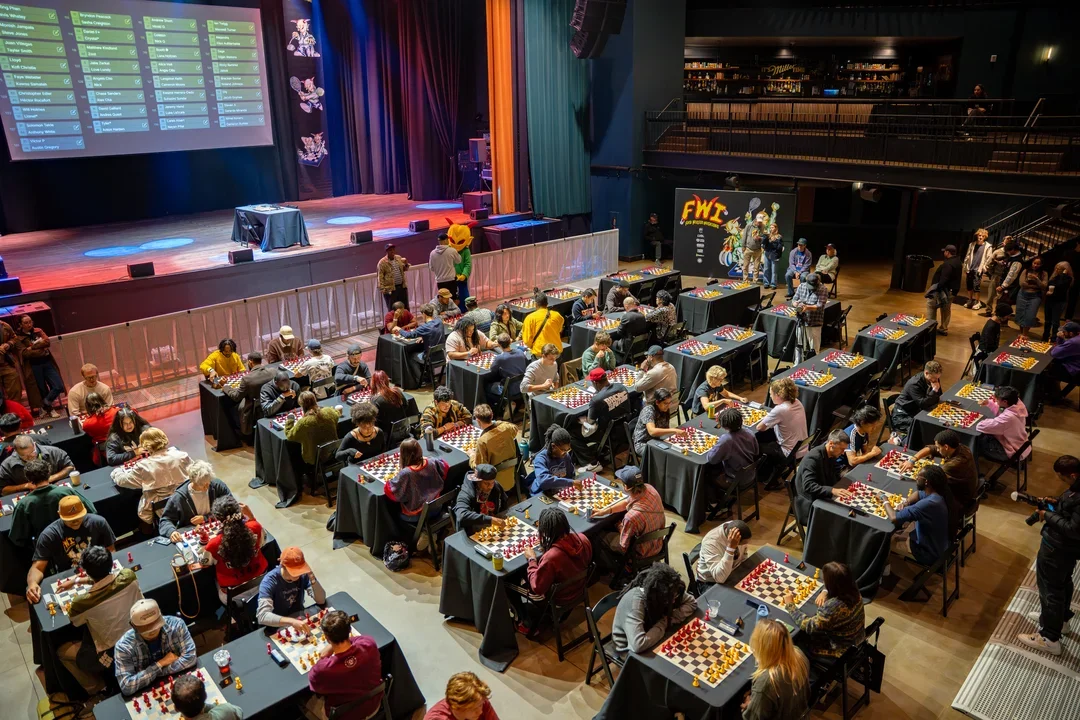
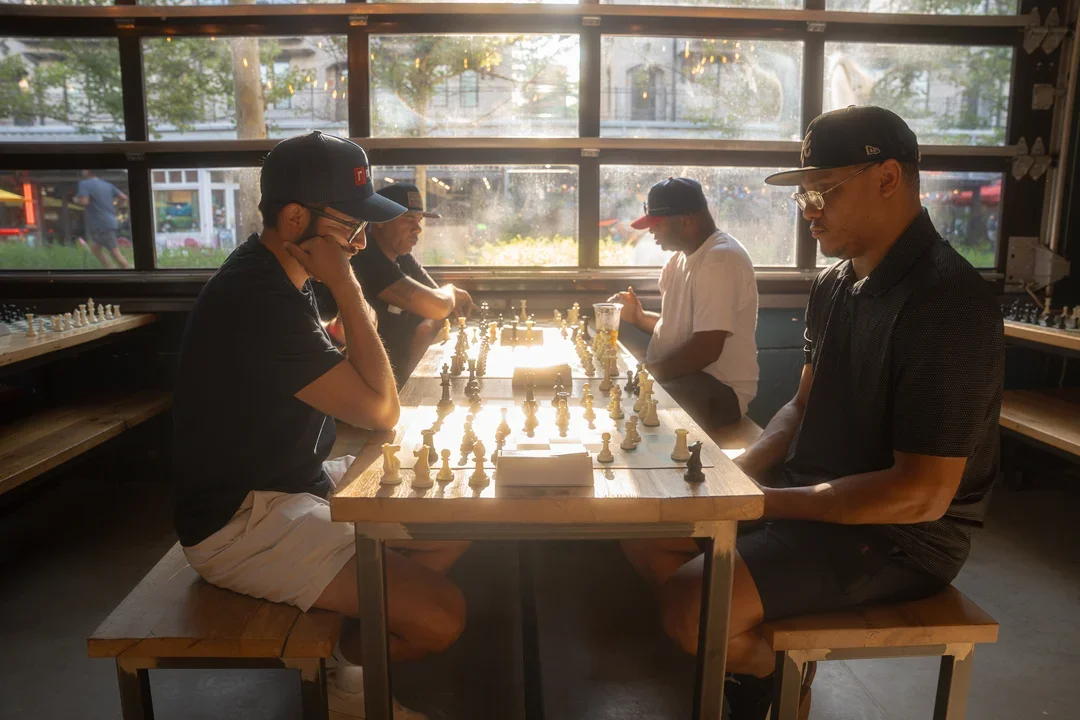
The Atlanta Checkmate Club has far outgrown its humble origins in a barbershop. It has transformed into a massive weekly gathering that rotates through various trendy, non-traditional urban venues. In addition to various bars, the club attracts scores of players to dog parks such as Fetch, in the upscale Buckhead district, for the club’s monthly Pawns and Pups event. Chess Life visited the regular Wednesday-night event at Ladybird Grove and Mess Hall, a tavern on the vibrant Atlanta Beltline trail, which has transformed the ATL as much as Dousman has transformed chess clubs.
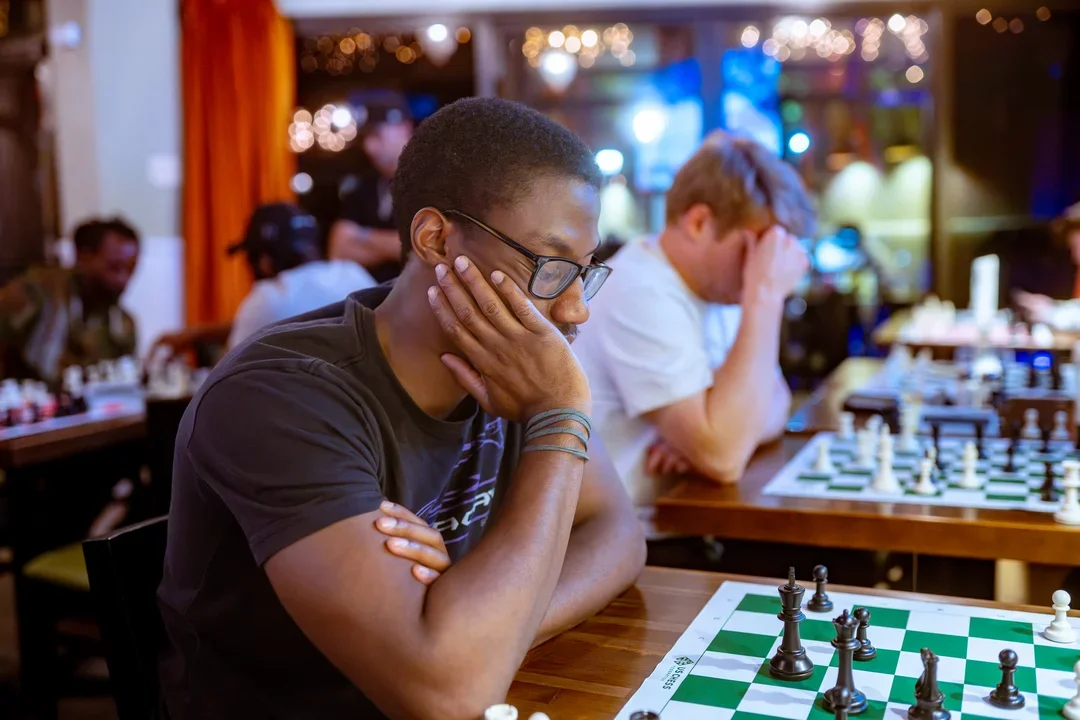
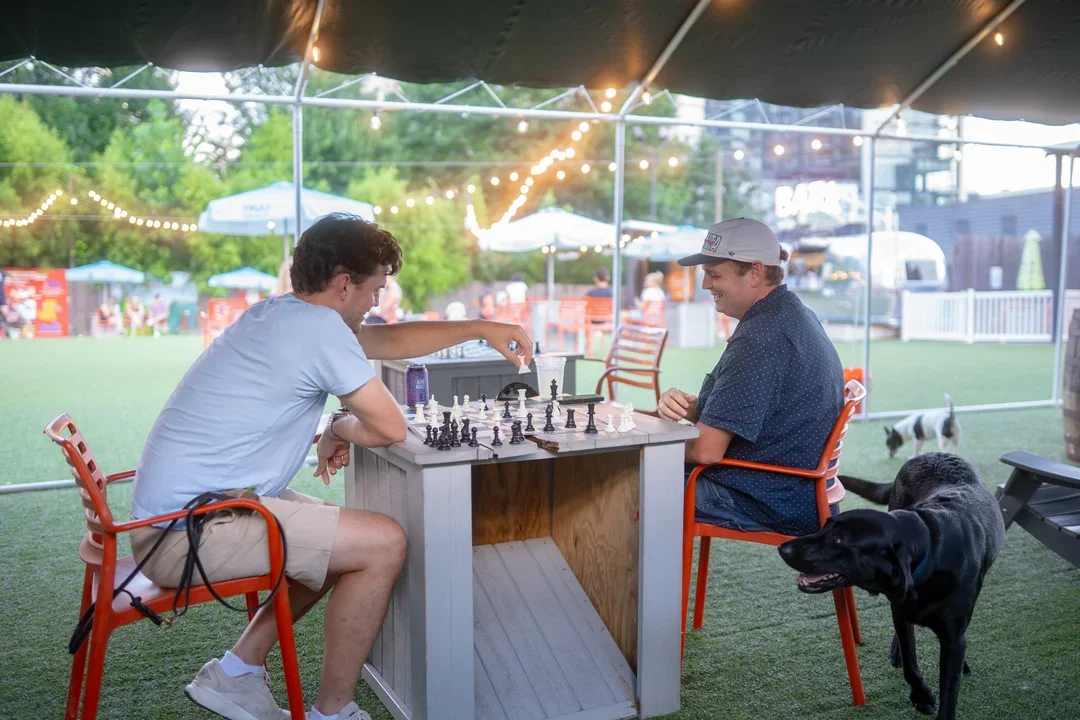
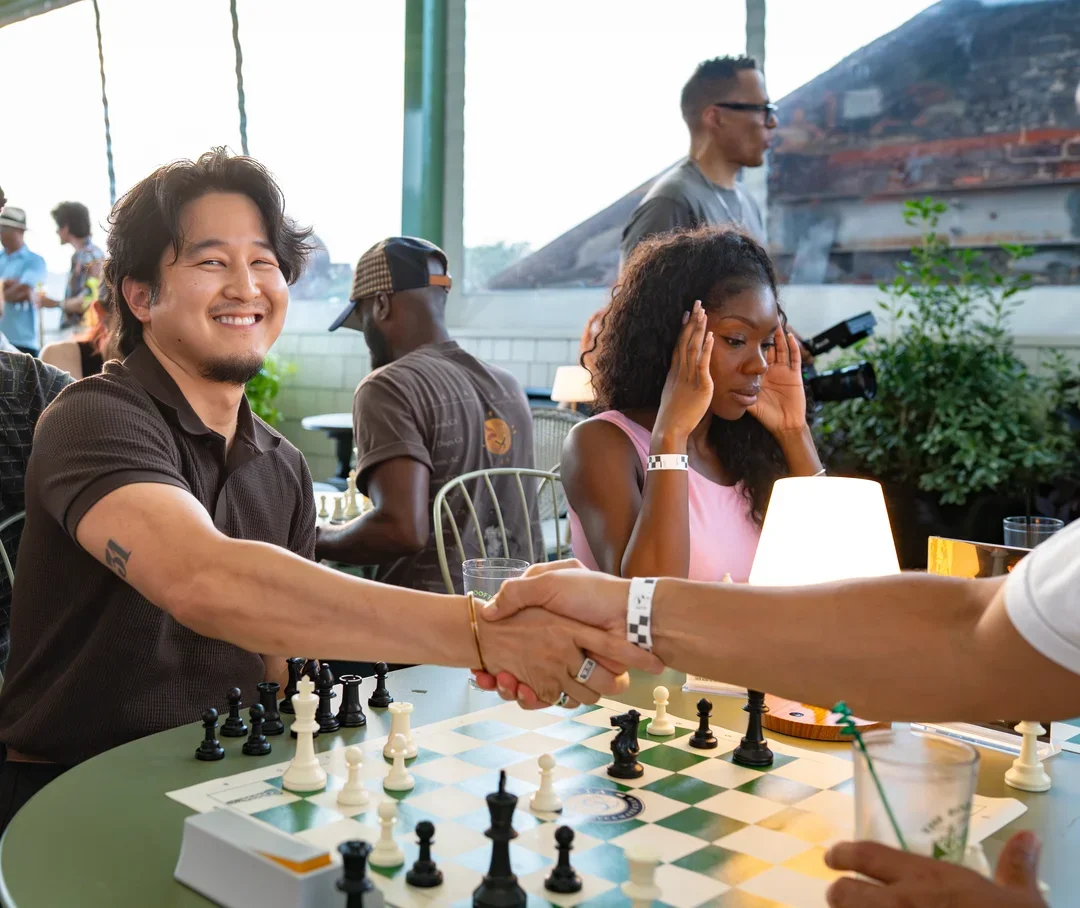
About 60 people participated in the free 10-minute rapid tournament; over the course of the night, at least 100 people sat at one of the boards on tables, on the bar, and in the casual seating areas, ordering food and drink as they played.
These numbers explain why the businesses are willing to pay the club to set up shop like they do for DJs or musicians, rather than the traditional model, in which a hopeful chess club is granted nothing more than permission to use a space, usually on what the business considers an off night.
When two players heard a reporter was on site, they sought him out to enthusiastically praise Dousman and what he had built. Mike Cozier and Dr. Nick Beaulieu became friends through chess and enjoy meeting up at Ladybird. Cozier highlights Dousman’s skill at bringing people from disparate backgrounds together. “He interfaces with everybody and just keeps them coming back — always makes you feel welcome.”
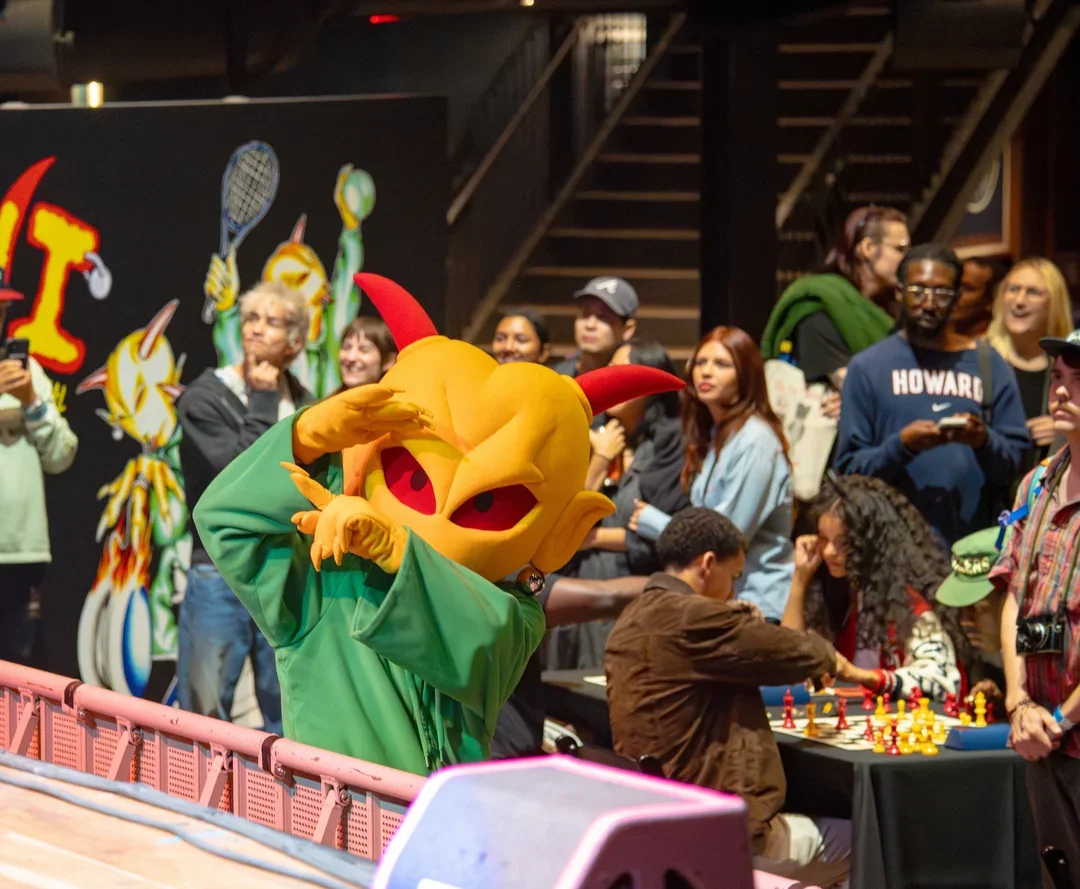
“My overarching mission statement is incredibly simple,” Dousman says. “I truly believe that if more people played chess, the world would be a much better place. I just want to keep spreading the good word of chess to anyone who will listen.”
Clubs such as the Atlanta Checkmate Club prove that the post-pandemic chess boom is not merely a digital phenomenon confined to computer screens. By blending the beauty of the game with the vibe of a great neighborhood block party, Seth Dousman has shown that chess can influence the culture of an entire city.
Bridging Two Chess Worlds
In April, the Atlanta Checkmate Chess Club hosted Chess.com’s Chief Chess Officer, IM Danny Rensch, for a signing event for his book Dark Squares, as well as a Q&A session and a blindfold exhibition, bringing together all the elements that make this club work so well.
Rensch left Atlanta suitably impressed by his experience, describing the club as “a completely different universe. Chess clubs in my day felt like you were leaving modern society behind in order to enter them. It wasn’t about being cool, let alone trendy. Nowadays — and the Atlanta Checkmate Club represents this as well as any I’ve visited — chess is what’s cool and trendy and part of modern society — and you feel that when you’re there.”
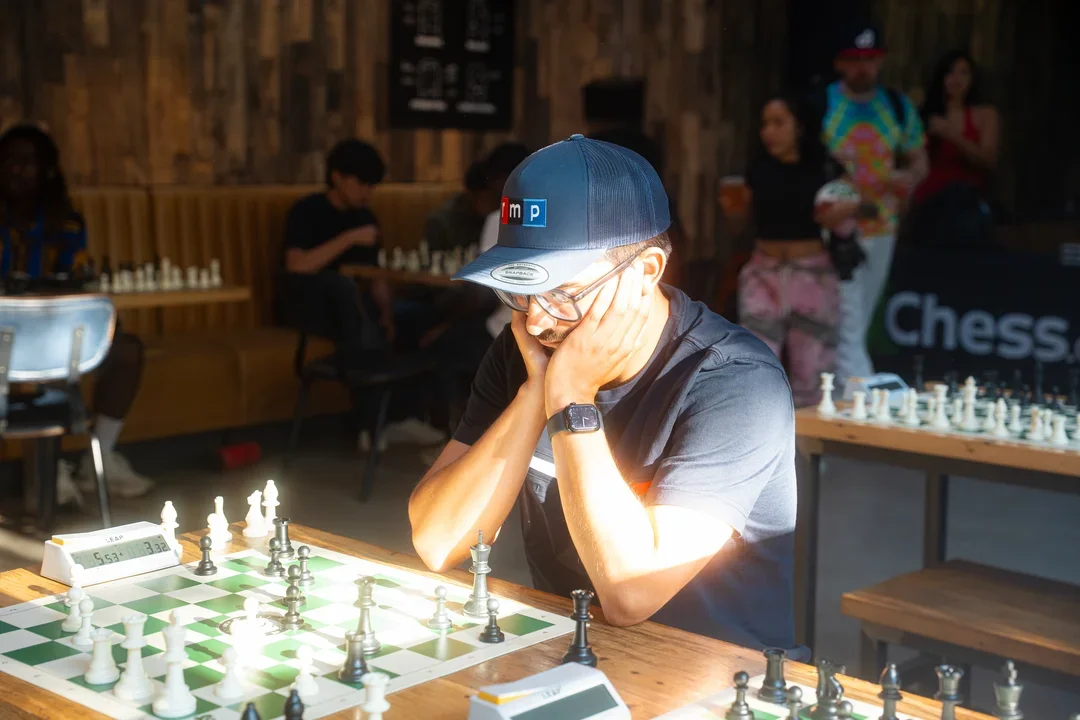
As online platforms such as Chess.com have boomed, over-the-board activity has surged too, too as players want to bridge their digital and real-world experiences. Rensch agrees, saying, “I was literally told this by many people while there, and it meant (and means!) the world to me. Knowing Chess.com has played any part (even if small) in connecting someone’s ‘online passion’ with their ‘real world friends and experiences’ is just so amazing and humbling.” When you’re at the Checkmate Chess Club, Rensch added, “You can feel how bright the future for the game is.”
Senior Public Relations Manager Bianca Facey of Chess.com told Chess Life, “Chess.com has always believed that our online platform is most powerful when it translates into real human connection, and these clubs are proof of that happening organically.”


Categories
Archives
- November 2026 (14)
- October 2026 (32)
- September 2026 (26)
- August 2026 (28)
- July 2026 (36)
- June 2026 (32)
- May 2026 (30)
- April 2026 (33)
- March 2026 (27)
- February 2026 (24)
- January 2026 (24)
- December 2025 (27)
- November 2025 (29)
- October 2025 (39)
- September 2025 (27)
- August 2025 (29)
- July 2025 (43)
- June 2025 (25)
- May 2025 (24)
- April 2025 (29)
- March 2025 (29)
- February 2025 (20)
- January 2025 (24)
- December 2024 (34)
- November 2024 (18)
- October 2024 (35)
- September 2024 (23)
- August 2024 (27)
- July 2024 (44)
- June 2024 (27)
- May 2024 (31)
- April 2024 (51)
- March 2024 (34)
- February 2024 (24)
- January 2024 (26)
- December 2023 (29)
- November 2023 (26)
- October 2023 (37)
- September 2023 (27)
- August 2023 (37)
- July 2023 (47)
- June 2023 (33)
- May 2023 (37)
- April 2023 (45)
- March 2023 (37)
- February 2023 (28)
- January 2023 (31)
- December 2022 (23)
- November 2022 (32)
- October 2022 (31)
- September 2022 (19)
- August 2022 (39)
- July 2022 (32)
- June 2022 (35)
- May 2022 (21)
- April 2022 (31)
- March 2022 (33)
- February 2022 (21)
- January 2022 (27)
- December 2021 (36)
- November 2021 (34)
- October 2021 (25)
- September 2021 (25)
- August 2021 (41)
- July 2021 (36)
- June 2021 (29)
- May 2021 (29)
- April 2021 (31)
- March 2021 (33)
- February 2021 (28)
- January 2021 (29)
- December 2020 (38)
- November 2020 (40)
- October 2020 (41)
- September 2020 (35)
- August 2020 (38)
- July 2020 (36)
- June 2020 (46)
- May 2020 (42)
- April 2020 (37)
- March 2020 (60)
- February 2020 (38)
- January 2020 (45)
- December 2019 (34)
- November 2019 (35)
- October 2019 (42)
- September 2019 (45)
- August 2019 (56)
- July 2019 (44)
- June 2019 (35)
- May 2019 (40)
- April 2019 (48)
- March 2019 (61)
- February 2019 (39)
- January 2019 (30)
- December 2018 (29)
- November 2018 (51)
- October 2018 (45)
- September 2018 (29)
- August 2018 (49)
- July 2018 (35)
- June 2018 (31)
- May 2018 (39)
- April 2018 (31)
- March 2018 (26)
- February 2018 (33)
- January 2018 (30)
- December 2017 (26)
- November 2017 (24)
- October 2017 (30)
- September 2017 (30)
- August 2017 (31)
- July 2017 (27)
- June 2017 (32)
- May 2017 (26)
- April 2017 (37)
- March 2017 (28)
- February 2017 (30)
- January 2017 (27)
- December 2016 (29)
- November 2016 (24)
- October 2016 (32)
- September 2016 (31)
- August 2016 (27)
- July 2016 (24)
- June 2016 (26)
- May 2016 (19)
- April 2016 (30)
- March 2016 (36)
- February 2016 (28)
- January 2016 (32)
- December 2015 (26)
- November 2015 (23)
- October 2015 (16)
- September 2015 (28)
- August 2015 (28)
- July 2015 (6)
- June 2015 (1)
- May 2015 (2)
- April 2015 (1)
- February 2015 (3)
- January 2015 (1)
- December 2014 (1)
- July 2010 (1)
- October 1991 (1)
- August 1989 (1)
- January 1988 (1)
- December 1983 (1)