


Jacorey Bynum has picked up some new fans recently. But the 18-year-old national master from Lauderhill, Florida, has been a big name in state and scholastic chess for years.
In 2019, the town of Sunrise, Florida declared Sept. 28 “Jacorey Bynum Day” in recognition of the then-11-year-old Bynum’s accomplishments and commitments to service in his community.
In 2024, he was covered in The Chess Drum for breaking the 2200 national rating barrier.
Last year, he finished eighth in the K-12 Championship section of SuperNationals VIII, only a half-point behind the seven co-champions.
In July, he was awarded an $8,000 Maurice Ashley Fellowship in recognition of his continued excellence.
Bynum broke through to the next level of notoriety on Jan. 27 when he checkmated GM Magnus Carlsen online during Chess.com’s Titled Tuesday tournament.
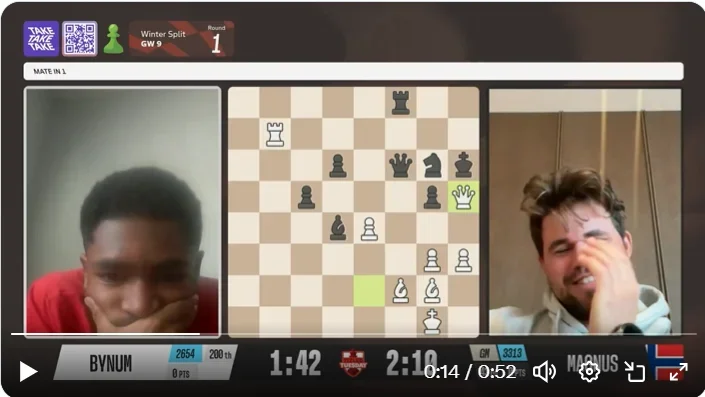
Bynum’s smooth queen sacrifice earned him a smile and laugh from Carlsen, the Agadmator treatment on YouTube, and, beyond the chess world, everything from a profile in The Times of India to a post on Worldstar Hip Hop’s socials.
Chess Life Online emailed Bynum to learn a little bit more about the rising talent’s recent success and what comes next. The below interview has been edited for clarity.
Chess Life Online (CLO): How old were you when you first started playing chess? What made you get interested in the game?
Jacorey Bynum (JB): I first learned about chess from a Mortal Kombat game when I was four years old. But I really started playing when I was nine. What made me interested was that I was winning a lot and my mentor at the time wanted to play in tournaments. I didn’t even know there were chess tournaments. I was already a competitive person, so chess tournaments were fun for me.
CLO: At what age did you become an NM? What was the hardest part of achieving that milestone, and what advice do you have to chess players climbing up the ranks?
JB: I became a national master when I was 16 years old. The hardest part of achieving the title is overthinking the ways you can get to NM. The advice that I would give is to just try to play your best chess no matter who you are playing.
CLO: Who were some of your first/favorite chess teachers/mentors? What did you learn from them?
JB: My first chess mentor was Mo Hylton. He was the one who got me into chess and chess tournaments. My first chess coach was FM Ramon Lorente (through the National Scholastic Chess Foundation). I was about 1400 or 1500 at the time.
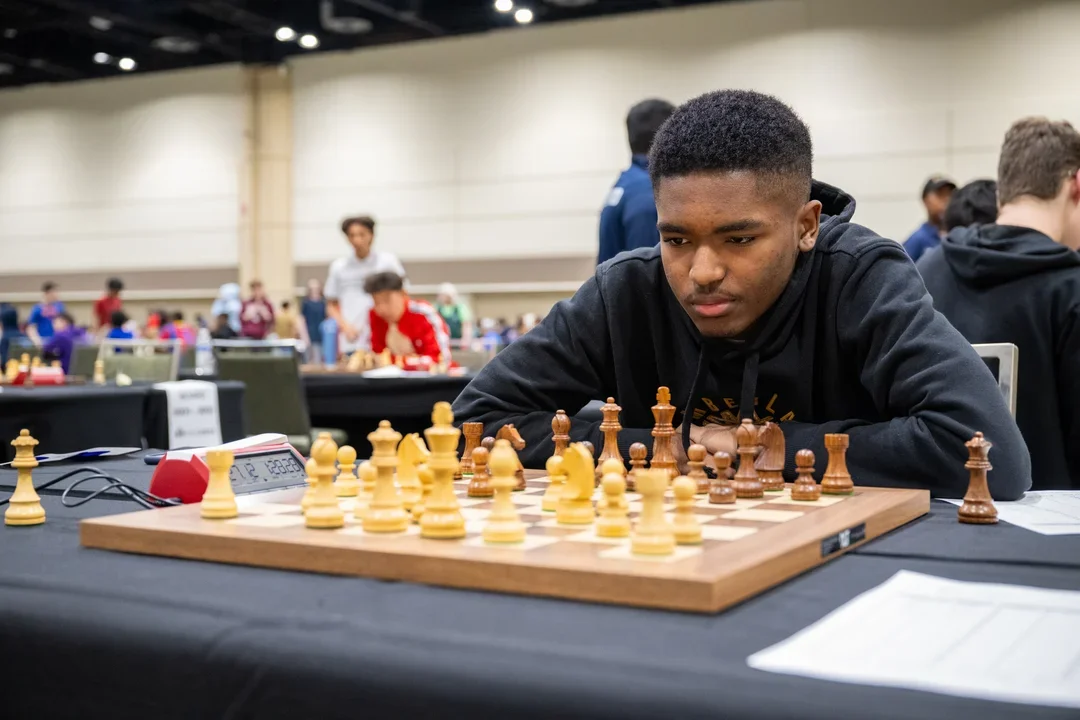
CLO: You had a strong result at SuperNationals VIII, finishing eighth with 5½/7, only a half-point behind the seven co-champions. What was your favorite part of competing in that tournament? Do you have a favorite game?
JB: My favorite part of competing was the tough chess games I played. None of them were easy, and it was challenging. I would say my favorite was against IM Eric Liu, even though I lost. It was a very tough game, and there were moments where I could’ve got a better result. It was the turning point of my tournament.
CLO: What was going on in your head when you saw you were paired against Magnus, and when he missed your trap? And what has the response been like from friends or the broader chess community?
JB: When I got paired against Magnus, I immediately got nervous. When he missed the trap, I thought that it wasn’t even checkmate and I was missing something. I had to look at it over and over again.
When the game was over, there were already a couple of people congratulating me in an instant. Then it got to become more and more people and then everyone was reaching out.
CLO: Do you have other recent wins you're proud of?
JB: A win that I was proud of was against IM Roman Pyrih last November at the U.S. Masters:
What’s next for the high school senior? Bynum has already started to hear back from colleges. While he says that being able to attend a school with a strong chess program is definitely a goal, other activities besides chess are also important. He plans to study psychology or forensic studies.
I also asked him what his goals were for his chess. Was he aiming for a rating? The FM or IM titles? His answer was definitive: “My goal is to reach GM.”


Categories
Archives
- October 2026 (8)
- September 2026 (27)
- August 2026 (28)
- July 2026 (36)
- June 2026 (32)
- May 2026 (30)
- April 2026 (33)
- March 2026 (27)
- February 2026 (24)
- January 2026 (24)
- December 2025 (27)
- November 2025 (29)
- October 2025 (39)
- September 2025 (27)
- August 2025 (29)
- July 2025 (43)
- June 2025 (25)
- May 2025 (24)
- April 2025 (29)
- March 2025 (29)
- February 2025 (20)
- January 2025 (24)
- December 2024 (34)
- November 2024 (18)
- October 2024 (35)
- September 2024 (23)
- August 2024 (27)
- July 2024 (44)
- June 2024 (27)
- May 2024 (31)
- April 2024 (51)
- March 2024 (34)
- February 2024 (24)
- January 2024 (26)
- December 2023 (29)
- November 2023 (26)
- October 2023 (37)
- September 2023 (27)
- August 2023 (37)
- July 2023 (47)
- June 2023 (33)
- May 2023 (37)
- April 2023 (45)
- March 2023 (37)
- February 2023 (28)
- January 2023 (31)
- December 2022 (23)
- November 2022 (32)
- October 2022 (31)
- September 2022 (19)
- August 2022 (39)
- July 2022 (32)
- June 2022 (35)
- May 2022 (21)
- April 2022 (31)
- March 2022 (33)
- February 2022 (21)
- January 2022 (27)
- December 2021 (36)
- November 2021 (34)
- October 2021 (25)
- September 2021 (25)
- August 2021 (41)
- July 2021 (36)
- June 2021 (29)
- May 2021 (29)
- April 2021 (31)
- March 2021 (33)
- February 2021 (28)
- January 2021 (29)
- December 2020 (38)
- November 2020 (40)
- October 2020 (41)
- September 2020 (35)
- August 2020 (38)
- July 2020 (36)
- June 2020 (46)
- May 2020 (42)
- April 2020 (37)
- March 2020 (60)
- February 2020 (38)
- January 2020 (45)
- December 2019 (34)
- November 2019 (35)
- October 2019 (42)
- September 2019 (45)
- August 2019 (56)
- July 2019 (44)
- June 2019 (35)
- May 2019 (40)
- April 2019 (48)
- March 2019 (61)
- February 2019 (39)
- January 2019 (30)
- December 2018 (29)
- November 2018 (51)
- October 2018 (45)
- September 2018 (29)
- August 2018 (49)
- July 2018 (35)
- June 2018 (31)
- May 2018 (39)
- April 2018 (31)
- March 2018 (26)
- February 2018 (33)
- January 2018 (30)
- December 2017 (26)
- November 2017 (24)
- October 2017 (30)
- September 2017 (30)
- August 2017 (32)
- July 2017 (27)
- June 2017 (32)
- May 2017 (26)
- April 2017 (37)
- March 2017 (28)
- February 2017 (30)
- January 2017 (27)
- December 2016 (29)
- November 2016 (24)
- October 2016 (32)
- September 2016 (31)
- August 2016 (27)
- July 2016 (24)
- June 2016 (26)
- May 2016 (19)
- April 2016 (30)
- March 2016 (37)
- February 2016 (27)
- January 2016 (33)
- December 2015 (25)
- November 2015 (23)
- October 2015 (16)
- September 2015 (28)
- August 2015 (28)
- July 2015 (6)
- June 2015 (1)
- May 2015 (2)
- April 2015 (1)
- February 2015 (3)
- January 2015 (1)
- December 2014 (1)
- July 2010 (1)
- October 1991 (1)
- August 1989 (1)
- January 1988 (1)
- December 1983 (1)