

Over 150 educators gather in New York to reimagine how chess develops student thinking and resilience
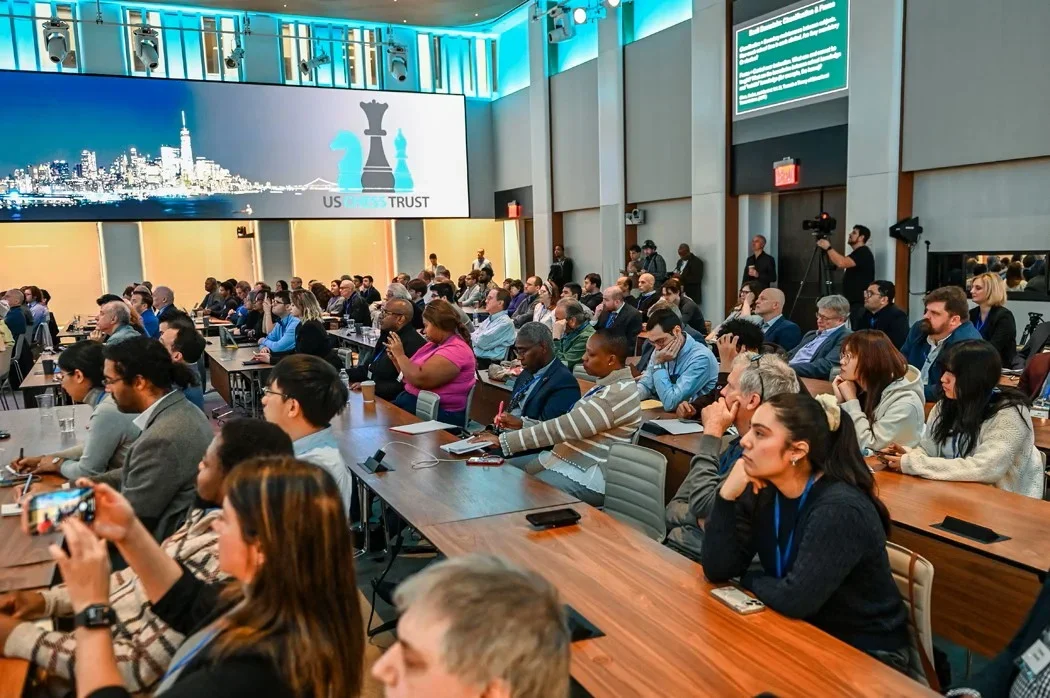
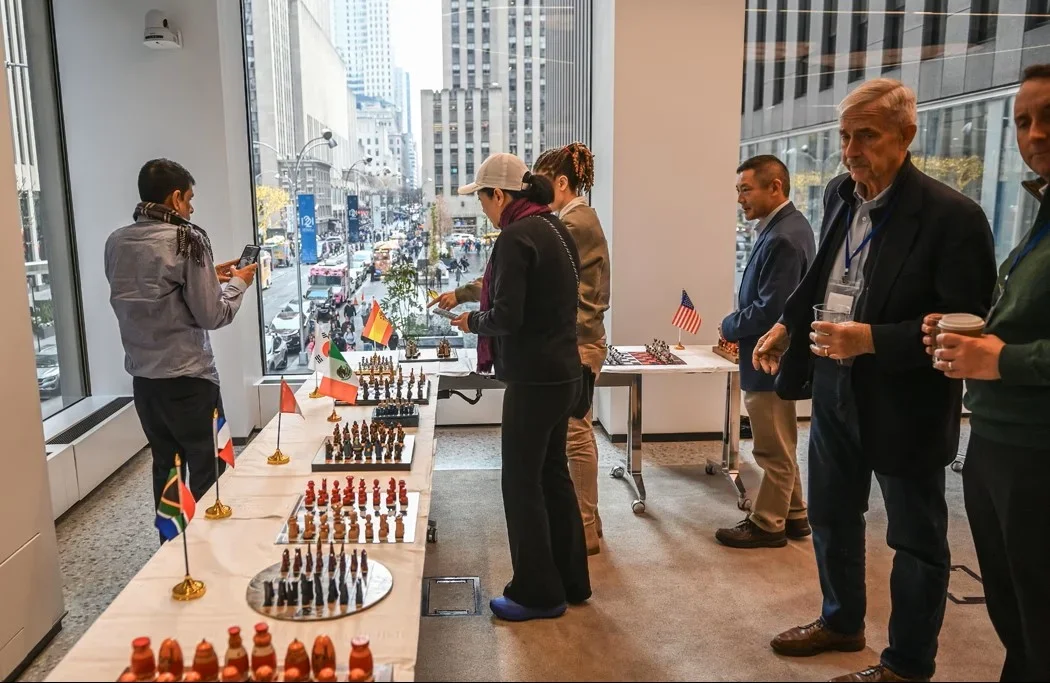
NEW YORK – The National Scholastic Chess Foundation (NSCF) and Kasparov Chess Foundation (KCF) presented Mindsets: The New York Chess in Education Conference on December 6 at Quorum in Rockefeller Center, bringing together educators, administrators, and researchers from across the United States and as far away as the UK, Latvia, and Sri Lanka.
The conference centered on a fundamental question: How can chess be used more intentionally in education to help students develop growth mindsets, embrace productive struggle, and cultivate transferable thinking skills?
From Talent to Growth
The weekend's programming challenged traditional notions of chess success focused solely on ratings and trophies. Instead, speakers emphasized chess as a vehicle for developing resilience, strategic thinking, and what keynote speakers GM Peter Wells and Dr. Barry Hymer termed "serious play."
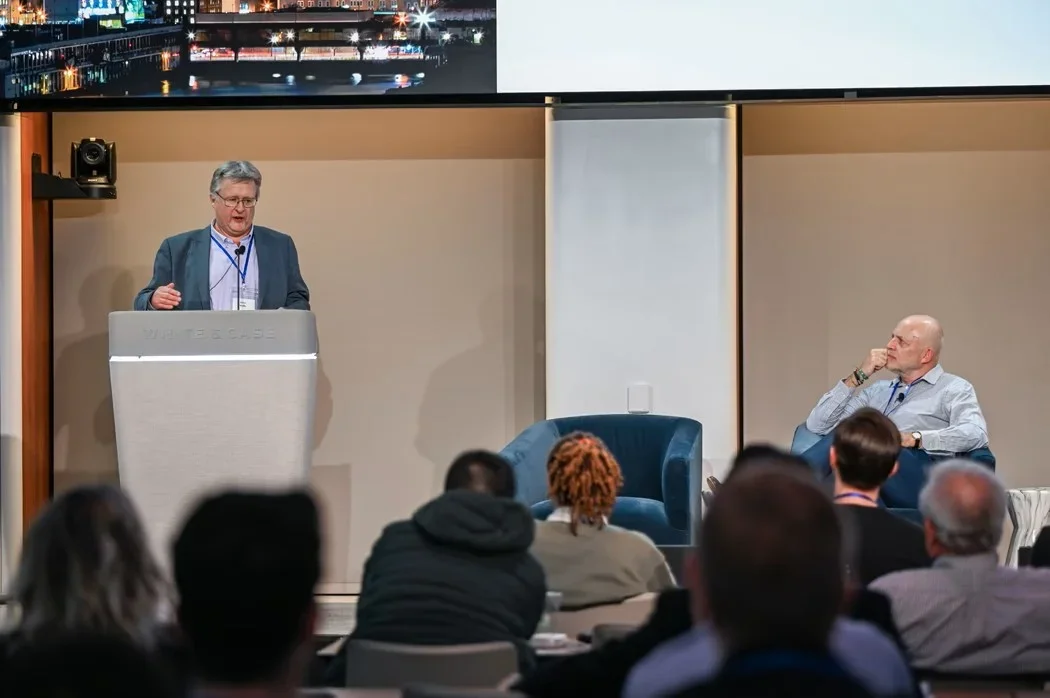
Drawing on Carol Dweck's research, Wells and Hymer contrasted fixed mindset beliefs — where talent is seen as innate and success measured by easy wins — with growth mindset approaches that view ability as cultivated through effort, learning, and challenging struggle. They posed critical questions for the modern chess education landscape: Has the growth mindset message survived the recent chess boom era, characterized by entertainment content, tricks and traps, and engine reliance? Can competition align with a growth mindset?
Their answer centered on synthesis rather than false binaries. "Serious play," they argued, recognizes the gifts both learning and performance offer when grounded in intrinsic motivation, challenge, meaningful feedback, productive failure, and metacognition.
A Champion's Perspective
World Chess Champion Garry Kasparov delivered one of the conference's most anticipated addresses, connecting lessons from elite competition to everyday teaching and learning. He reflected on how chess education must evolve as society transitions from an era where knowledge is instantly accessible to an AI-driven world where even thinking can be outsourced.
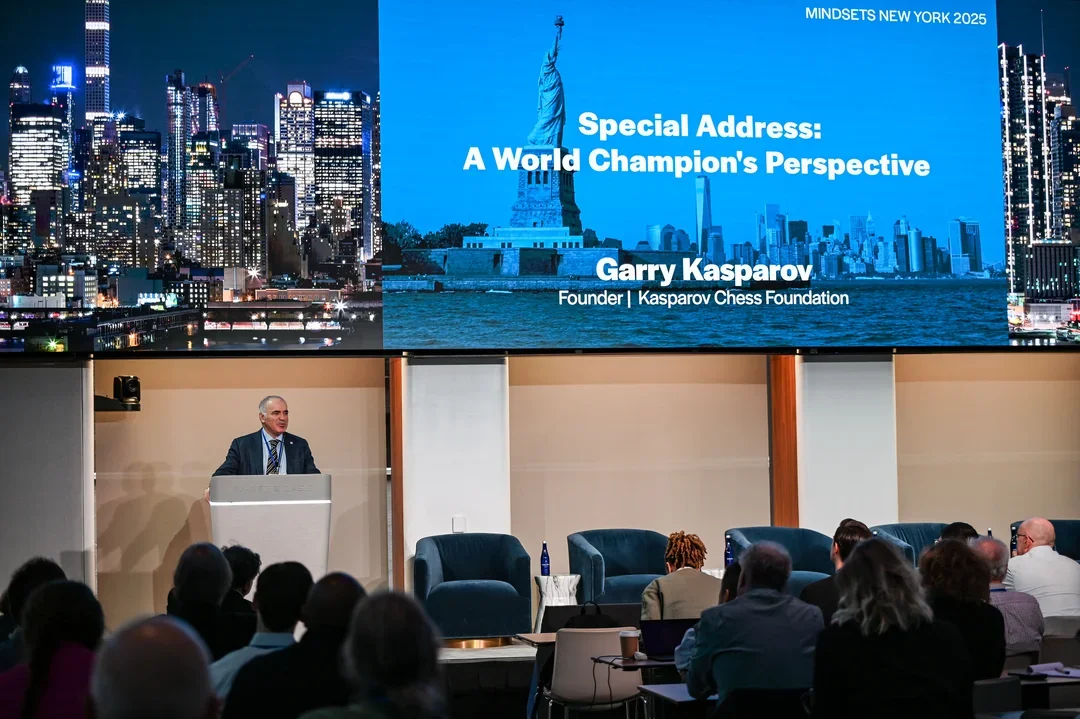
Kasparov contrasted his own chess development — learning from books and magazines shared among players in his city, studying games of predecessors — with today's environment where players increasingly consult engines rather than trust their own assessment. His message underscored how educators can use chess to help students embrace challenges and develop independent analytical thinking.
Research, Practice, and Pathways
Morning sessions featured Dr. Jeff Bulington of the Franklin Chess Center addressing why precious instructional time should be devoted to chess, examining the challenge of cognitive transfer while emphasizing that intentionally taught chess can develop transferable skills in planning, decision-making, and strategic thinking.
Matan Prilleltensky, NSCF Executive Director, presented a mastery-based approach using the Steps Method curriculum, which builds foundational knowledge systematically while keeping students focused on problem-solving rather than memorization.
Research presentations included findings from Dr. Brian Kisida, Dr. Matthew Pepper, and Dr. Michelle Wickman on gender gaps in competitive chess. Their analysis of over 106,000 young USCF players from 2000-2019 revealed that while females start with lower ratings, they improve at similar rates to males, and the gender gap narrows as female participation increases — especially at higher skill levels.
Afternoon panels explored pathways from high school to collegiate chess, models for offering chess as for-credit academic coursework, and broader definitions of success that include personal growth, character development, and lifelong engagement beyond competitive achievements.
Building Community
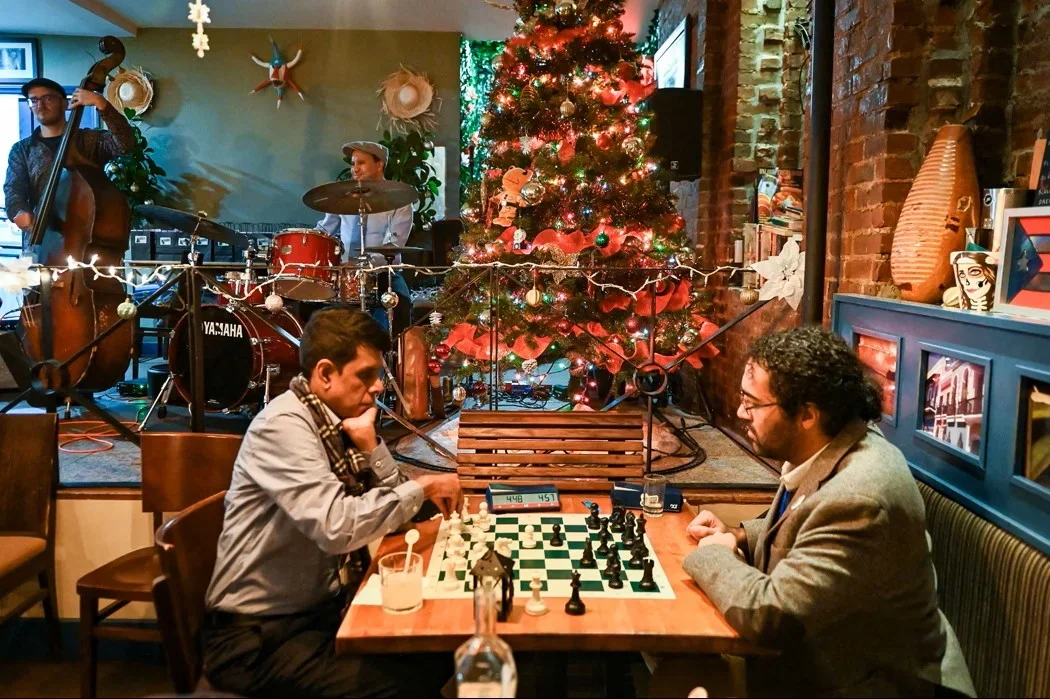
Beyond formal programming, three satellite events across the weekend created space for connection and informal exchange. A pre-conference reception at Hunter College Campus Schools showcased a program that has modeled scholastic chess excellence for over 40 years. An evening reception at a Chess Place in Spanish Harlem featured live jazz and casual play, underscoring that joy and community are essential components of meaningful learning.
The weekend concluded with a special presentation and book signing by Wells and Hymer at the historic Marshall Chess Club.
The Mindsets conference was made possible through the generous support of The Saint Louis Chess Club, US Chess, US Chess Trust, ICC: The Internet Chess Club, Mark Wieder, Chess in the Schools, and the New York State Chess Association.
Representatives from the Saint Louis Chess Club announced dates for the 2026 Chess in Education Conference (October 22 through 24) during closing remarks, ensuring the conversation continues.
For a complete report and photo galleries from the weekend, visit: https://nscfchess.org/mindsets-2025/


Categories
Archives
- October 2026 (10)
- September 2026 (27)
- August 2026 (28)
- July 2026 (36)
- June 2026 (32)
- May 2026 (30)
- April 2026 (33)
- March 2026 (27)
- February 2026 (24)
- January 2026 (24)
- December 2025 (27)
- November 2025 (29)
- October 2025 (39)
- September 2025 (27)
- August 2025 (29)
- July 2025 (43)
- June 2025 (25)
- May 2025 (24)
- April 2025 (29)
- March 2025 (29)
- February 2025 (20)
- January 2025 (24)
- December 2024 (34)
- November 2024 (18)
- October 2024 (35)
- September 2024 (23)
- August 2024 (27)
- July 2024 (44)
- June 2024 (27)
- May 2024 (31)
- April 2024 (51)
- March 2024 (34)
- February 2024 (24)
- January 2024 (26)
- December 2023 (29)
- November 2023 (26)
- October 2023 (37)
- September 2023 (27)
- August 2023 (37)
- July 2023 (47)
- June 2023 (33)
- May 2023 (37)
- April 2023 (45)
- March 2023 (37)
- February 2023 (28)
- January 2023 (31)
- December 2022 (23)
- November 2022 (32)
- October 2022 (31)
- September 2022 (19)
- August 2022 (39)
- July 2022 (32)
- June 2022 (35)
- May 2022 (21)
- April 2022 (31)
- March 2022 (33)
- February 2022 (21)
- January 2022 (27)
- December 2021 (36)
- November 2021 (34)
- October 2021 (25)
- September 2021 (25)
- August 2021 (41)
- July 2021 (36)
- June 2021 (29)
- May 2021 (29)
- April 2021 (31)
- March 2021 (33)
- February 2021 (28)
- January 2021 (29)
- December 2020 (38)
- November 2020 (40)
- October 2020 (41)
- September 2020 (35)
- August 2020 (38)
- July 2020 (36)
- June 2020 (46)
- May 2020 (42)
- April 2020 (37)
- March 2020 (60)
- February 2020 (38)
- January 2020 (45)
- December 2019 (34)
- November 2019 (35)
- October 2019 (42)
- September 2019 (45)
- August 2019 (56)
- July 2019 (44)
- June 2019 (35)
- May 2019 (40)
- April 2019 (48)
- March 2019 (61)
- February 2019 (39)
- January 2019 (30)
- December 2018 (29)
- November 2018 (51)
- October 2018 (45)
- September 2018 (29)
- August 2018 (49)
- July 2018 (35)
- June 2018 (31)
- May 2018 (39)
- April 2018 (31)
- March 2018 (26)
- February 2018 (33)
- January 2018 (30)
- December 2017 (26)
- November 2017 (24)
- October 2017 (30)
- September 2017 (30)
- August 2017 (32)
- July 2017 (27)
- June 2017 (32)
- May 2017 (26)
- April 2017 (37)
- March 2017 (28)
- February 2017 (30)
- January 2017 (27)
- December 2016 (29)
- November 2016 (24)
- October 2016 (32)
- September 2016 (31)
- August 2016 (27)
- July 2016 (24)
- June 2016 (26)
- May 2016 (19)
- April 2016 (30)
- March 2016 (37)
- February 2016 (27)
- January 2016 (33)
- December 2015 (25)
- November 2015 (23)
- October 2015 (16)
- September 2015 (28)
- August 2015 (28)
- July 2015 (6)
- June 2015 (1)
- May 2015 (2)
- April 2015 (1)
- February 2015 (3)
- January 2015 (1)
- December 2014 (1)
- July 2010 (1)
- October 1991 (1)
- August 1989 (1)
- January 1988 (1)
- December 1983 (1)