


IA/IO Carlos Chavez is the Executive Director of the storied Marshall Chess Club in Manhattan, NY. Last month, he served as an arbiter for the 6th Intercontinental Championship for Prisoners
He documented his experience in The Marshall Spectator newsletter, and, with permission from the Spectator and from Chavez, we are reprinting his article here.
From October 13-15, FIDE and the Cook County Sheriff’s Office held the 6th Intercontinental Championship for Prisoners, hosted online by Chess.com. A record 140 teams representing 56 countries participated across the men’s, women’s, and youth sections competed across multiple time zones. The goal of the event was to promote chess as a tool for educational and social development in correctional facilities.
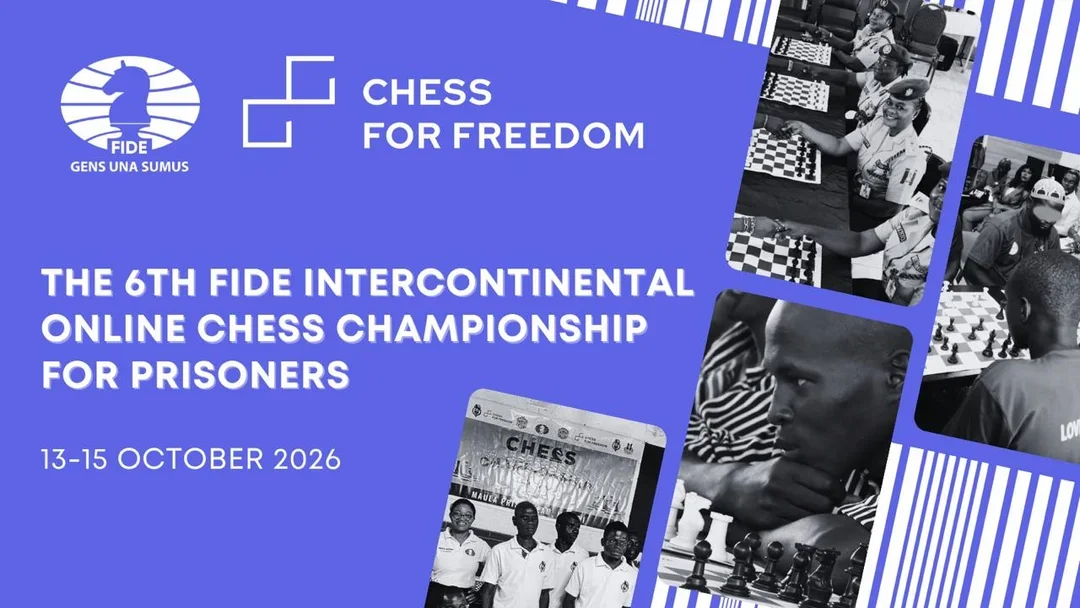
The first International Championship for Prisoners was held in 2021. Since then, it has expanded to six continents. It has nurtured critical thinking, emotional control, teamwork, and social skills that help inmates reintegrate into society. This is a testament to the power of chess to give everyone the opportunity to make better choices on and off the board and to give everyone the chance to be part of a large and growing chess community.
I had the privilege of being invited by Chief Arbiter Nebojsa Baralic to officiate Group 12 of the Americas, which included teams from the United States, Mexico, Argentina, and the Caribbean. The format was a seven-game round robin. I was responsible for monitoring all the players during the Zoom sessions, maintaining the integrity of online chess, entering the game results into a massive Google spreadsheet that contained the matches of all 140 teams, uploading the results to Chess-Results, and addressing any online troubleshooting issues as best as possible. I had officiated online tournaments during the pandemic, but this was the first time I had worked on an online tournament of this magnitude, with my peers and me working across different time zones. The beginning of the tournament was challenging because some of the competing groups experienced online connection issues, but once we got through this hurdle, the tournament progressed in a very organized manner. The players gave it their all in each game for the countries they were representing.
I was fortunate that the champions from the men’s section came from the group I officiated on the first day of the event, which consisted of eight teams (Mexico 1, Argentina, USA-KS-Norton, Grenada, Saint Kitts and Nevis 1, Trinidad & Tobago 2, Guyana, and El Salvador 2). Mexico 1 and Argentina qualified for the next round. The second day of the tournament saw the quarterfinals, which pitted the remaining 24 men’s teams, 8 women’s teams, and 11 youth teams against one another for a place in the three finals.
Due to scheduling conflicts, I was not able to officiate the quarterfinals or the final matches, but I closely followed the results as Mexico 1 and Armenia booked tickets to the men’s final. In the women’s final, Mexico faced off against India, while in the youth final, India faced Serbia. Each final match consisted of two sets, with colors reversed.
Mexico 1 won the men’s final after drawing the first match 2–2 while playing with the white pieces and winning the second match 3–1 with the black pieces. Congratulations to Federal Social Rehabilitation Center Number 18 (CEFERESO-18) in Coahuila, Mexico, for winning the men’s championship. India won the women’s final in a lopsided victory in both matches versus the Mexican women’s team. Congratulations to the Government Children’s Home in Bhopal for deservedly winning the women’s championship. India also won the youth final by edging Serbia 2½–1½ in the first match and drawing the second match. You can replay all the games here.
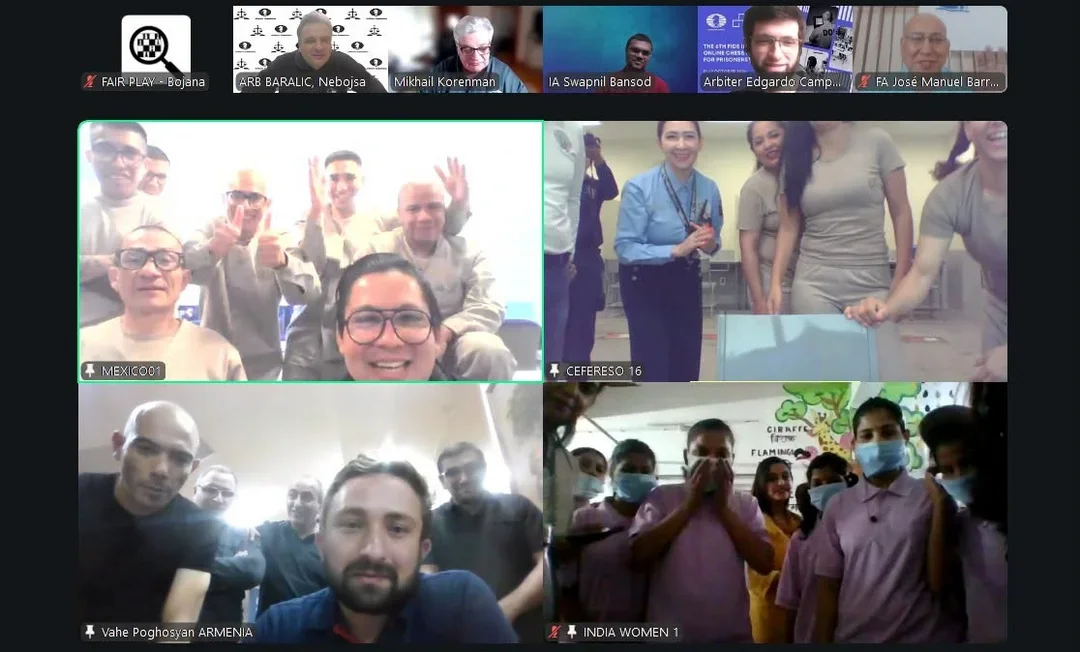
The FIDE 6th Intercontinental Championship for Prisoners was a testament to the power of chess and its ability to break down barriers and walls and unite people from all over the world. The event has brought people together to celebrate chess and given participants another chance to rebuild their lives by using critical thinking, problem-solving, planning, and teamwork to make the right moves and choices. It was an impactful experience for me to be part of this online global event and to work with FIDE and Chief Arbiter Nebojsa Baralic to keep promoting, elevating, and solidifying the opportunities for change and progress that this championship offers to people in prison.
The next Chess for Freedom Conference will be held in Chicago, USA, from March 17-19, 2027. At this crucial conference, representatives from prison administrations, policymakers, researchers, practitioners, and chess federations will come together to discuss and promote best practices for implementing chess-based education and rehabilitation programs in correctional facilities. If you are interested in attending the conference, you can register here.
You can read more about chess in correctional facilities around the world and the magnitude of the Intercontinental Championship for Prisoners here.


Categories
Archives
- November 2026 (8)
- October 2026 (32)
- September 2026 (26)
- August 2026 (28)
- July 2026 (36)
- June 2026 (32)
- May 2026 (30)
- April 2026 (33)
- March 2026 (27)
- February 2026 (24)
- January 2026 (24)
- December 2025 (27)
- November 2025 (29)
- October 2025 (39)
- September 2025 (27)
- August 2025 (29)
- July 2025 (43)
- June 2025 (25)
- May 2025 (24)
- April 2025 (29)
- March 2025 (29)
- February 2025 (20)
- January 2025 (24)
- December 2024 (34)
- November 2024 (18)
- October 2024 (35)
- September 2024 (23)
- August 2024 (27)
- July 2024 (44)
- June 2024 (27)
- May 2024 (31)
- April 2024 (51)
- March 2024 (34)
- February 2024 (24)
- January 2024 (26)
- December 2023 (29)
- November 2023 (26)
- October 2023 (37)
- September 2023 (27)
- August 2023 (37)
- July 2023 (47)
- June 2023 (33)
- May 2023 (37)
- April 2023 (45)
- March 2023 (37)
- February 2023 (28)
- January 2023 (31)
- December 2022 (23)
- November 2022 (32)
- October 2022 (31)
- September 2022 (19)
- August 2022 (39)
- July 2022 (32)
- June 2022 (35)
- May 2022 (21)
- April 2022 (31)
- March 2022 (33)
- February 2022 (21)
- January 2022 (27)
- December 2021 (36)
- November 2021 (34)
- October 2021 (25)
- September 2021 (25)
- August 2021 (41)
- July 2021 (36)
- June 2021 (29)
- May 2021 (29)
- April 2021 (31)
- March 2021 (33)
- February 2021 (28)
- January 2021 (29)
- December 2020 (38)
- November 2020 (40)
- October 2020 (41)
- September 2020 (35)
- August 2020 (38)
- July 2020 (36)
- June 2020 (46)
- May 2020 (42)
- April 2020 (37)
- March 2020 (60)
- February 2020 (38)
- January 2020 (45)
- December 2019 (34)
- November 2019 (35)
- October 2019 (42)
- September 2019 (45)
- August 2019 (56)
- July 2019 (44)
- June 2019 (35)
- May 2019 (40)
- April 2019 (48)
- March 2019 (61)
- February 2019 (39)
- January 2019 (30)
- December 2018 (29)
- November 2018 (51)
- October 2018 (45)
- September 2018 (29)
- August 2018 (49)
- July 2018 (35)
- June 2018 (31)
- May 2018 (39)
- April 2018 (31)
- March 2018 (26)
- February 2018 (33)
- January 2018 (30)
- December 2017 (26)
- November 2017 (24)
- October 2017 (30)
- September 2017 (30)
- August 2017 (31)
- July 2017 (27)
- June 2017 (32)
- May 2017 (26)
- April 2017 (37)
- March 2017 (28)
- February 2017 (30)
- January 2017 (27)
- December 2016 (29)
- November 2016 (24)
- October 2016 (32)
- September 2016 (31)
- August 2016 (27)
- July 2016 (24)
- June 2016 (26)
- May 2016 (19)
- April 2016 (30)
- March 2016 (36)
- February 2016 (28)
- January 2016 (32)
- December 2015 (26)
- November 2015 (23)
- October 2015 (16)
- September 2015 (28)
- August 2015 (28)
- July 2015 (6)
- June 2015 (1)
- May 2015 (2)
- April 2015 (1)
- February 2015 (3)
- January 2015 (1)
- December 2014 (1)
- July 2010 (1)
- October 1991 (1)
- August 1989 (1)
- January 1988 (1)
- December 1983 (1)