


John D. “Jay” Rockefeller IV passed away on Friday; he was 89. A former U.S. senator and governor of West Virginia, he holds a special place in the chess community.
Rockefeller sponsored the 2010 Senate resolution officially establishing the second Saturday in October as National Chess Day; until then, the day was in a 1976 presidential proclamation that had no real effect.
He was also the father of US Chess Vice President John Rockefeller V, an Executive Board member and former chair of the Scholastic Committee.
The former senator wrote a My Best Move piece for the October 2017 Chess Life; we’re reprinting it below, and you can see that while he didn’t play chess himself, he saw the effect it had on his son and grandchildren. “In some ways,” he wrote, “I was the ideal sponsor because I’m not a chess player: I understood chess’ intrinsic value through the impartial lens of an outsider.”
US Chess extends its deepest condolences to the Rockefeller family.
My Best Move
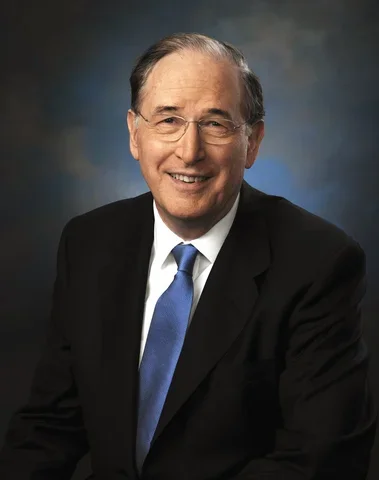
Toward the end of my junior year at Harvard, I had what can best be described as a “light bulb” moment. I’d just been elected president of a club, and, in the midst of all the attention it generated, I began asking myself why any of it mattered. So I went to a professor and said I wanted to do something more meaningful — and I wound up moving to Japan for three years. There I had the opportunity to experience a cross-section of life outside of the United States. What struck me quite vividly was the enormous disparity between the Harvard bubble and peoples’ everyday struggles beyond those sheltered ivy walls. The stark contrast completely shifted my focus toward public service. When I returned to the United States, I finished my Harvard degree in Far Eastern culture and history, then entered Yale for graduate work in Far Eastern studies.
I never made it through graduate school because I was offered the opportunity to work in the fledgling Peace Corps during John F. Kennedy’s administration. I served as the operations director for the program in the Philippines and as a special assistant to the director, R. Sargent Shriver. A few years later, when I learned about VISTA’s (Volunteers In Service to America) antipoverty program, I volunteered to move to Emmons, West Virginia, a coal-mining town that was one of the poorest areas in the nation. From that moment on, I never looked back. West Virginia became my home, the place where my wife, Sharon, and I raised our family, and where I began my lifelong career in public service. I served the citizens of West Virginia for over five decades — in the state legislature, as secretary of state, as governor, and as their senator.
My son, John, was fascinated by chess as a child, but he didn’t become involved in rated tournaments until his three children discovered chess. All played in dozens of rated tournaments — the youngest (age 10) is at 75 and counting — and John is a senior tournament director, certified coach, and active at the state and national level. It was through John that I became involved in sponsoring the Senate resolution that officially created National Chess Day. In some ways, I was the ideal sponsor because I’m not a chess player: I understood chess’ intrinsic value through the impartial lens of an outsider. I firmly believe chess is more than just a game. It teaches self-discipline, acceptance in the face of a loss, and how to quickly adjust and adapt to changing situations. And it’s diverse. Age, gender, and race don’t matter when two people are squaring off over the board.
Getting the resolution passed through the Senate was relatively smooth, but was not without a few hurdles, the most significant being the need for a co-sponsor. Fortunately, Senator Kay Bailey Hutchison (TX) stepped up, Lamar Alexander (TN) added his support, and on September 29, 2010, the U.S. Senate, in S. Res. #672, unanimously proclaimed October 9, 2010 as the first official National Chess Day. I am proud to have helped make this happen — and it might never had happened if I hadn’t entered public service.
Clearly, My Best Move was leaving Harvard in my senior year and going to Japan. It was there, living in a paper and wood shack in the middle of a rice field, that I gained empathy for other cultures, and I realized that I wanted to make a difference in the world. My experiences in Japan put me on the track of public service, and my life has been much better for it.
About National Chess Day
by Dan Lucas
In 1976, President Gerald Ford issued a proclamation naming the second Saturday in October as National Chess Day. Although the sentiment was well-meaning, it was unofficial and unsupported, and eventually interest faded. In 2009, new Executive Board member Mike Atkins “noticed some conversations about National Chess Day in the US Chess ‘Issues’ forum and thought about reviving it.”
Mike's first step was to find an ally in Congress. “I knew that Senator Rockefeller’s son, John, was a new organizer/ tournament director in Baltimore as well as a chess parent. I approached him and asked if he could introduce me to his father with respect to a Senate-declared National Chess Day.”
John remembers, “When Mike Atkins spoke with me about the idea, I mentioned it to my father on the phone, and he told me to contact his legislative assistant, Barbara Pryor. I put Mike in email contact with Barbara and they took it from there.”
Mike continues, “We [Barbara and I] worked for a number of months on the wording of the resolution, making sure the text was accurate and correctly captured the statistics of players” before Senator Rockefeller introduced the resolution.
Their hard work paid off. On September 29, 2010, the Senate unanimously approved the resolution to proclaim October 9, 2010, as the first official National Chess Day. In appreciation for their efforts, Barbara Pryor received the Special Friend of US Chess award in 2012 and Senator Rockefeller was awarded the same honor in 2017.


Categories
Archives
- November 2026 (7)
- October 2026 (32)
- September 2026 (26)
- August 2026 (28)
- July 2026 (36)
- June 2026 (32)
- May 2026 (30)
- April 2026 (33)
- March 2026 (27)
- February 2026 (24)
- January 2026 (24)
- December 2025 (27)
- November 2025 (29)
- October 2025 (39)
- September 2025 (27)
- August 2025 (29)
- July 2025 (43)
- June 2025 (25)
- May 2025 (24)
- April 2025 (29)
- March 2025 (29)
- February 2025 (20)
- January 2025 (24)
- December 2024 (34)
- November 2024 (18)
- October 2024 (35)
- September 2024 (23)
- August 2024 (27)
- July 2024 (44)
- June 2024 (27)
- May 2024 (31)
- April 2024 (51)
- March 2024 (34)
- February 2024 (24)
- January 2024 (26)
- December 2023 (29)
- November 2023 (26)
- October 2023 (37)
- September 2023 (27)
- August 2023 (37)
- July 2023 (47)
- June 2023 (33)
- May 2023 (37)
- April 2023 (45)
- March 2023 (37)
- February 2023 (28)
- January 2023 (31)
- December 2022 (23)
- November 2022 (32)
- October 2022 (31)
- September 2022 (19)
- August 2022 (39)
- July 2022 (32)
- June 2022 (35)
- May 2022 (21)
- April 2022 (31)
- March 2022 (33)
- February 2022 (21)
- January 2022 (27)
- December 2021 (36)
- November 2021 (34)
- October 2021 (25)
- September 2021 (25)
- August 2021 (41)
- July 2021 (36)
- June 2021 (29)
- May 2021 (29)
- April 2021 (31)
- March 2021 (33)
- February 2021 (28)
- January 2021 (29)
- December 2020 (38)
- November 2020 (40)
- October 2020 (41)
- September 2020 (35)
- August 2020 (38)
- July 2020 (36)
- June 2020 (46)
- May 2020 (42)
- April 2020 (37)
- March 2020 (60)
- February 2020 (38)
- January 2020 (45)
- December 2019 (34)
- November 2019 (35)
- October 2019 (42)
- September 2019 (45)
- August 2019 (56)
- July 2019 (44)
- June 2019 (35)
- May 2019 (40)
- April 2019 (48)
- March 2019 (61)
- February 2019 (39)
- January 2019 (30)
- December 2018 (29)
- November 2018 (51)
- October 2018 (45)
- September 2018 (29)
- August 2018 (49)
- July 2018 (35)
- June 2018 (31)
- May 2018 (39)
- April 2018 (31)
- March 2018 (26)
- February 2018 (33)
- January 2018 (30)
- December 2017 (26)
- November 2017 (24)
- October 2017 (30)
- September 2017 (30)
- August 2017 (31)
- July 2017 (27)
- June 2017 (32)
- May 2017 (26)
- April 2017 (37)
- March 2017 (28)
- February 2017 (30)
- January 2017 (27)
- December 2016 (29)
- November 2016 (24)
- October 2016 (32)
- September 2016 (31)
- August 2016 (27)
- July 2016 (24)
- June 2016 (26)
- May 2016 (19)
- April 2016 (30)
- March 2016 (36)
- February 2016 (28)
- January 2016 (32)
- December 2015 (26)
- November 2015 (23)
- October 2015 (16)
- September 2015 (28)
- August 2015 (28)
- July 2015 (6)
- June 2015 (1)
- May 2015 (2)
- April 2015 (1)
- February 2015 (3)
- January 2015 (1)
- December 2014 (1)
- July 2010 (1)
- October 1991 (1)
- August 1989 (1)
- January 1988 (1)
- December 1983 (1)