


Editor's note: For Black History Month, US Chess invited Dr. Daaim Shabazz to write a reflection on Black chess history as a complement to our player and coach profiles published earlier this month. As it was The Chess Drum's 25th anniversary on February 12, Dr. Shabazz shares a bit of personal history, as well, going into the origin of The Chess Drum as well as exploring the past, present, and future of Black chess in the U.S. A longer version of this piece is available on The Chess Drum.
As we approach the end of Black History Month, something important in chess happened 25 years ago. At midnight on February 12, 2001, The Chess Drum website went live. The website started with eight pages and would be yet another platform to extol the beauty of chess.
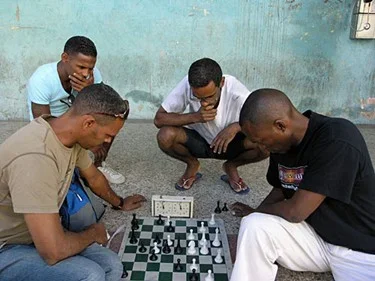
However, this site was dedicated to highlighting chess players across the African Diaspora, a segment that is often overlooked.. Originally designed to be a quarterly magazine, the idea of creating a digital platform became more practical as websites became key portals for chess news and content in the late-90s. The name is symbolic of an African communicative vehicle.
As a scholastic player, I was a voracious reader of Chess Life and scoured the pages for the latest theoretical games from top players. I also took a keen interest in photography and kept an eye on the up-and-coming players. However, I noticed a lack of diversity in the players represented. There were occasional cameo appearances, but it was difficult to know whether chess was finding inroads in the Black community. It was only later that I found more examples of Black chess excellence.
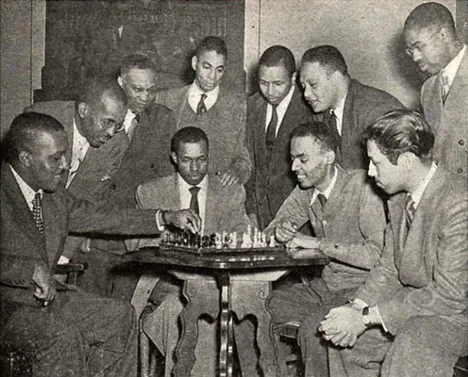
As a scholastic player, I attended Chicago Vocational High School on the city’s southside. The school had 4000-5000 students and over 100 players in its chess club. We won the city championship in my senior year and were a traditional powerhouse. After winning the Illinois Junior Championship (under-21), I continued to improve. However, I found it strange that just a few years later, I remained the only active player from my high school club. When a master-level player in Chicago asked me about the low number of Black masters, it raised another question. Why did so few Black players seek higher heights in chess? I went looking for answers.
The Beat Begins!
There were many ideas about what could give the African Diaspora greater visibility. Some players even considered establishing a separate federation. My goal was to make the African Diaspora a more integral part of the global chess community. I wanted to educate the chess world about the African Diaspora while educating the African Diaspora about the chess world.
After discussing ideas with many U.S. Chess officials and others who would lend me an ear, I decided to write a marketing plan for an international chess network for the African Diaspora. The following summer, I interned at Sports Illustrated in New York and got a closer look at the magazine formation process. I frequented the iconic Washington Square Park, interacted with famous chess hustlers, and reveled in the exciting scene. I also shared my ideas with a young Maurice Ashley, whom I met at the 1989 U.S. Open in Chicago.
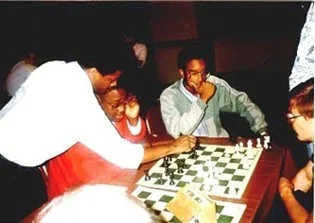
During my time in New York, I also met Jerry Bibuld, with whom I had previously exchanged letters. Jerry was a long-time advocate of documenting Black chess players worldwide. His early contributions of photos helped fill the void of Black masters in chess media.
Jerry, Maurice, and I traveled to the 1990 World Open at the old Adams Mark in Philadelphia to watch the action. I hawked my marketing plan and discussed it with several players, including the legendary Philadelphia master, Wilbert Paige. At the end of an eventful day, Maurice told me never to forget about July 3rd, 1990. I didn’t.
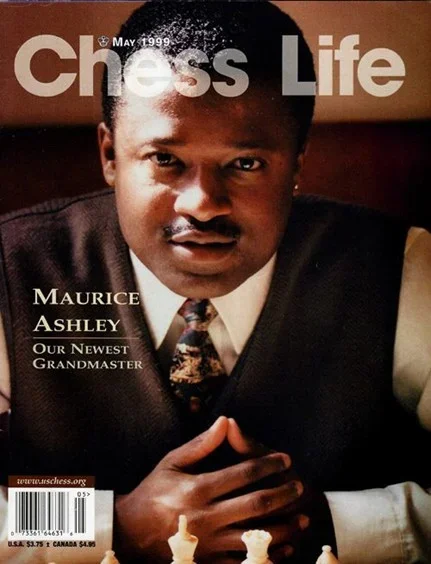
Ten years after meeting Ashley, he became the first African-American Grandmaster and graced the cover of the May 1999 Chess Life. As I retrieved the magazine from the mailbox, I looked at his photo on the cover for several minutes. It was yet another sign to dust off the marketing plan I had written ten years earlier. In 2001, the marketing plan for a Black chess platform came into fruition as I launched a rather crude but novel website. The chess beat had begun!
Missing Media
There is a reason that it becomes necessary to highlight this overlooked demographic segment. First, it shows the universal appeal of chess. This may be attractive to corporate sponsors wanting to reach a wider audience. Second, it taps a potential market of new players. Lastly, it allows young minds to develop and perhaps use chess as an academic platform. On The Chess Drum, there is an important article titled, “Former African-American standouts reap benefits of chess.” It profiles six players who have all used chess as a gateway to success, academically and professionally.
Chess is not a desired professional pursuit in the Black community, but the passion is ever-present. Some of my earliest stories were on Jamaican chess, Zambian star Amon Simutowe, and the impassioned impresario, Emory Tate!!! In 2017, I released a book titled, Triple Exclam: The Life and Games of Emory Tate, Chess Warrior. Emory was not merely a chess player, but a chess artist. His creative ideas and ability to generate attacking chess made him a fan favorite.
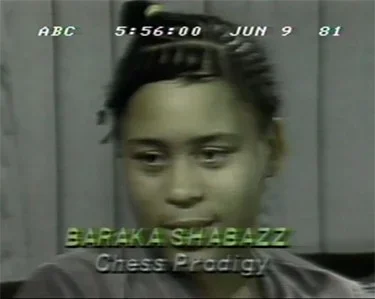
During this journey, I have uncovered many novel stories. In fact, one of the most important figures covered at The Chess Drum was that of Baraka Shabazz (no relation). She was one of the first media sensations during the early 80s, but her rapid rise was followed by a precipitous fall only a few years after competing in the 1981 Women's Chess Championship.
The Baraka Shabazz story showed the overwhelming effects of media exposure on a young star. Unable to meet her parents’ high expectations, she quit chess and wanted nothing more to do with the game. One of the saddest stories in chess and a lesson we should heed.
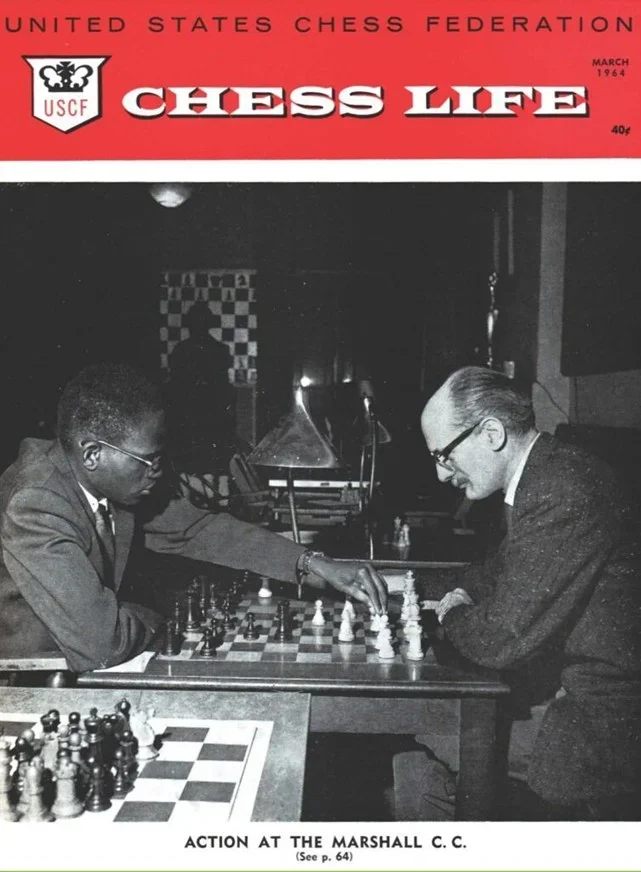
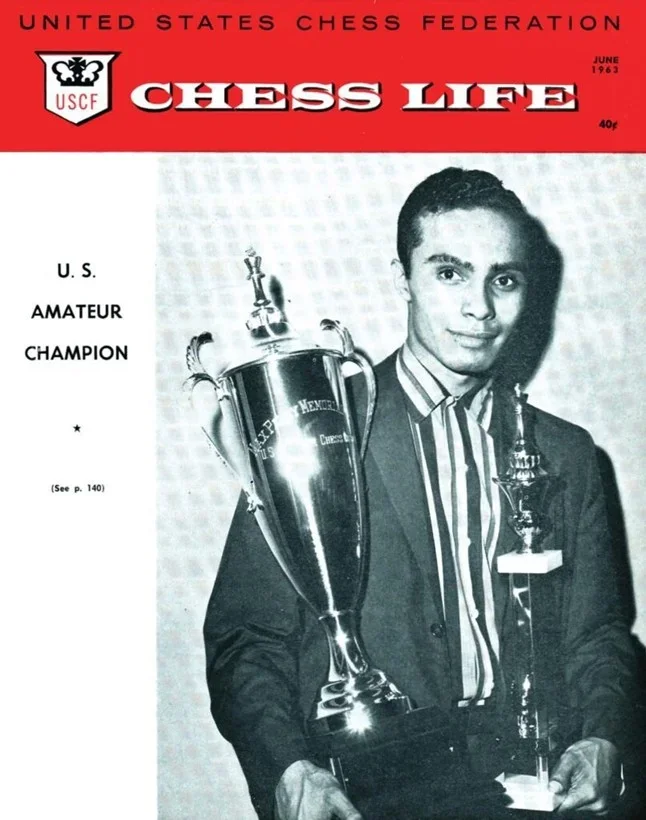
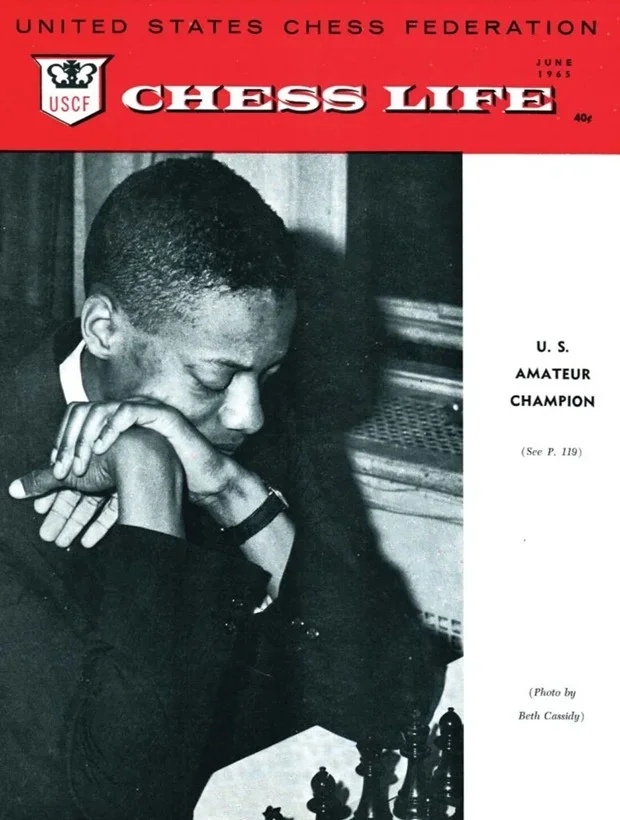
In 1950, Chess Life Editor Montgomery Major proudly stated that "in many enlightened communities, no barrier has been placed to bar any group because of race or creed or color." He also mentioned that there were "Negros" competing in the U.S. Junior and U.S. Open. However, there were few visual images of Black players appearing in Chess Life. That would begin to change during the turbulent 60s. Walter Harris, who became the first Black national master in 1960, graced the cover of March 1964 Chess Life, followed by Kenneth Clayton (June 1963) and Frank Street (June 1965).
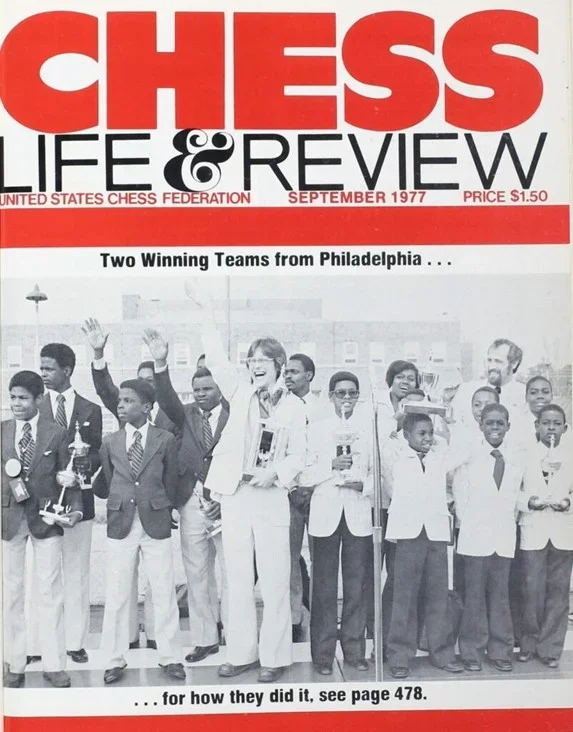
There was also the rise of young Leroy Jackson (Muhammad), who had a spectacular run in the 1960s. Vaux Junior High School of Philadelphia won eight national championships (seven consecutive) and also made the cover in 1977.
The Theophilus Thompson Mystery
In the month of February, we are encouraged to reflect on the accomplishments of the African Diaspora. In the 20th century, we found that many historical treasures were overlooked because of the low status Black people held in society. There were many inventions credited to Black pioneers from the slave era who sought to be more efficient in their duties.
In 1926, Dr. Carter G. Woodson created "Negro History Week" to highlight the contributions and accomplishments of people of African descent. The tradition has evolved into "Black History Month," and it remains a tradition in the Black community. If not for these types of traditions, perhaps there would not be the type of examples to inspire future generations.
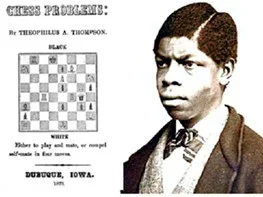
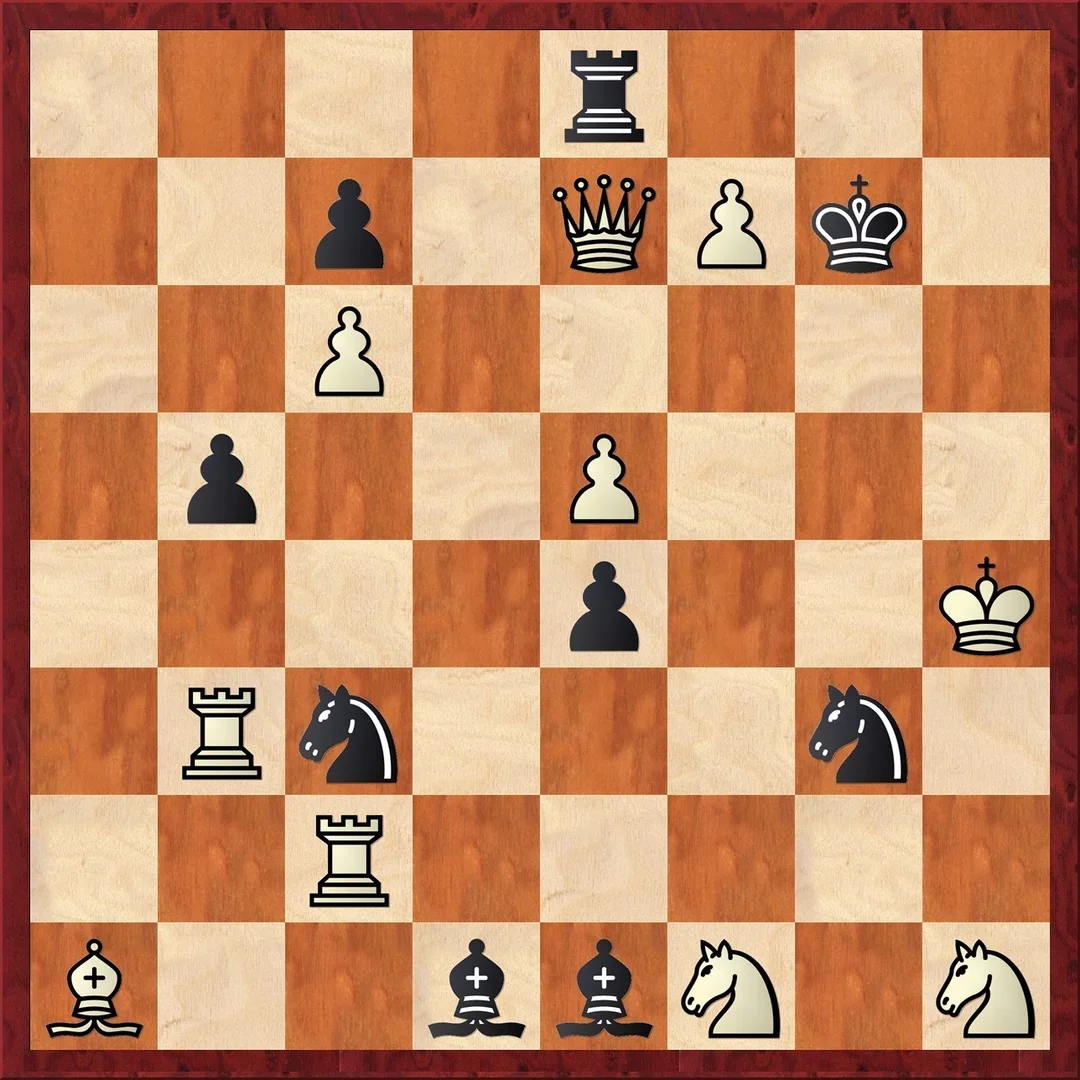
One of the most prominent figures covered on The Chess Drum was Theophilus Thompson, a problemist from Frederick, Maryland. Born in 1855, he learned chess at age 17 after watching an off-hand game. He remembered the moves, borrowed a chess book and set, and a year later, he composed a problem book. He would disappear from the scene, and for decades, no one knew what had happened.
Even a tribute by Larry Parr in the June 1986 Chess Life considered his disappearance a mystery. In 2019, I received an e-mail from a member of the African American Resources, Cultural Heritage Society of Frederick County (AARCH) who sent an obituary from the Frederick Examiner. It showed that Thompson had died in 1881 of tuberculosis, known then as “consumption,” at age 26.
The Universality of Chess
What has been my proudest moment in these 25 years? It occurred only during the site's first year. It was the Wilbert Paige Chess Memorial, a tournament featuring several of the strongest players in the African Diaspora. The field was led by a 19-year-old Zambian IM Amon Simutowe and strengthened by Canada's IM Michael Schleifer and South Africa's IM Watu Kobese. Hosted by Harlem Educational Activity Fund (HEAF), Maurice Ashley was the host and commentator, Jones Murphy Jr., the sponsor, and Jerry Bibuld was the organizer and arbiter.
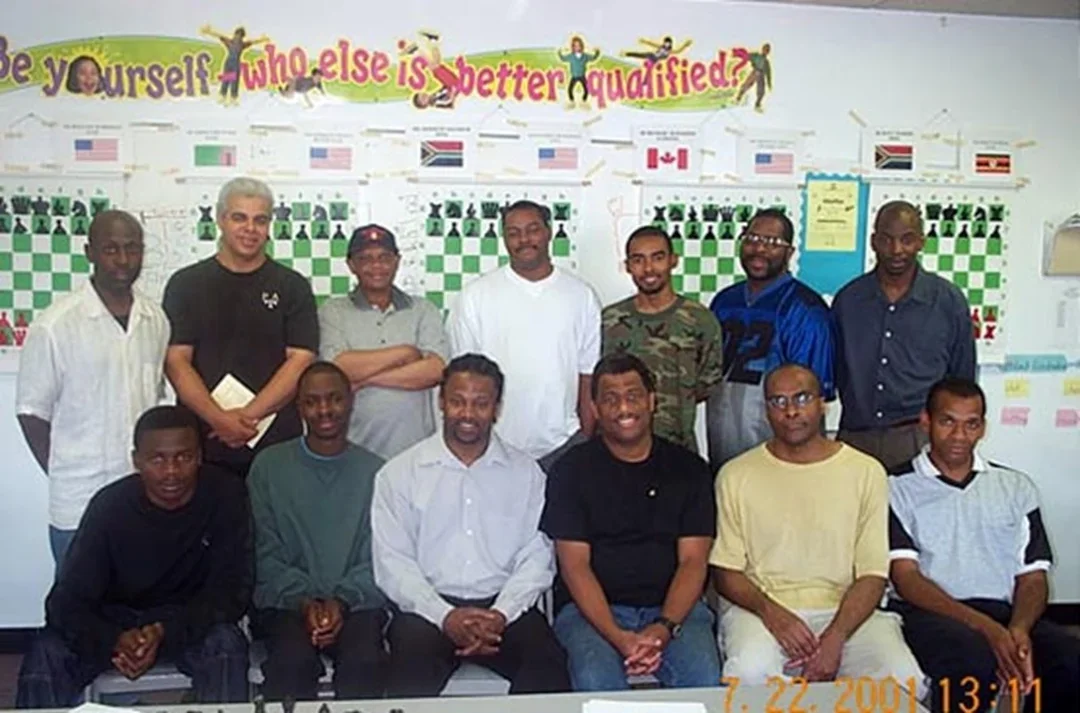
Seated (L-R): IM Amon Simutowe, NM Grace Nsubuga, GM Maurice Ashley (commentator), FM Ronald Simpson, IM Michael Schleifer, FM Stephen Muhammad. Standing (L-R): NM Jerald Times (commentator), NM Ernest Colding, IM Watu Kobese, FM William Morrison, FM Kenny Solomon, NM Norman Rogers, NM Elvin Wilson (commentator). In this photo, both Simutowe (2008) and Solomon (2015) became Grandmasters. Muhammad became an International Master. As of 2022, two players in the photo are now deceased: Schleifer (2009), Simpson (2013) and Muhammad (2024).
Stephen Muhammad won the tournament, scored his first IM norm, and would later qualify for the U.S. championship three times. There was such a palpable energy present during the two weeks. In the neighborhood where the "Harlem Renaissance" enthralled the world, ten chess players assembled in the famous Hotel Theresa. It was also near the bustling 125th Street and a short walk from the Apollo Theater, where Black entertainers sought to showcase their talents on the world stage. Chess would have its own “Harlem Renaissance.”
While there have been many current breakthroughs, such as Brewington Hardaway earning the Grandmaster title and master's titles earned by Shama Yisrael and Jessica Hyatt, there is hope that chess will continue to tap this underserved demographic.
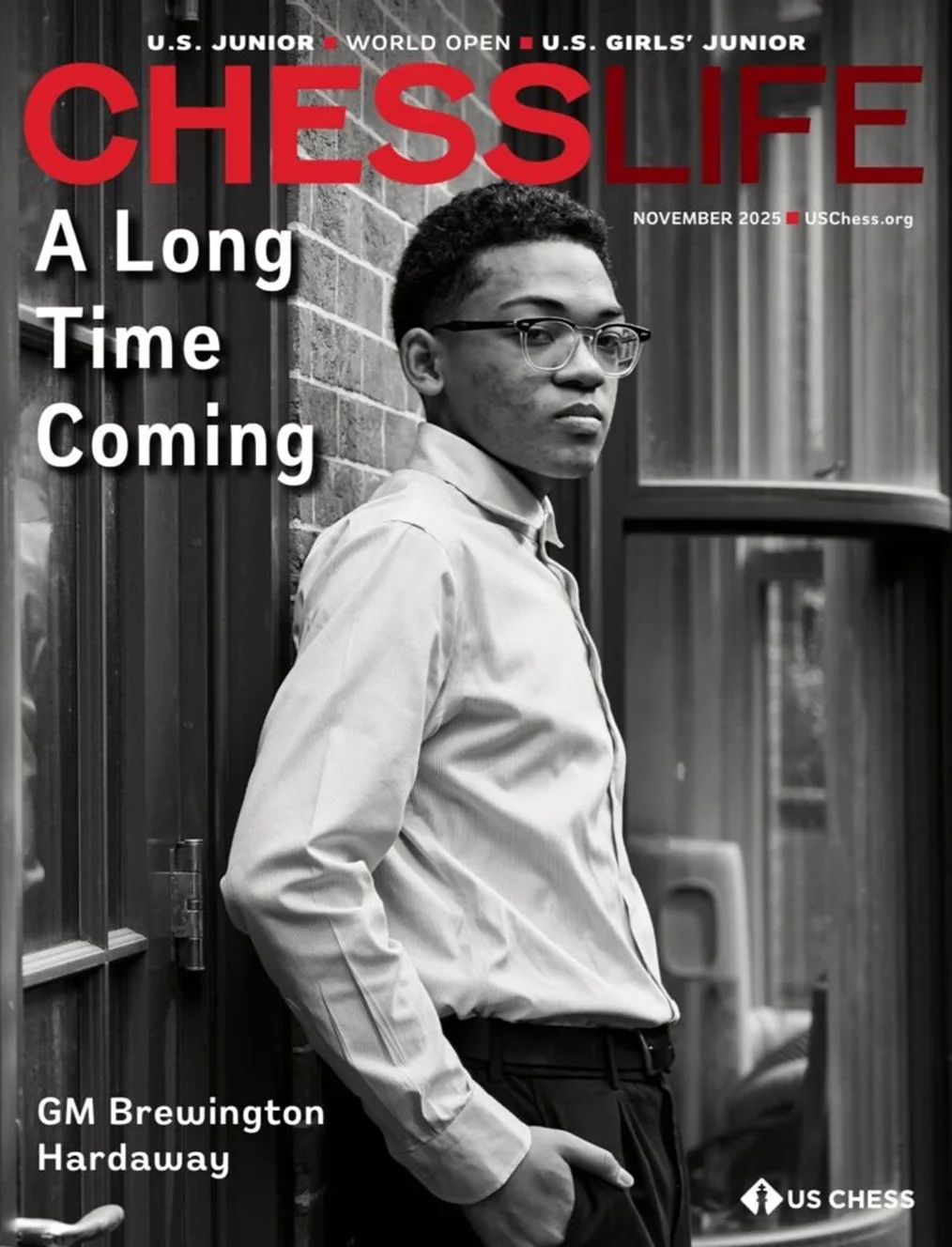
Having traveled to six Olympiad tournaments, two World Championships, Grand Chess Tour events and visited many chess communities worldwide, it is such an enlightening experience to see the beauty of chess and its universality. The Chess Drum hopes to continue to keep the beat going in coming years. Thank you for your support!


Categories
Archives
- October 2026 (5)
- September 2026 (27)
- August 2026 (28)
- July 2026 (36)
- June 2026 (32)
- May 2026 (30)
- April 2026 (33)
- March 2026 (27)
- February 2026 (24)
- January 2026 (24)
- December 2025 (27)
- November 2025 (29)
- October 2025 (39)
- September 2025 (27)
- August 2025 (29)
- July 2025 (43)
- June 2025 (25)
- May 2025 (24)
- April 2025 (29)
- March 2025 (29)
- February 2025 (20)
- January 2025 (24)
- December 2024 (34)
- November 2024 (18)
- October 2024 (35)
- September 2024 (23)
- August 2024 (27)
- July 2024 (44)
- June 2024 (27)
- May 2024 (31)
- April 2024 (51)
- March 2024 (34)
- February 2024 (24)
- January 2024 (26)
- December 2023 (29)
- November 2023 (26)
- October 2023 (37)
- September 2023 (27)
- August 2023 (37)
- July 2023 (47)
- June 2023 (33)
- May 2023 (37)
- April 2023 (45)
- March 2023 (37)
- February 2023 (28)
- January 2023 (31)
- December 2022 (23)
- November 2022 (32)
- October 2022 (31)
- September 2022 (19)
- August 2022 (39)
- July 2022 (32)
- June 2022 (35)
- May 2022 (21)
- April 2022 (31)
- March 2022 (33)
- February 2022 (21)
- January 2022 (27)
- December 2021 (36)
- November 2021 (34)
- October 2021 (25)
- September 2021 (25)
- August 2021 (41)
- July 2021 (36)
- June 2021 (29)
- May 2021 (29)
- April 2021 (31)
- March 2021 (33)
- February 2021 (28)
- January 2021 (29)
- December 2020 (38)
- November 2020 (40)
- October 2020 (41)
- September 2020 (35)
- August 2020 (38)
- July 2020 (36)
- June 2020 (46)
- May 2020 (42)
- April 2020 (37)
- March 2020 (60)
- February 2020 (38)
- January 2020 (45)
- December 2019 (34)
- November 2019 (35)
- October 2019 (42)
- September 2019 (45)
- August 2019 (56)
- July 2019 (44)
- June 2019 (35)
- May 2019 (40)
- April 2019 (48)
- March 2019 (61)
- February 2019 (39)
- January 2019 (30)
- December 2018 (29)
- November 2018 (51)
- October 2018 (45)
- September 2018 (29)
- August 2018 (49)
- July 2018 (35)
- June 2018 (31)
- May 2018 (39)
- April 2018 (31)
- March 2018 (26)
- February 2018 (33)
- January 2018 (30)
- December 2017 (26)
- November 2017 (24)
- October 2017 (30)
- September 2017 (30)
- August 2017 (32)
- July 2017 (27)
- June 2017 (32)
- May 2017 (26)
- April 2017 (37)
- March 2017 (28)
- February 2017 (30)
- January 2017 (27)
- December 2016 (29)
- November 2016 (24)
- October 2016 (32)
- September 2016 (31)
- August 2016 (27)
- July 2016 (24)
- June 2016 (26)
- May 2016 (19)
- April 2016 (30)
- March 2016 (37)
- February 2016 (27)
- January 2016 (33)
- December 2015 (25)
- November 2015 (23)
- October 2015 (16)
- September 2015 (28)
- August 2015 (28)
- July 2015 (6)
- June 2015 (1)
- May 2015 (2)
- April 2015 (1)
- February 2015 (3)
- January 2015 (1)
- December 2014 (1)
- July 2010 (1)
- October 1991 (1)
- August 1989 (1)
- January 1988 (1)
- December 1983 (1)