


Hitting the road with GM Jianchao Zhou
Editor's note: this story first appeared in the July 2026 issue of Chess Life magazine. Consider becoming a US Chess member for more content like this — access to digital editions of both Chess Life and Chess Life Kids is a member benefit, and you can receive print editions of both magazines for a small add-on fee.
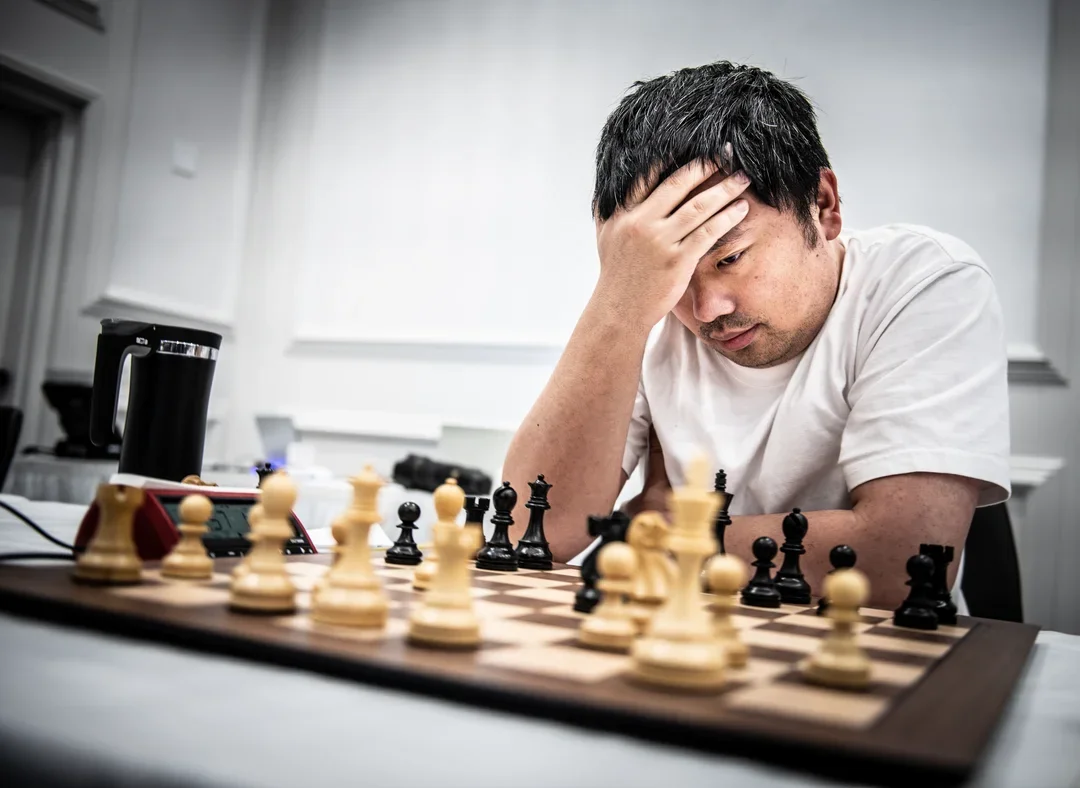
Want to win the Grand Prix? It takes more than you might think.
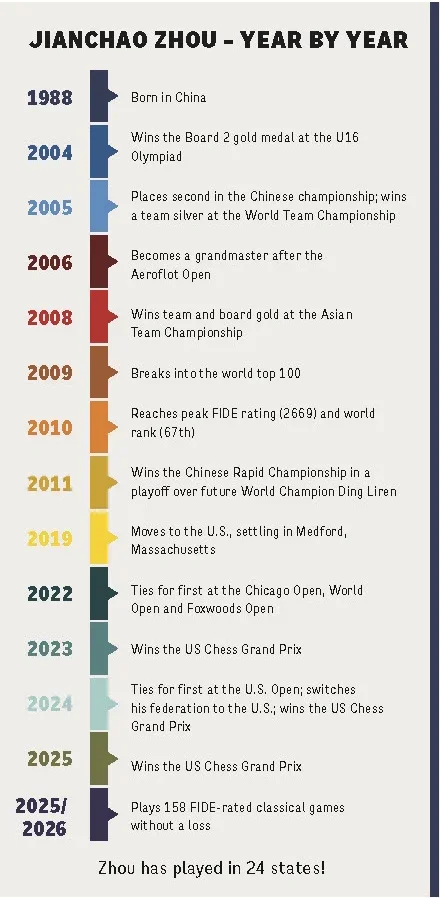
GM Jianchao Zhou has won it three years in a row, and he’s got a sizable lead in this year’s standings.
And as long as he’s in the running, it’s going to take a lot to unseat him.
You have to be a great chessplayer, of course: Zhou has been a full-time player since age 14 in his native China, a grandmaster at 17. He moved to Medford, Mass., in 2019, and in addition to his tournament successes he recently broke the record for most FIDE-rated games in a row without a loss — 158 games in 26 tournaments from May 2025 to February of this year.
But the Grand Prix isn’t about one tournament, or even a few: Tournament organizers offer Grand Prix points to high finishers based on the size of the prize fund, and it’s a year-long contest. So Zhou criss-crosses the country in search of points virtually every weekend.
That means a lot of red-eye flights, a lot of bus rides (some of which are cancelled), and a lot of games against amateur players looking for an upset, Zhou says through his partner, Jocelyn, who acts as an interpreter. Even though organizers sometimes give him conditions to play, it still means a lot of hotel rooms, sometimes an hour’s walk away if the room rates are too expensive.
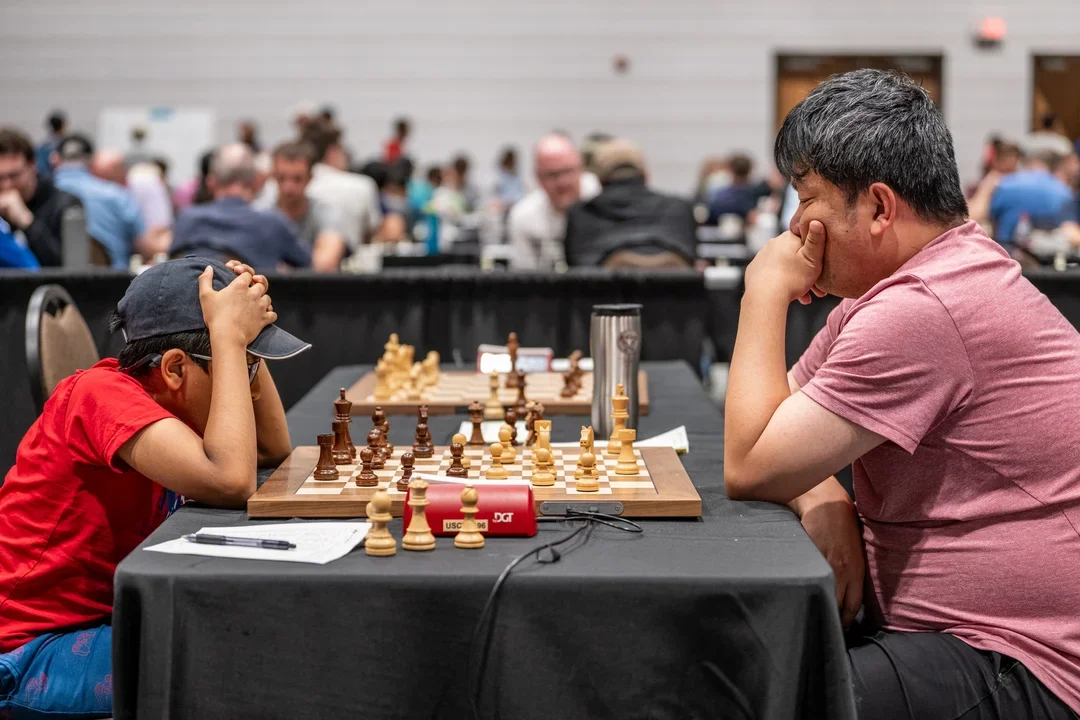
It also means seeing a lot of American chess from a grass-roots perspective. Zhou’s first choice is the larger tournaments where the most points are, such as the World Open, National Open, and U.S. Masters. “I don’t care [whether] I can win,” he says; “I prefer the strongest tournament. … I like to play with the strong, strong players, to play some interesting games.”
But sometimes he’s in Nebraska for the 50th anniversary celebration of the 1975 U.S. Open, Georgia for the Phillip O’Neal Taylor State Championship, Wyoming for the Community Foundation Open, or Rhode Island for the Lou Giarrusso Memorial, which didn’t even offer any Grand Prix points. (“He was a very inspiring and passionate person,” Zhou says of the 1300-player who passed away in 2024 at the age of 101.)
‘He goes’
“As long as the schedule permits, and he’s available, he goes to the tournament,” Jocelyn says. “He is very adaptive to the environment. During traveling time, he does a lot of the most difficult puzzles, and if he feels tired, he just takes naps on the airplane — just a couple hours’ sleep will recharge him. He has a passion for chess, so a difficulty, like the logistics, is not a big issue for him.”
Zhou coaches a few strong young players in Massachusetts, as well as some online coaching, and is sometimes engaged to give a formal lecture or do analysis at tournaments he’s playing in. But there are a lot of informal conversations too.
While there are generally at least a few GMs in the field at any tournament he plays in, he often ends up playing untitled players, even non-masters, and says it’s a mutual learning experience — he learns a lot about openings (especially obscure ones) and is usually quick to go over a game with an opponent. “It benefits the whole community.”
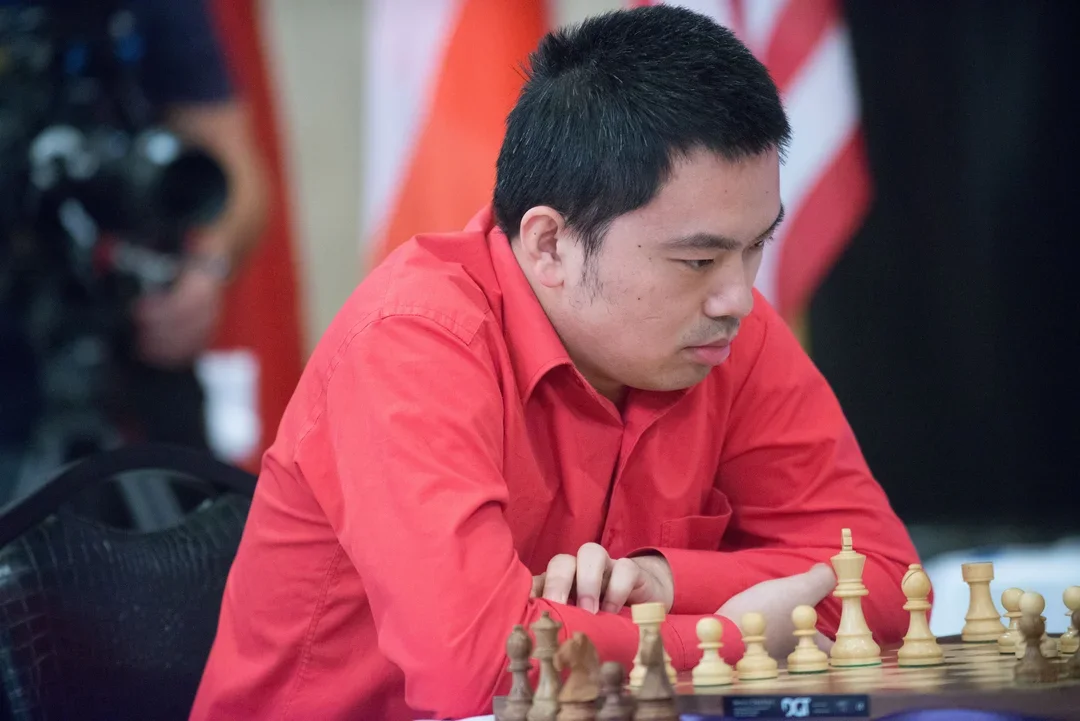
First prize for the Grand Prix is $5,000. That’s a nice pot of money, but it wouldn’t seem worth chasing all over the country for. But Zhou says he wins 70 to 80% of the tournaments he plays in, and the first prize is important, given all the costs of his travel. First place can generally cover costs, while anything less could present a problem. “That kind of motivates you — you’re gonna go for the best.”
‘Very difficult’
Zhou moved to Massachusetts when he came to the States to join up with a chessplaying friend, and says the U.S. and China are roughly equal in chess strength as far as the top 10 or so. But with so many more strong open tournaments in the States, “the entire level is stronger here,” Jocelyn says. “Everyone has more chances.”
His own training consists mostly of deep analysis of puzzles and other positions. Jocelyn says he will play a 10-round blitz tournament at the Boylston Chess Club, come home at midnight, and stay up until 3 a.m. analyzing the games.
Zhou often returns to the same tournaments and communities year after year, and he’s heartened when he sees local club and tournament scenes getting stronger — the establishment and growth of the Charlotte Chess Center, the Space Coast Chess Foundation, and the Ocean State Chess Association are three examples he cited.
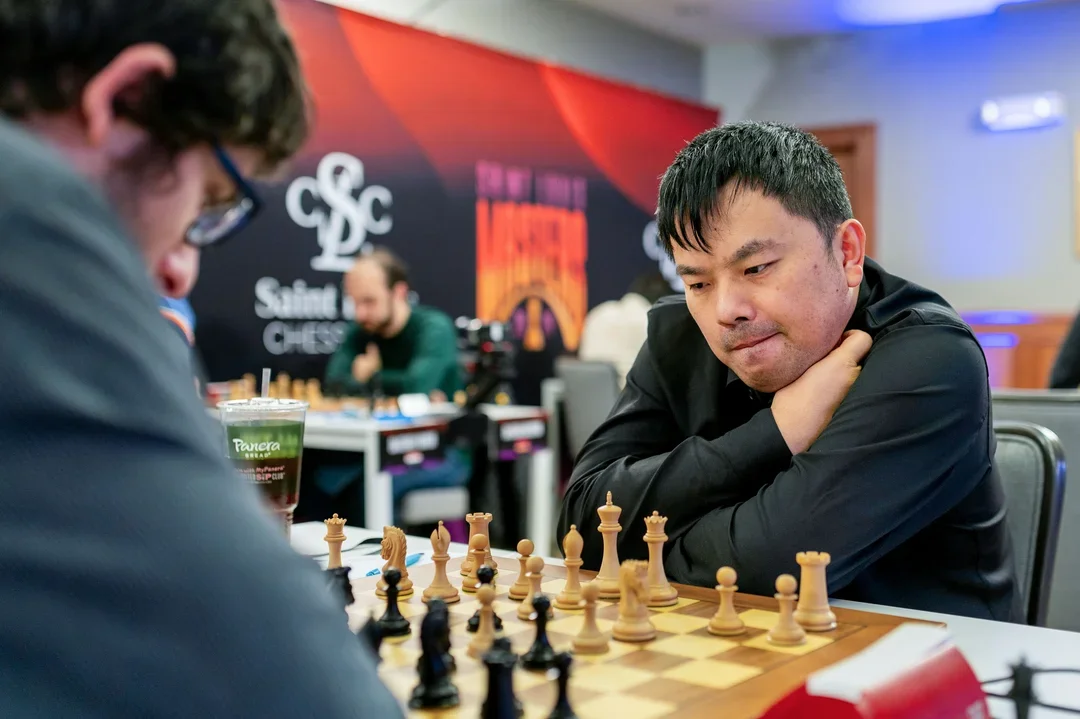
“In Ohio,” he says, “the parents, the kids, they’re very committed, and they put a lot of effort on the chess, growing the chess community.”
An opponent looking to knock Zhou off has a tough task, but his own advice is to find a new move in the opening and catch him unaware in an unclear position with a lot of pieces still on the board.
“Want to beat me? Very difficult.”
In The Arena: Five Games Annotated by Jianchao Zhou


Categories
Archives
- October 2026 (24)
- September 2026 (26)
- August 2026 (28)
- July 2026 (36)
- June 2026 (32)
- May 2026 (30)
- April 2026 (33)
- March 2026 (27)
- February 2026 (24)
- January 2026 (24)
- December 2025 (27)
- November 2025 (29)
- October 2025 (39)
- September 2025 (27)
- August 2025 (29)
- July 2025 (43)
- June 2025 (25)
- May 2025 (24)
- April 2025 (29)
- March 2025 (29)
- February 2025 (20)
- January 2025 (24)
- December 2024 (34)
- November 2024 (18)
- October 2024 (35)
- September 2024 (23)
- August 2024 (27)
- July 2024 (44)
- June 2024 (27)
- May 2024 (31)
- April 2024 (51)
- March 2024 (34)
- February 2024 (24)
- January 2024 (26)
- December 2023 (29)
- November 2023 (26)
- October 2023 (37)
- September 2023 (27)
- August 2023 (37)
- July 2023 (47)
- June 2023 (33)
- May 2023 (37)
- April 2023 (45)
- March 2023 (37)
- February 2023 (28)
- January 2023 (31)
- December 2022 (23)
- November 2022 (32)
- October 2022 (31)
- September 2022 (19)
- August 2022 (39)
- July 2022 (32)
- June 2022 (35)
- May 2022 (21)
- April 2022 (31)
- March 2022 (33)
- February 2022 (21)
- January 2022 (27)
- December 2021 (36)
- November 2021 (34)
- October 2021 (25)
- September 2021 (25)
- August 2021 (41)
- July 2021 (36)
- June 2021 (29)
- May 2021 (29)
- April 2021 (31)
- March 2021 (33)
- February 2021 (28)
- January 2021 (29)
- December 2020 (38)
- November 2020 (40)
- October 2020 (41)
- September 2020 (35)
- August 2020 (38)
- July 2020 (36)
- June 2020 (46)
- May 2020 (42)
- April 2020 (37)
- March 2020 (60)
- February 2020 (38)
- January 2020 (45)
- December 2019 (34)
- November 2019 (35)
- October 2019 (42)
- September 2019 (45)
- August 2019 (56)
- July 2019 (44)
- June 2019 (35)
- May 2019 (40)
- April 2019 (48)
- March 2019 (61)
- February 2019 (39)
- January 2019 (30)
- December 2018 (29)
- November 2018 (51)
- October 2018 (45)
- September 2018 (29)
- August 2018 (49)
- July 2018 (35)
- June 2018 (31)
- May 2018 (39)
- April 2018 (31)
- March 2018 (26)
- February 2018 (33)
- January 2018 (30)
- December 2017 (26)
- November 2017 (24)
- October 2017 (30)
- September 2017 (30)
- August 2017 (32)
- July 2017 (27)
- June 2017 (32)
- May 2017 (26)
- April 2017 (37)
- March 2017 (28)
- February 2017 (30)
- January 2017 (27)
- December 2016 (29)
- November 2016 (24)
- October 2016 (32)
- September 2016 (31)
- August 2016 (27)
- July 2016 (24)
- June 2016 (26)
- May 2016 (19)
- April 2016 (30)
- March 2016 (37)
- February 2016 (27)
- January 2016 (33)
- December 2015 (25)
- November 2015 (23)
- October 2015 (16)
- September 2015 (28)
- August 2015 (28)
- July 2015 (6)
- June 2015 (1)
- May 2015 (2)
- April 2015 (1)
- February 2015 (3)
- January 2015 (1)
- December 2014 (1)
- July 2010 (1)
- October 1991 (1)
- August 1989 (1)
- January 1988 (1)
- December 1983 (1)