




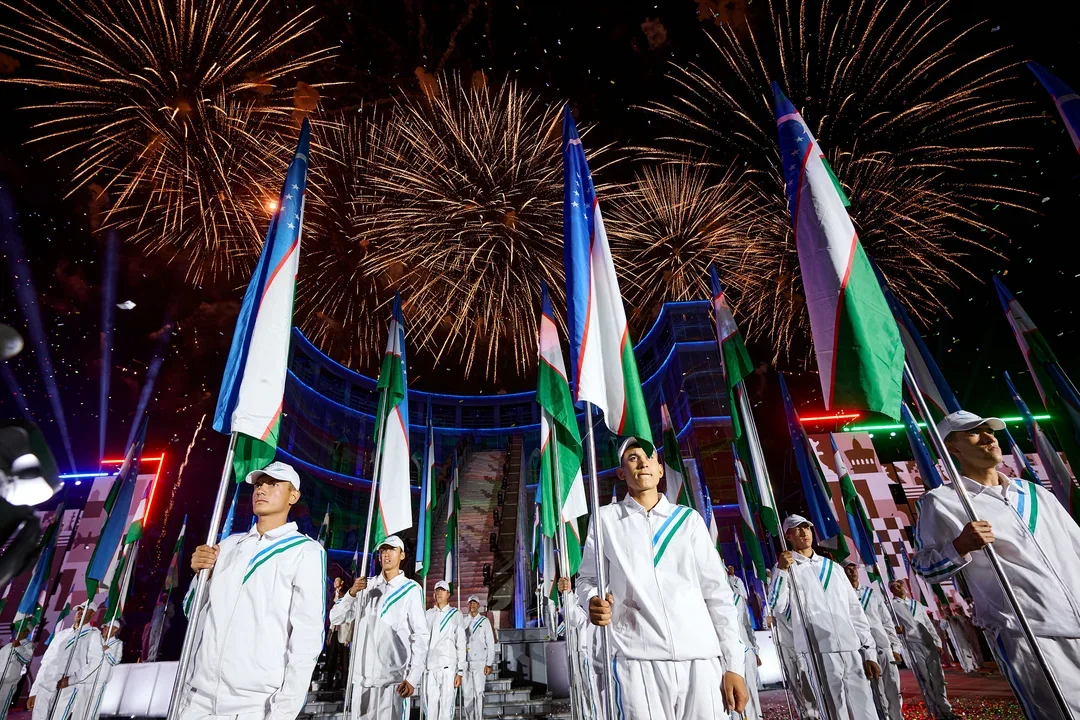
Both American teams finished one spot short of the podium when the 46th FIDE Chess Olympiad came to an end Sunday afternoon in Samarkand, Uzbekistan. Uzbekistan won its second gold (in four years) in the Open, finishing two points ahead of India and Germany.
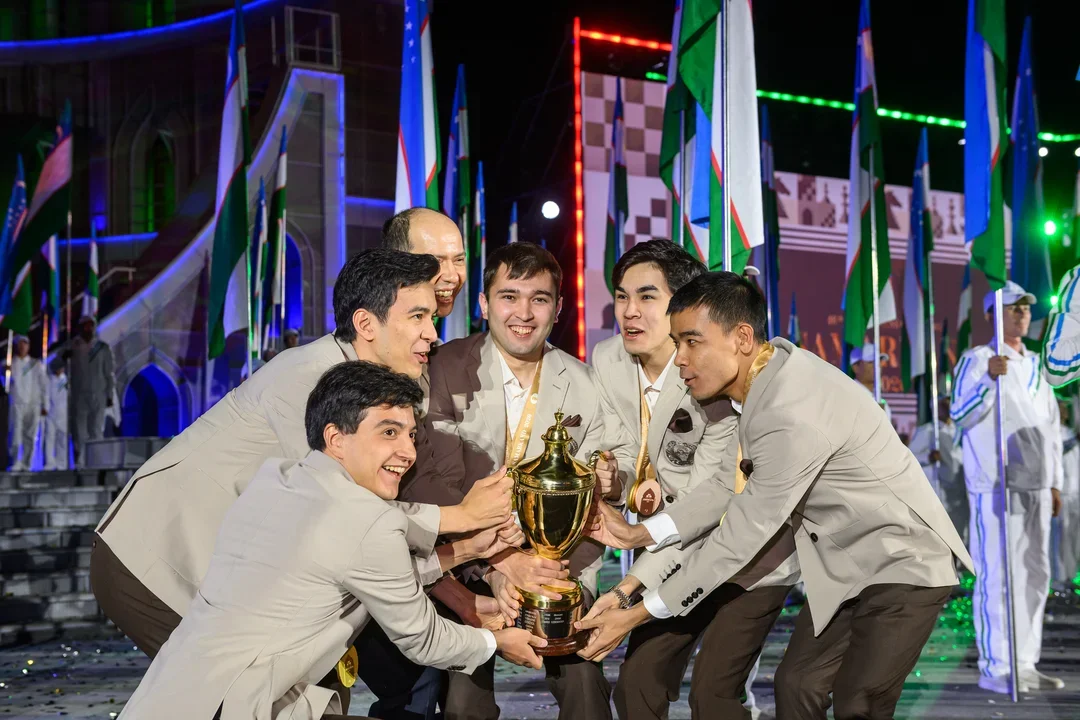
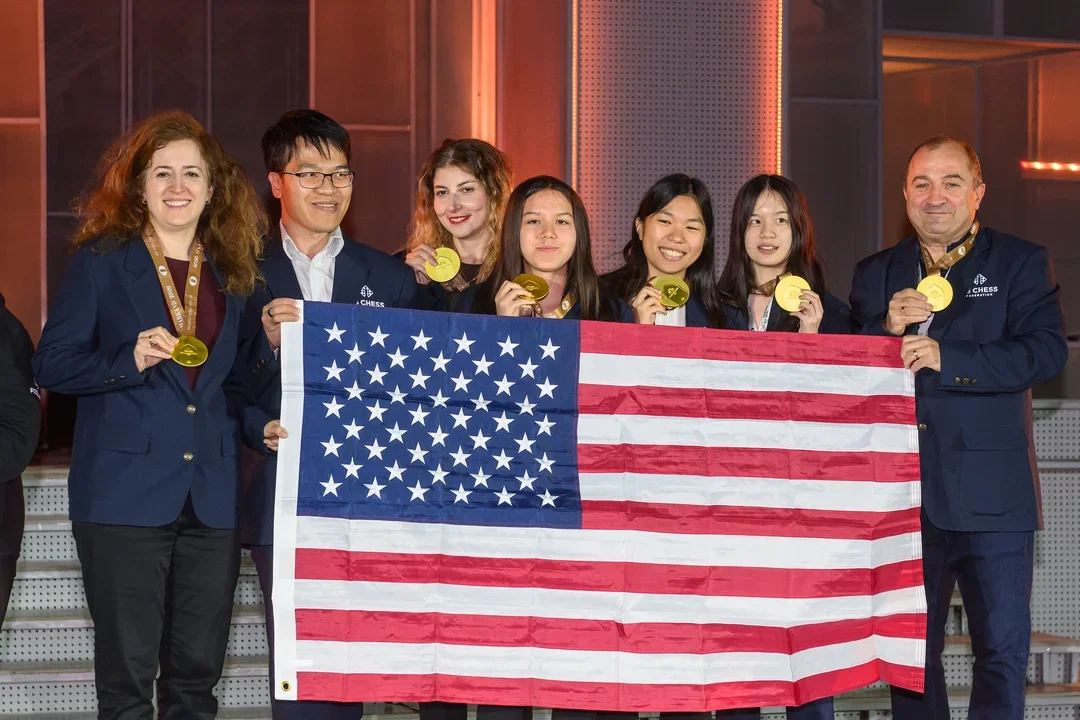
China won its seventh women’s Olympiad, and first in eight years, with a 20/22 score, two points ahead of Kazakhstan. Five teams, including the U.S., tied for third with 17/22 scores, and India won bronze on tiebreaks.

Enjoy highly insightful analysis from GM Luka Budisavljevic, whose understanding of subtle positional factors turns these grandmaster games into something even the casual fan can make sense of.
Open
In the Open, USA had a chance to reshape the race for gold on Friday in a gritty match against the eventual gold medalists.
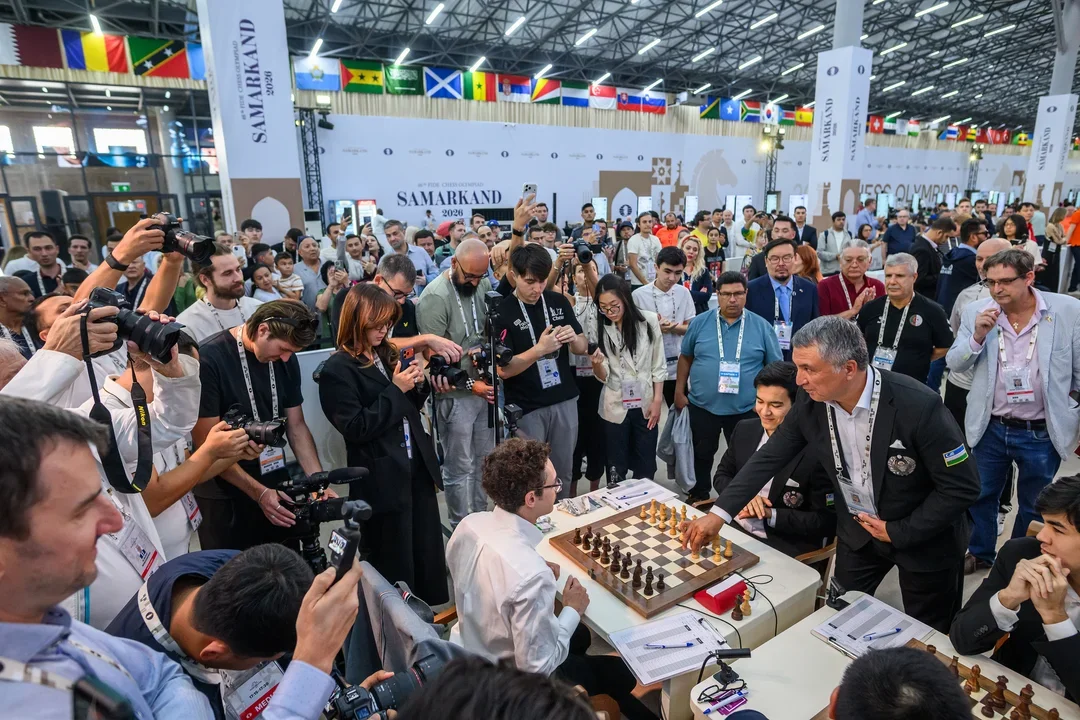
A relatively short draw on Board 4 between GM Levon Aronian and GM Mukhiddin Madaminov was first to finish, and it turned out to be the only quiet game of the round.
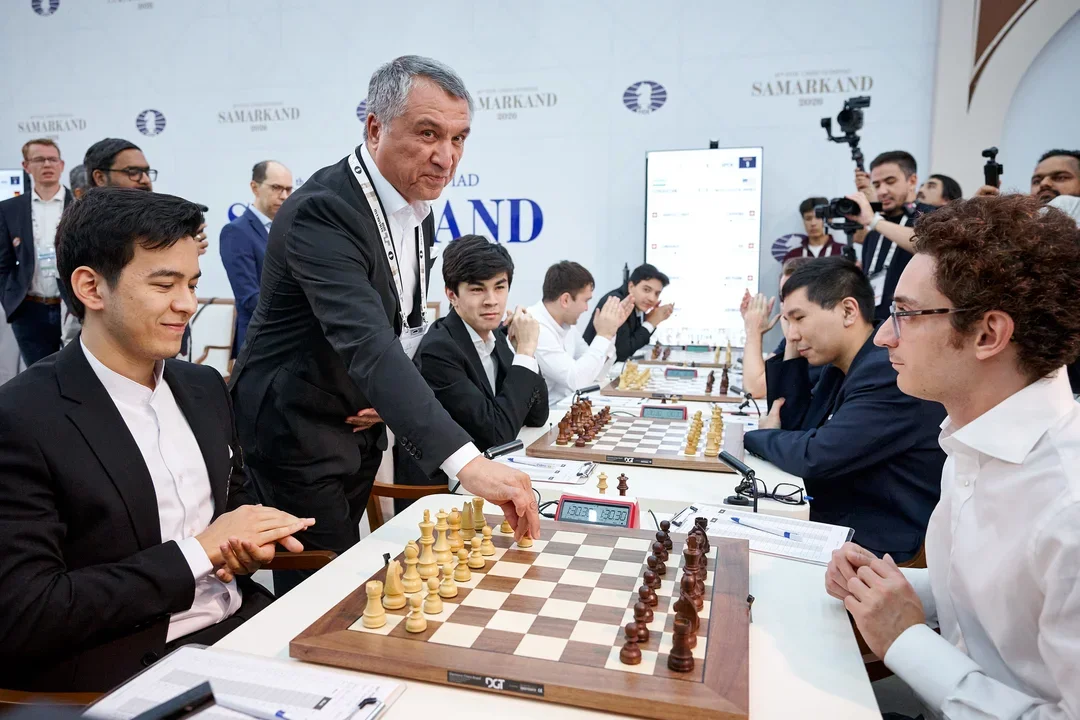
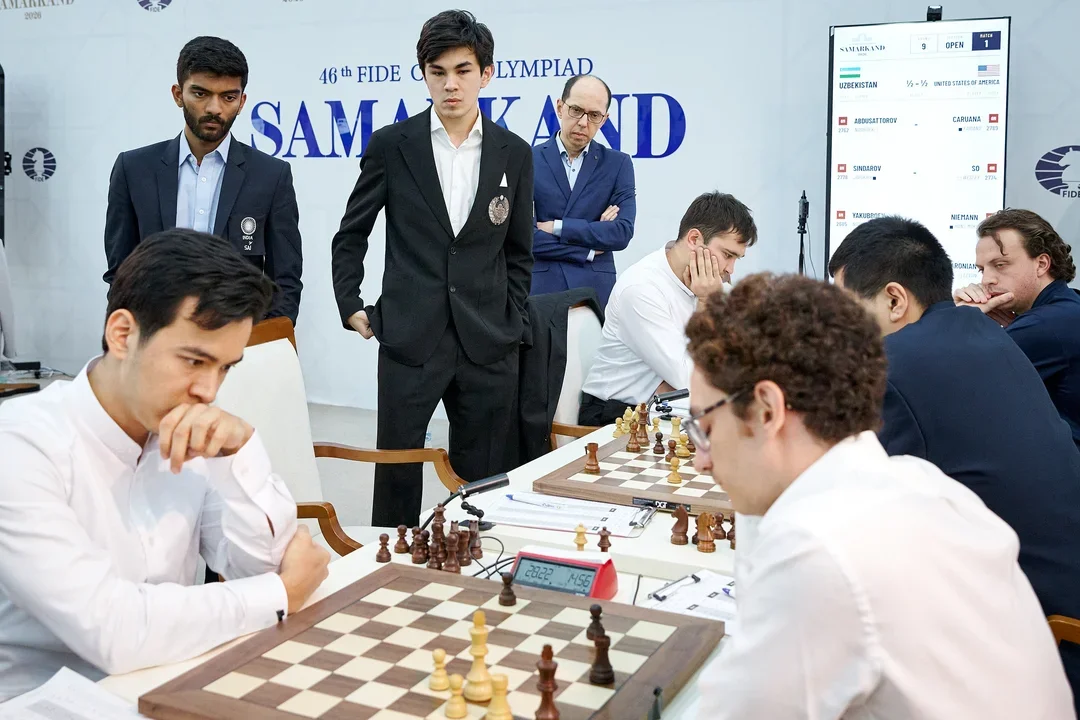
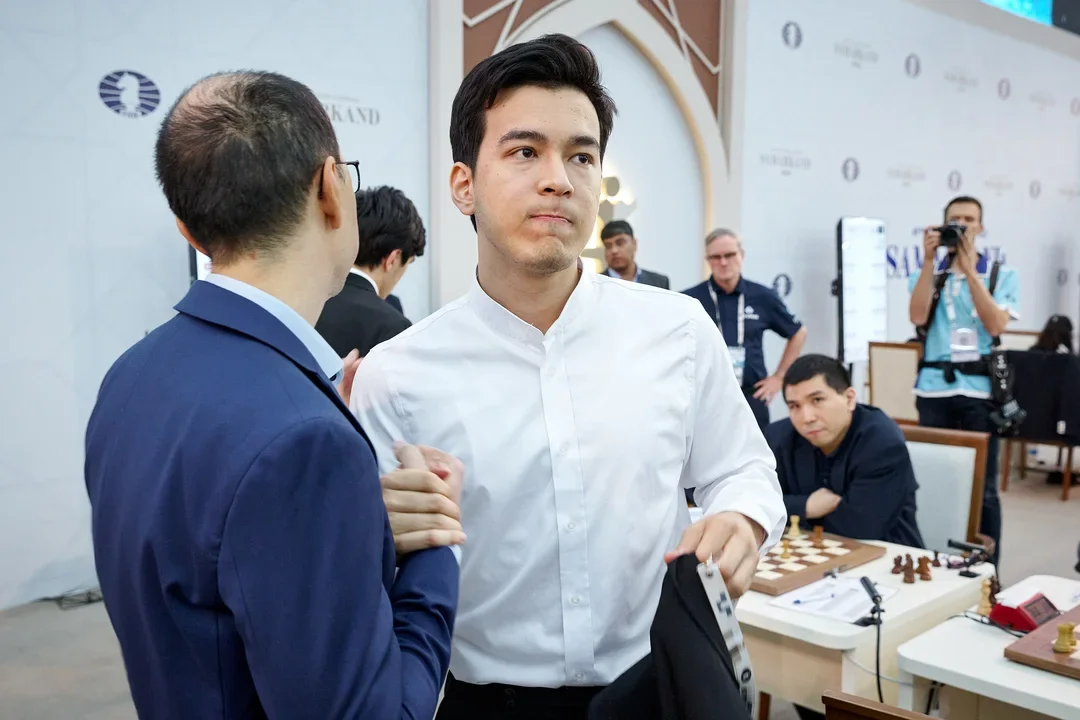
On Board 1, GM Nodirbek Abdusattorov forced GM Fabiano Caruana to defend an increasingly difficult endgame as the clocks ticked down before the time control. While Caruana missed his last drawing chance on move 40, already the position was getting away from him, writes Budisavljevic:
While GM Javokhir Sindarov has been playing as well as anybody in the world over the past year, GM Wesley So came prepared with a great opening choice and, despite Sindarov’s impressive efforts, never gave the young Uzbek a real chance of getting back into the game.
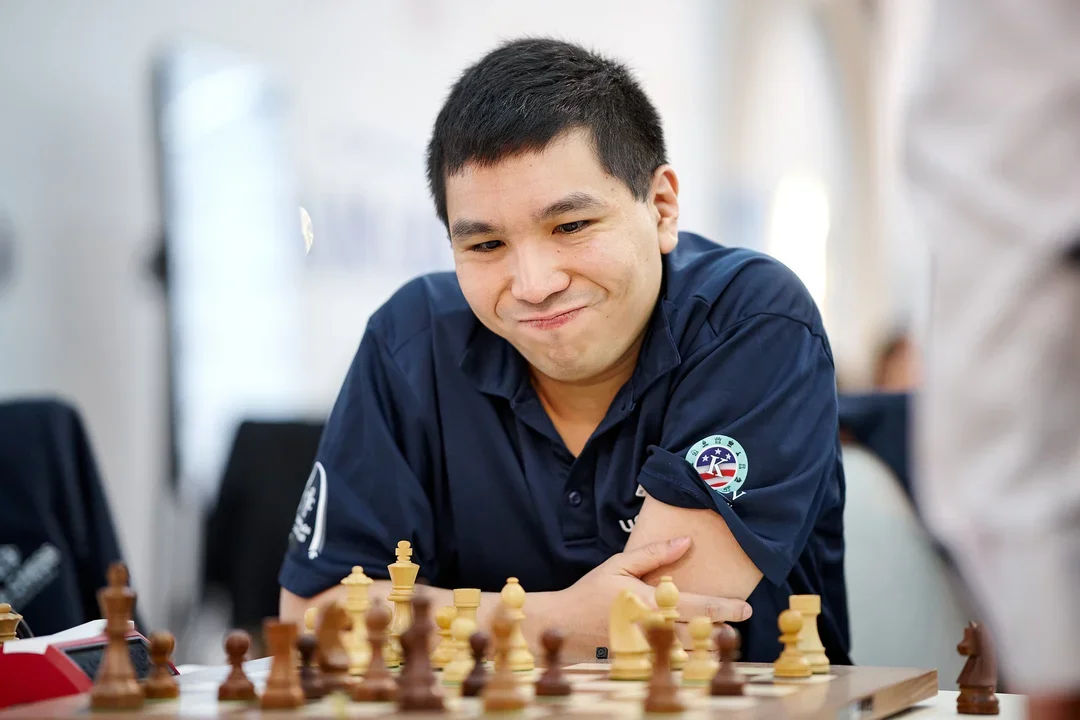
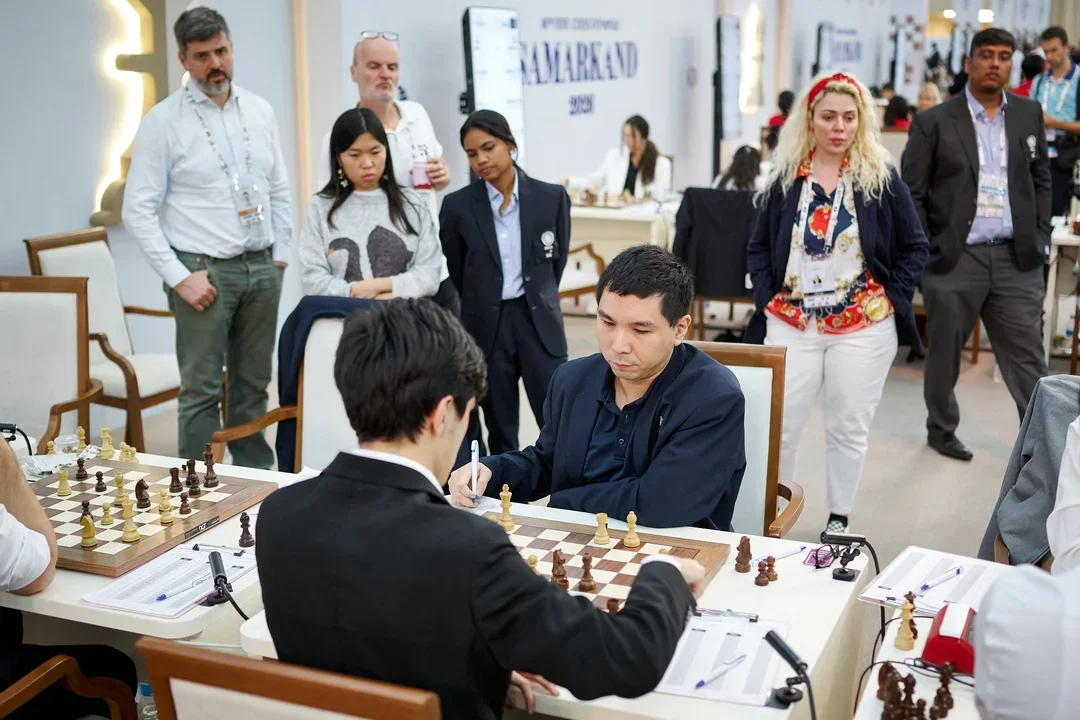
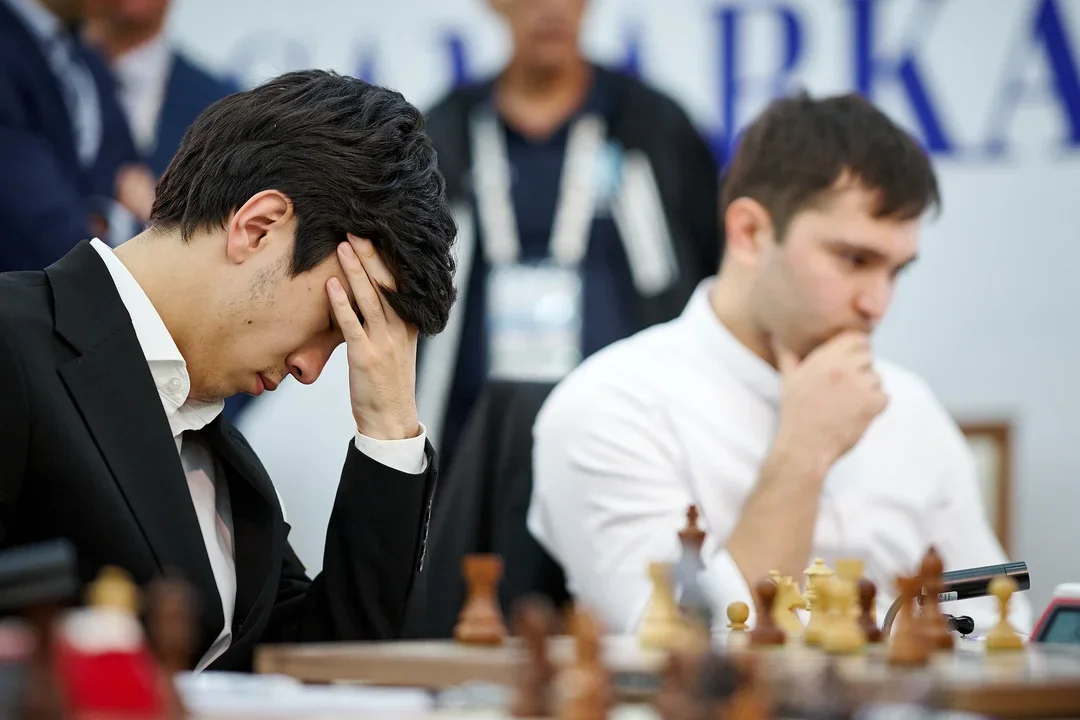
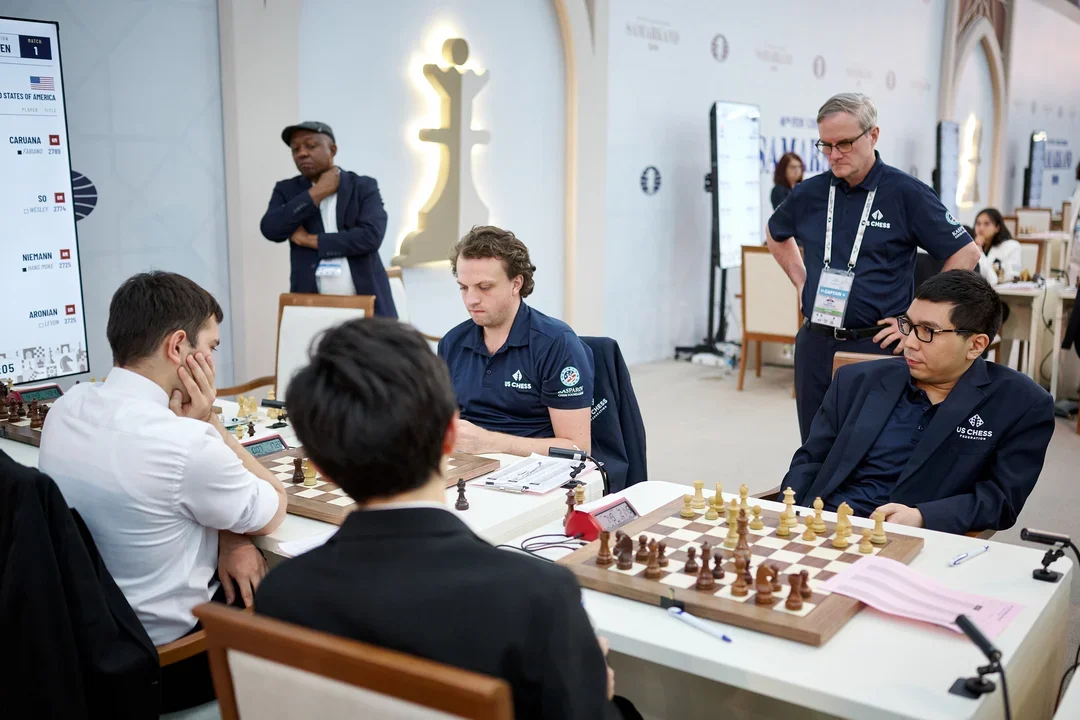
The final game to finish was between GM Hans Niemann and GM Nodirbek Yakubboev. A spirited pawn sac from Niemann was totally justified, but the resulting position turned out to be less intuitive than it appeared from afar.
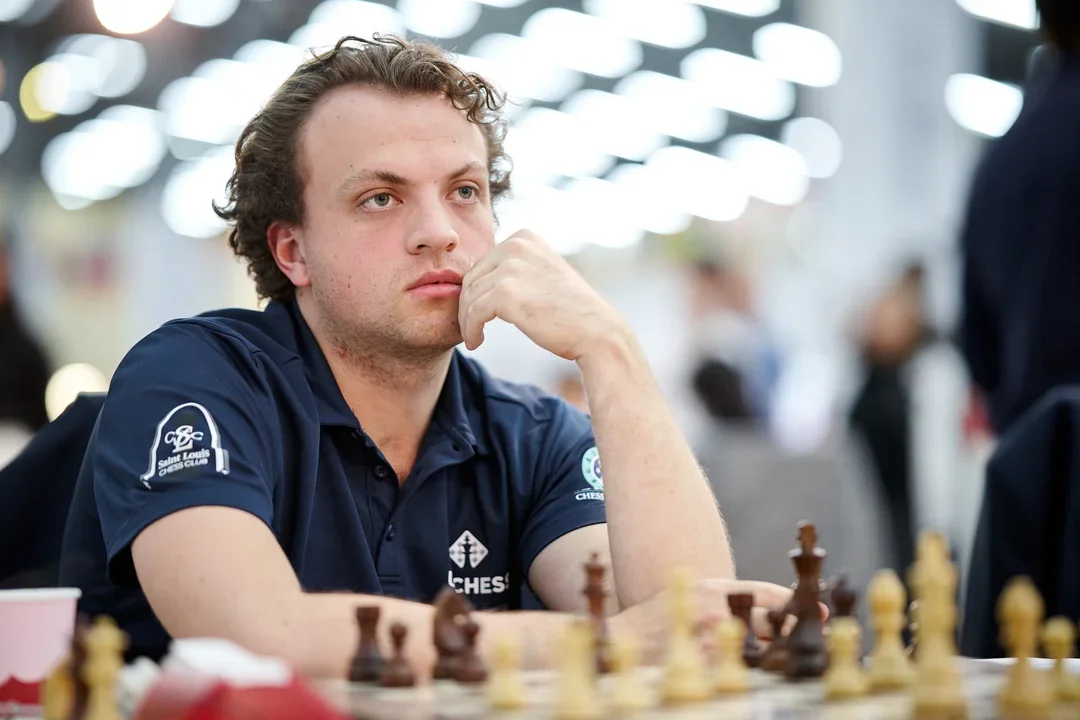
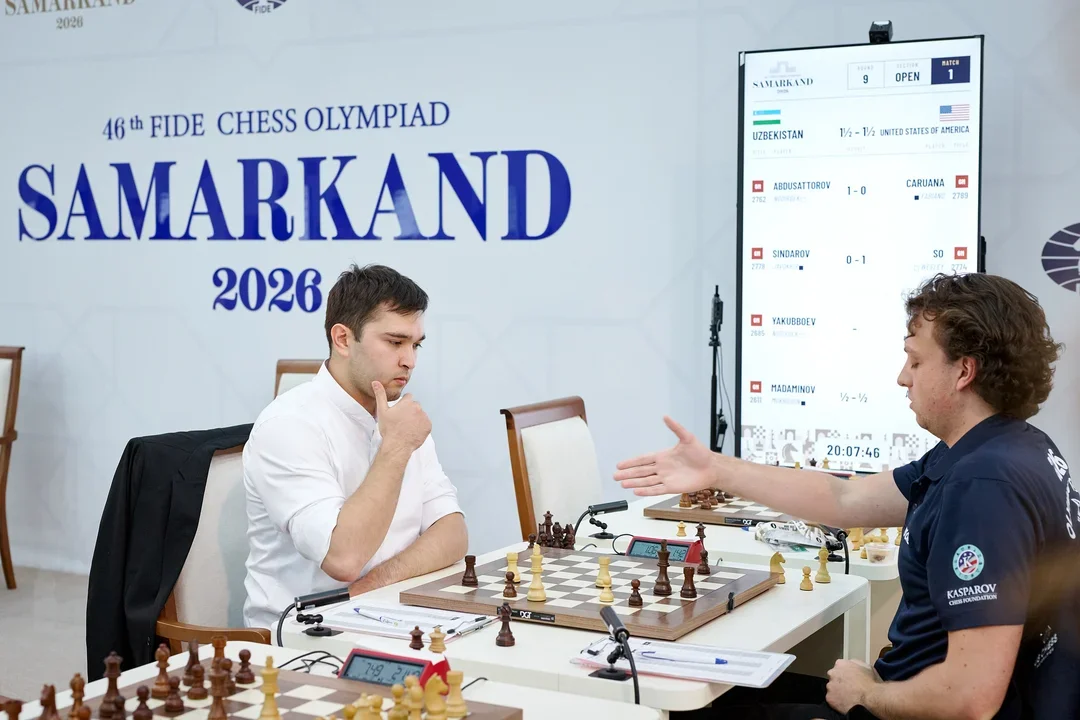
Still, after a mistake from Yakubboev, Niemann still had dreams of drawing the game and the match:
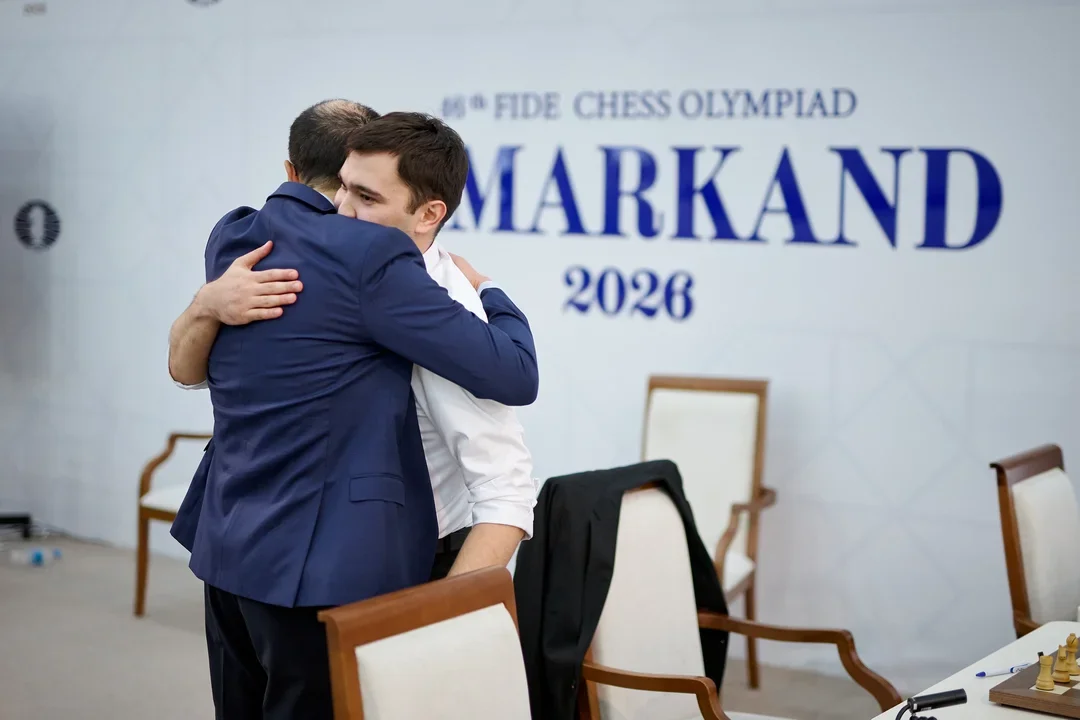

The loss sent USA down to a tie for 11th place with a 13/18 score and just two rounds remaining. The best the Americans could hope for was a strong 4/4 finish and a few friendly results paving the way to a podium spot.
Indeed, with 3–1 wins over Greece and Turkiye, respectively, to conclude the event, USA’s 17/22 score came close to an overall medal. With a Germany tie or loss to the Netherlands on Sunday, USA would have finished tied for third with the best tiebreaks. Instead, after GM Matthias Bluebaum secured a 2½–1½ win for the Germans, USA finished tied for fourth. With the best tiebreaks, the Americans therefore won gold for Category A, as explained in Section 4.6.2 of the FIDE Olympiad regulations.

Aronian also won an individual bronze for his 8/10 performance on Board 4. His Round 10 win showed his unique mixture of creativity and fundamental understanding:
With its win over USA, Uzbekistan improved to a 16/18 score entering the final two rounds. It looked like Germany would keep pace, however, despite the difficult pairing against India. The match was tied with one game to go, and GM Alexander Donchenko appeared to be coasting against the World Champion:
The massive turnaround instead bumped India up into a three-way tie for second along with Armenia and, funnily enough, Uzbekistan 2! With a one-point lead, Uzbekistan 1 officially controlled its destiny. With a 3½–½ win over Armenia and a 2½–1½ win over Ukraine to close out the event, the race for gold was indeed never in doubt.
India then dashed Uzbekistan 2’s dreams of a majority podium finish with a 3½–½ win to take outright second place with a round to go. A 2–2 tie against Hungary allowed Germany to catch the leaders with its win against the Netherlands, but India persevered for silver with better tiebreaks.
Still, a podium finish is tremendous for Germany, which finished the event with wins over USA and Uzbekistan and within a few moves of a win over India.
Women’s
After its close loss in Round 8 to Armenia, USA entered Friday’s ninth trailing 17 other teams. The dream of a second consecutive medal was beginning to fade, but all USA could do was win its remaining matches and see where the cards fell.
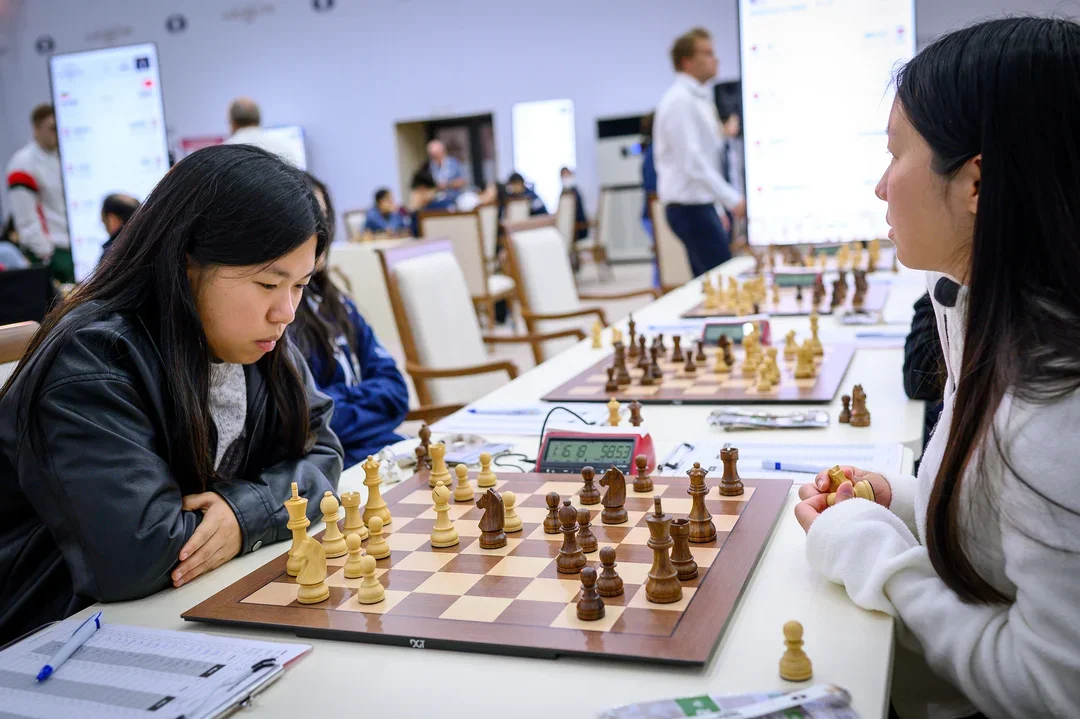
Against Canada, Israel, and Romania, the Americans won 3–1, 4–0, and 3–1, respectively, to reach a 17/22 score. Across the final three rounds, IMs Carissa Yip and Alice Lee notched a combined 5½/6 score on the top two boards. Even against serious resistance, the friendly rivals showed why they are the future of this team!
Yip followed her gold medal performance on Board 2 in 2024 by winning silver in her first year as the team’s Board 1, scoring 8/10. Lee won a silver medal on Board 4 in 2024, and, despite being bumped up two boards, she outdid herself with an undefeated 8½/10 score and a gold medal for her showing on Board 2.
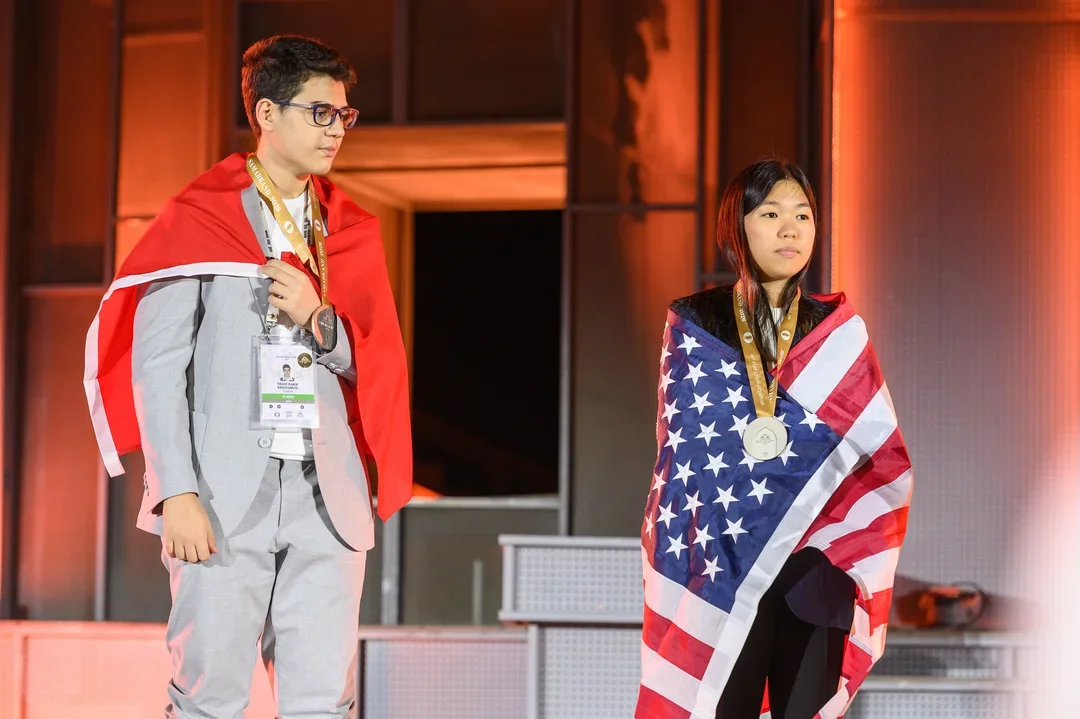
Entering the final round, China led with 18/20, ahead of Kazakhstan with 17/20, and India, Poland, and Vietnam with 16/20 each. The key pairings were China – Vietnam and India – Georgia. With an upset victory, Vietnam would catch China at 18/20 and any result from the Kazakhstan – Poland match would put a third team at 18/20 (or 19/20 with a Kazakhstan win).
With an unflinching 3–1 win, China clinched gold and turned attention to India – Georgia. With a tie against Poland, Kazakhstan clinched at least a share of second place, but India would claim silver on tiebreaks with a win against Georgia. But if India did not win, USA would claim a share of third, but here’s where tiebreaks come into play. A Georgia victory would give USA the best tiebreaks of every time tied for third (including Georgia), whereas a Georgia tie would give India and its better tiebreaks a share of third instead.
After GM Humpy Koneru defeated GM Nana Dzagnidze with a quick mating attack, an India victory appeared to be the most likely result. But then IM Savitha Shri found herself in a losing position on Board 4 when a shocking blunder by GM Divya Deshmukh forced her resignation:
IM Meri Arabidze reached the time control with serious winning chances against Savitha, but on move 41 she allowed her opponent to equalize the game and the match, giving India a share of third and, therefore, bronze on tiebreaks.
As in the Open, USA's result earned it the Category A gold medal as the top-finishing team (outside of the overall top three) from the top quintile.
Category Prizes, Board Prizes, and Norms
USA won gold for Category A in both events. In the Open, Vietnam, Ecuador, Pakistan, and Qatar won gold in categories B through E, respectively. In the women's, those awards went (in order) to Croatia, Sri Lanka, Ghana, and the Maldives.
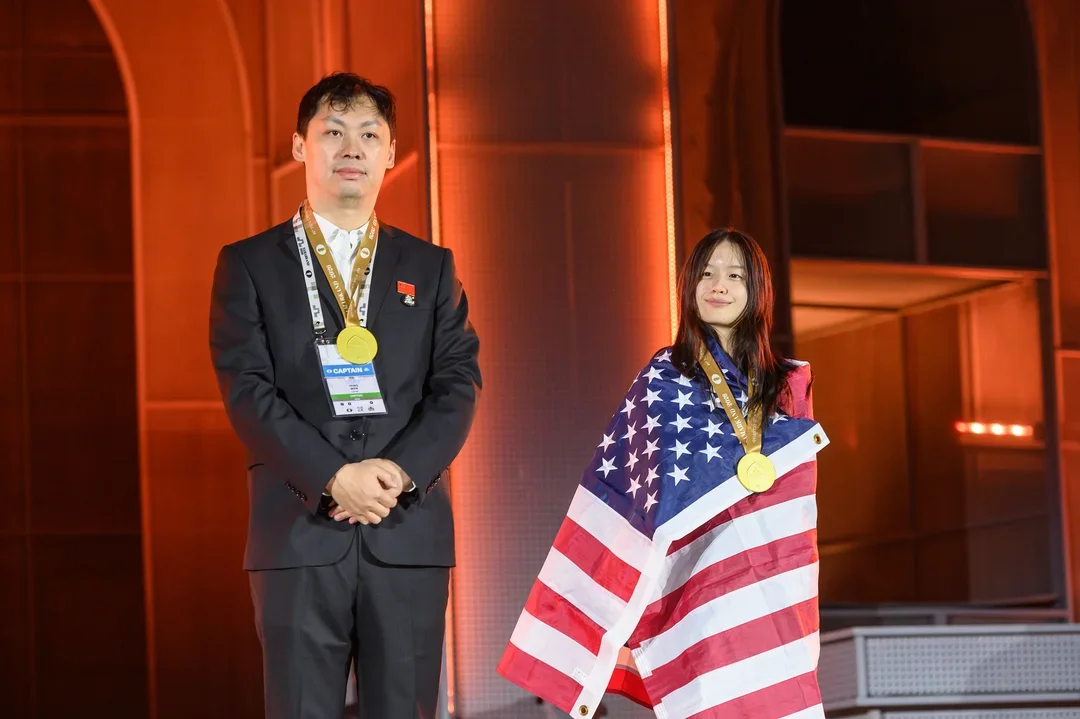
For board prizes in the Open, Abdusattorov won gold for his undefeated 8½/11 Board 1 performance that anchored his Uzbek squad. GM Wei Yi (pictured above with Lee) won top Board 2 honors for his undefeated 7½/10 showing. Like Abdusattorov, Germany's GM Frederik Svane notched an undefeated 8½/11 score, earning Board 3 gold. With an undefeated 8/10 score, GM Ihor Samunenkov won the Board 4 gold for Ukraine. Hungary's GM Gleb Dudin won gold as the best alternate, scoring 8/10 with seven wins.
In the Women's event, China's GM Zhu Jiner won gold for her lossless 7/9 showing on the top board. On Board 3, Zhu's teammate IM Lu Miaoyi had perhaps the most outstanding score of the event, going an undefeated 9½/11! WIM Elnaz Kaliakhmet anchored her Kazakhstan squad's rush to silver, scoring 7½/9 with seven wins on Board 4. IM Savitha Shri for India won top Board 5 honors with a 9/10 score that included her aforementioned clutch draw in Round 11.
According to preliminary calculations, three players earned GM norms and five earned IM norms in the Open. Two of the GM norms came from the same team, with Vietnam's 17-year-old IM Gia Huy Banh and 20-year-old IM Quoc Hy Nguyen, playing Board 2 and Board 3, respectively, both earning norms. At age 30, Venezuela's Felix Jose Ynojosa Aponte was the final GM norm recipient.
Again according to preliminary calculations, 17 players earned norms in the Women's event, including four IM norms and five WGM norms. England's 11-year-old FM Bodhana Sivanandan earned her second IM norm, as did Ukraine's 16-year-old WFM Anastasiia Hnatyshyn, Uzbekistan's 17-year-old WGM Afruza Khamdamova, and Armenia's 22-year-old WGM Mariam Mkrtchyan.
While Yip finished with a 2601 performance rating, she was not eligible for a GM norm because she only played two GM opponents, one short of the required three.
Quick Links
- 46th FIDE Olympiad: Official Website
- 3rd FIDE Olympiad for People with Disabilities: Official Website
- 46th FIDE Olympiad Games: Lichess | Chess.com
- 3rd FIDE Olympiad for People with Disabilities Games: Lichess | Chess.com
- All event coverage on Chess Life Online
- More photos: FIDE Flickr


Categories
Archives
- September 2026 (24)
- August 2026 (28)
- July 2026 (36)
- June 2026 (32)
- May 2026 (30)
- April 2026 (33)
- March 2026 (27)
- February 2026 (24)
- January 2026 (24)
- December 2025 (27)
- November 2025 (29)
- October 2025 (39)
- September 2025 (27)
- August 2025 (29)
- July 2025 (43)
- June 2025 (25)
- May 2025 (24)
- April 2025 (29)
- March 2025 (29)
- February 2025 (20)
- January 2025 (24)
- December 2024 (34)
- November 2024 (18)
- October 2024 (35)
- September 2024 (23)
- August 2024 (27)
- July 2024 (44)
- June 2024 (27)
- May 2024 (31)
- April 2024 (51)
- March 2024 (34)
- February 2024 (24)
- January 2024 (26)
- December 2023 (29)
- November 2023 (26)
- October 2023 (37)
- September 2023 (27)
- August 2023 (37)
- July 2023 (47)
- June 2023 (33)
- May 2023 (37)
- April 2023 (45)
- March 2023 (37)
- February 2023 (28)
- January 2023 (31)
- December 2022 (23)
- November 2022 (32)
- October 2022 (31)
- September 2022 (19)
- August 2022 (39)
- July 2022 (32)
- June 2022 (35)
- May 2022 (21)
- April 2022 (31)
- March 2022 (33)
- February 2022 (21)
- January 2022 (27)
- December 2021 (36)
- November 2021 (34)
- October 2021 (25)
- September 2021 (25)
- August 2021 (41)
- July 2021 (36)
- June 2021 (29)
- May 2021 (29)
- April 2021 (31)
- March 2021 (33)
- February 2021 (28)
- January 2021 (29)
- December 2020 (38)
- November 2020 (40)
- October 2020 (41)
- September 2020 (35)
- August 2020 (38)
- July 2020 (36)
- June 2020 (46)
- May 2020 (42)
- April 2020 (37)
- March 2020 (60)
- February 2020 (38)
- January 2020 (45)
- December 2019 (34)
- November 2019 (35)
- October 2019 (42)
- September 2019 (45)
- August 2019 (56)
- July 2019 (44)
- June 2019 (35)
- May 2019 (40)
- April 2019 (48)
- March 2019 (61)
- February 2019 (39)
- January 2019 (30)
- December 2018 (29)
- November 2018 (51)
- October 2018 (45)
- September 2018 (29)
- August 2018 (49)
- July 2018 (35)
- June 2018 (31)
- May 2018 (39)
- April 2018 (31)
- March 2018 (26)
- February 2018 (33)
- January 2018 (30)
- December 2017 (26)
- November 2017 (24)
- October 2017 (30)
- September 2017 (30)
- August 2017 (32)
- July 2017 (27)
- June 2017 (32)
- May 2017 (26)
- April 2017 (37)
- March 2017 (28)
- February 2017 (30)
- January 2017 (27)
- December 2016 (29)
- November 2016 (24)
- October 2016 (32)
- September 2016 (31)
- August 2016 (27)
- July 2016 (24)
- June 2016 (26)
- May 2016 (19)
- April 2016 (30)
- March 2016 (37)
- February 2016 (27)
- January 2016 (33)
- December 2015 (25)
- November 2015 (23)
- October 2015 (16)
- September 2015 (28)
- August 2015 (28)
- July 2015 (6)
- June 2015 (1)
- May 2015 (2)
- April 2015 (1)
- February 2015 (3)
- January 2015 (1)
- December 2014 (1)
- July 2010 (1)
- October 1991 (1)
- August 1989 (1)
- January 1988 (1)
- December 1983 (1)