


The most important tournament of the year began on Sunday in Cyprus as 16 of the world’s top chess players compete in the 2026 FIDE Candidates and Women’s Candidates tournaments, with rights to matches against the reigning World Champion and Women’s World Champion on the line.
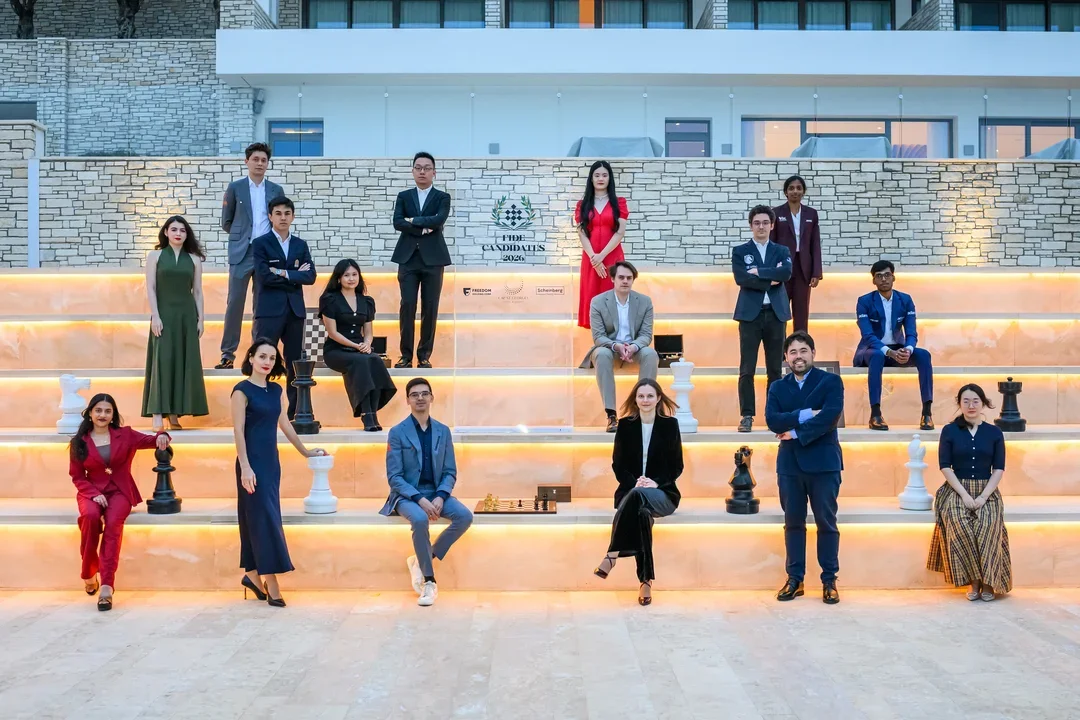
Each event is an eight-player double Round Robin consisting of a total of 14 games, so an early deficit after one round is hardly insurmountable. Still, some commentators were prepared for players to enter Sunday’s games cautiously, warming up rather than revealing their best prep or fighting their hardest for a win at all costs.
Plus, all intra-country pairings take place in Rounds 1 and 8, so perhaps we’d see some friendly draws between the two Americans in the Open or the two Chinese or two Russian players in the Women’s.*
Guess again.
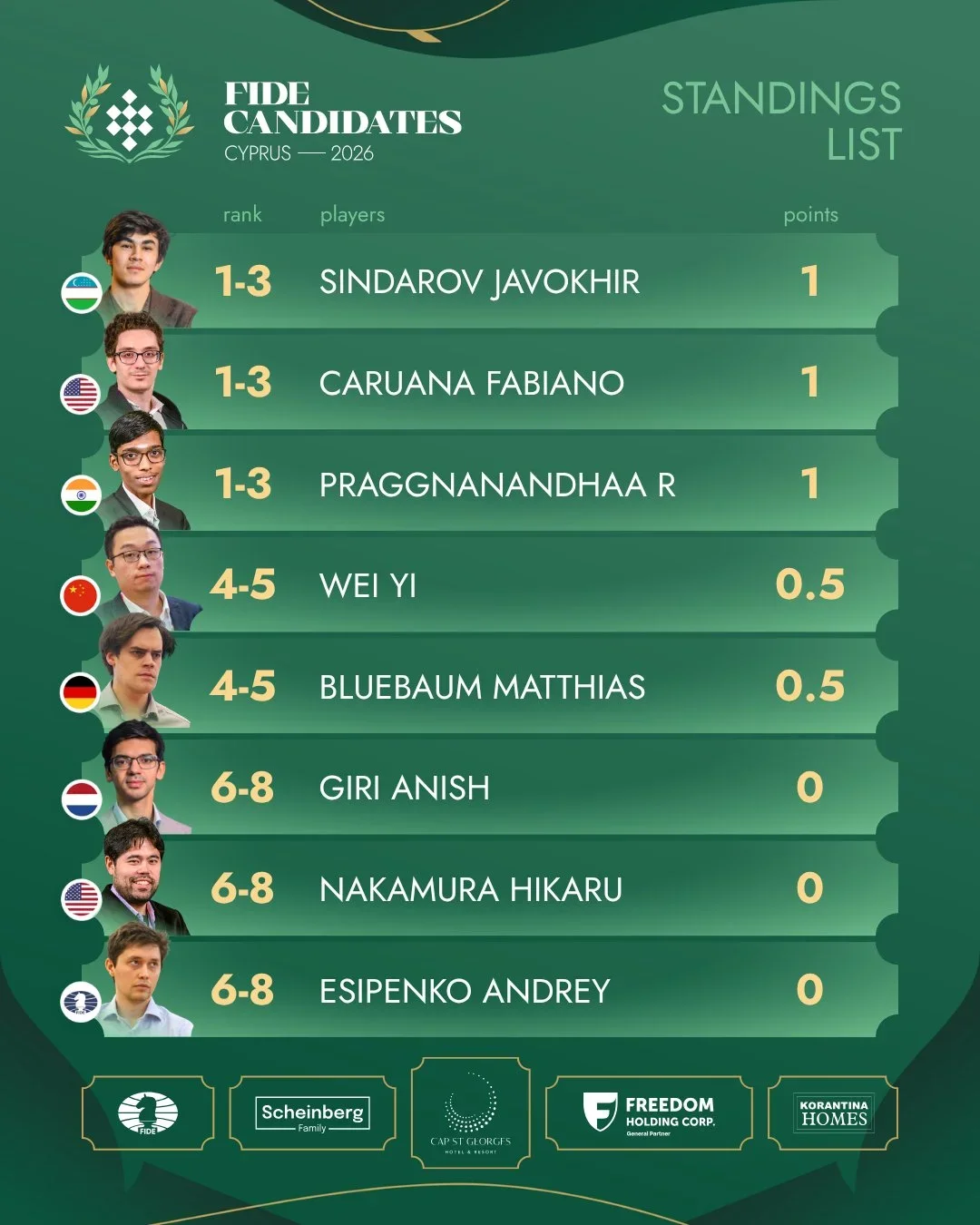
The Open featured an impressive three decisive results out of four games, and there was fighting chess galore in the Women’s despite the round eventually settling with four draws. We saw opening surprises in both sections, a knight sac in the all-China Women’s match-up, and a heart-stopping endgame between the two Americans in the Open.
In our preview, I pointed out that GM Fabiano Caruana had not beaten GM Hikaru Nakamura in a classical game since the 2022 Candidates Tournament, while Nakamura had won six classical games against Caruana in that time-span. Well, that’s over.

In a fantastic battle, Caruana took down his countryman in the longest game of the round. Caruana began burning time in what appeared to be a calm position, only furthering suspicions that a draw was incoming.
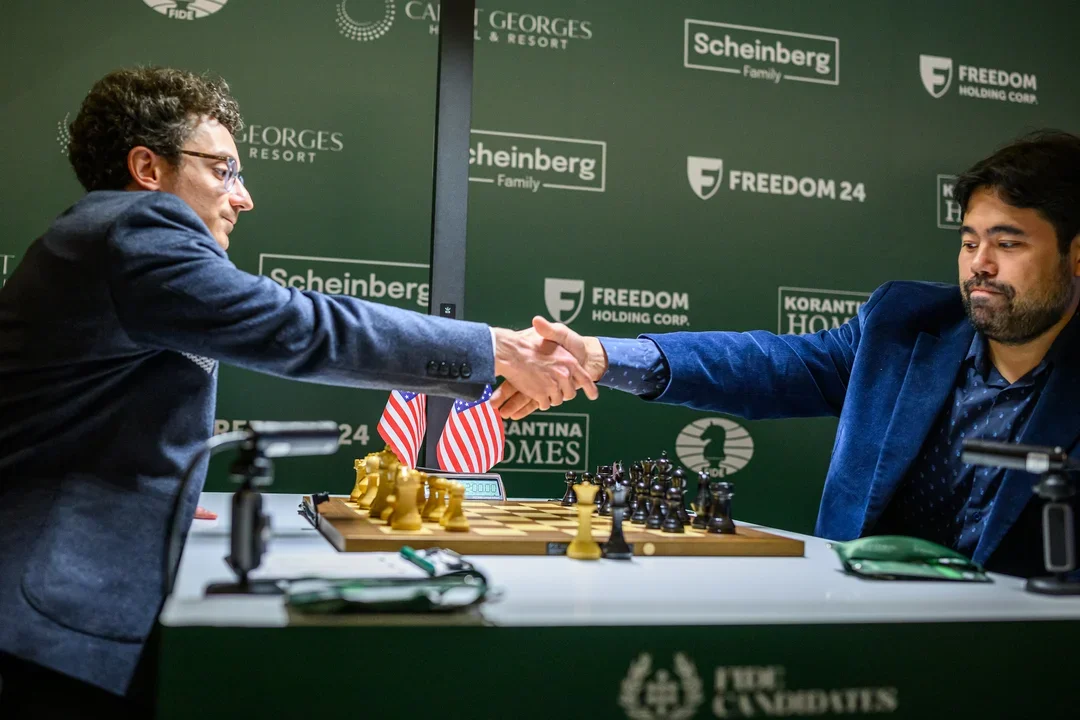
But Nakamura uncharacteristically relaxed a bit prematurely, allowing Caruana to develop a ferocious initiative, eventually winning a pawn. There was no forcing win, however, and Caruana then shocked the commentators by choosing to trade queens into an opposite-colored bishop ending.


While the position was still winning, there was very little margin for error. Just when Caruana appeared to have found a winning plan, he made a fatal error with only a minute on his clock. But Nakamura replied too quickly, only to immediately realize what he had done.

From there, Nakamura had no choice but to resign.
The youngest player in the tournament — Uzbekistan’s GM Javokhir Sindarov — won an even more back-and-forth game against Russia’s GM Andrey Esipenko.
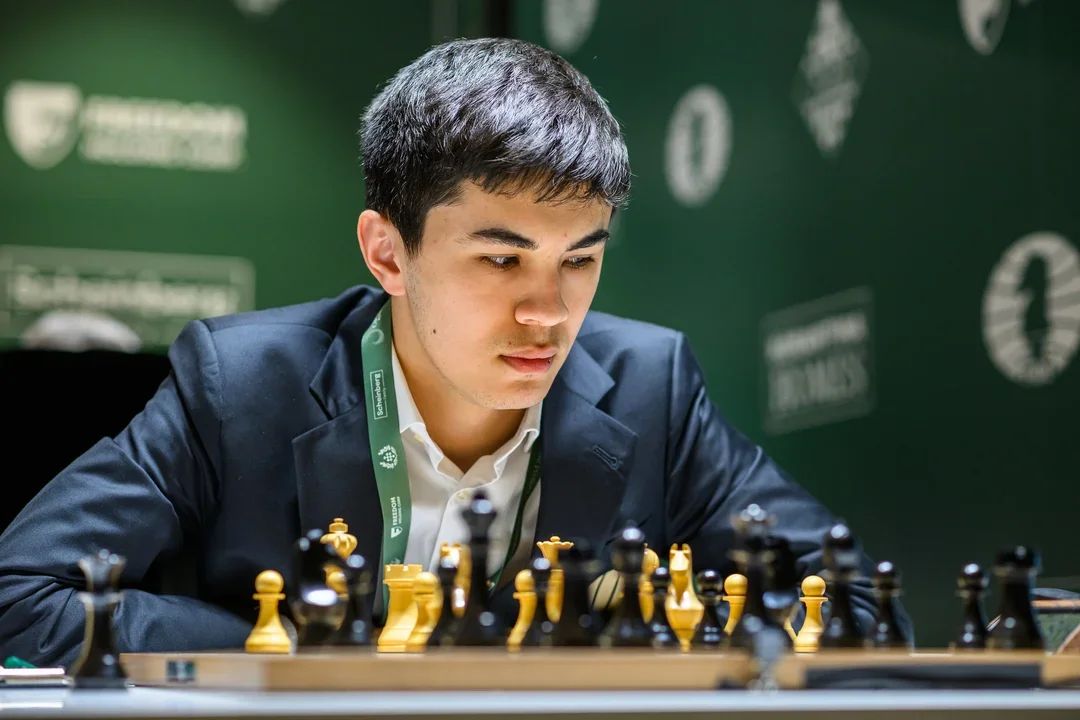
Sindarov got into some trouble out of the opening, going as far as to admit in a post-game interview that he thought he was losing. But Esipenko alleviated the pressure unnecessarily, and from there Sindarov was able to show his strength.
I owe an apology to Indian GM Praggnanandhaa Rameshbabu. I questioned whether he would be a serious contender in my preview, claiming he had not made much progress in his game since the 2024 Candidates.
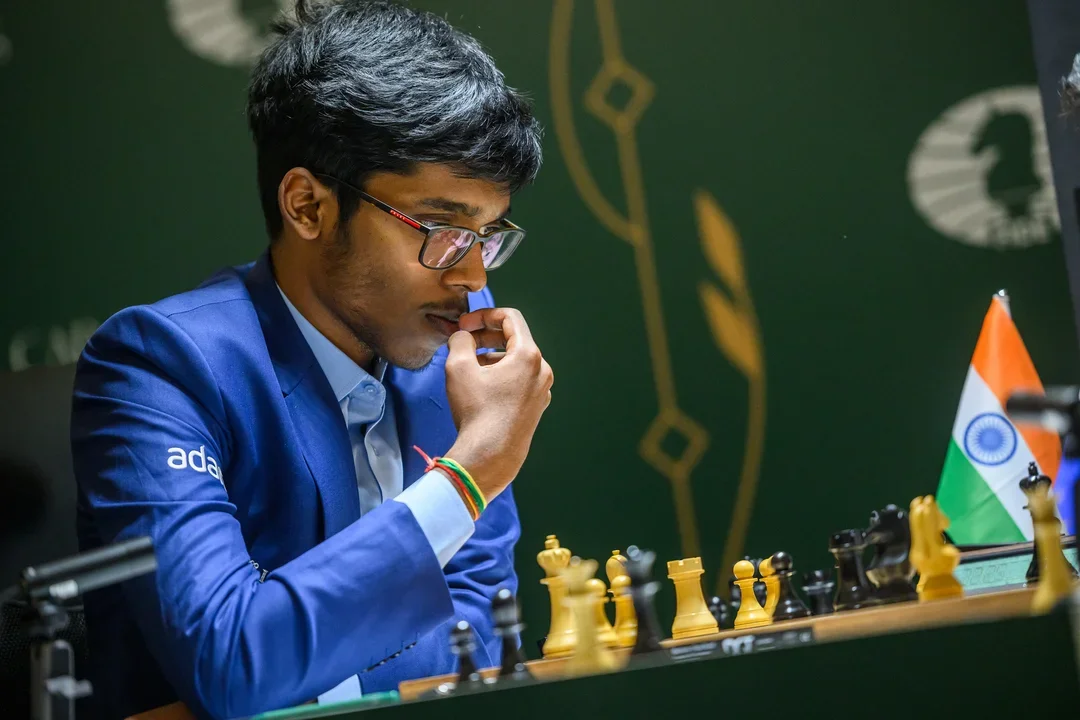
Praggnanandhaa replied by uncorking a rare Grand Prix Attack against Giri’s Sicilian and conducting it flawlessly, winning the smoothest game of the round.

The internet is a weird place, and in the lead-up to the tournament, talk of German GM Matthias Bluebaum’s chances became something of a meme. The hashtag #GreatBluebaumSweep was even trending on Twitter, with users (mostly ironically) predicting that the event’s lowest-rated player would not only win the event, but that he would win with a perfect 14/14 score.
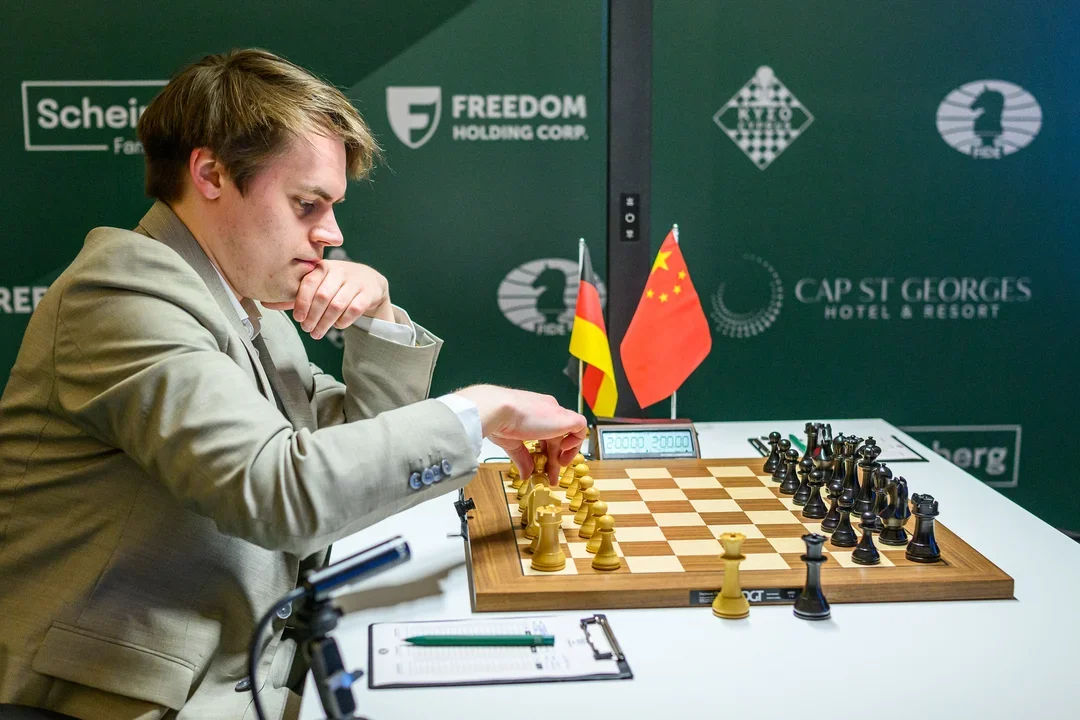
Unfortunately for Bluebaum’s legion of fans, he began the event with a draw against Chinese GM Wei Yi. He did acknowledge the “sweep” in a post-game interview, jokingly apologizing to his fans while pointing out that he could still maybe deliver 14 straight draws.
Don’t be fooled by the final results. The Women’s event featured three sharp games, and it’s a bit shocking that they produced zero decisive results.
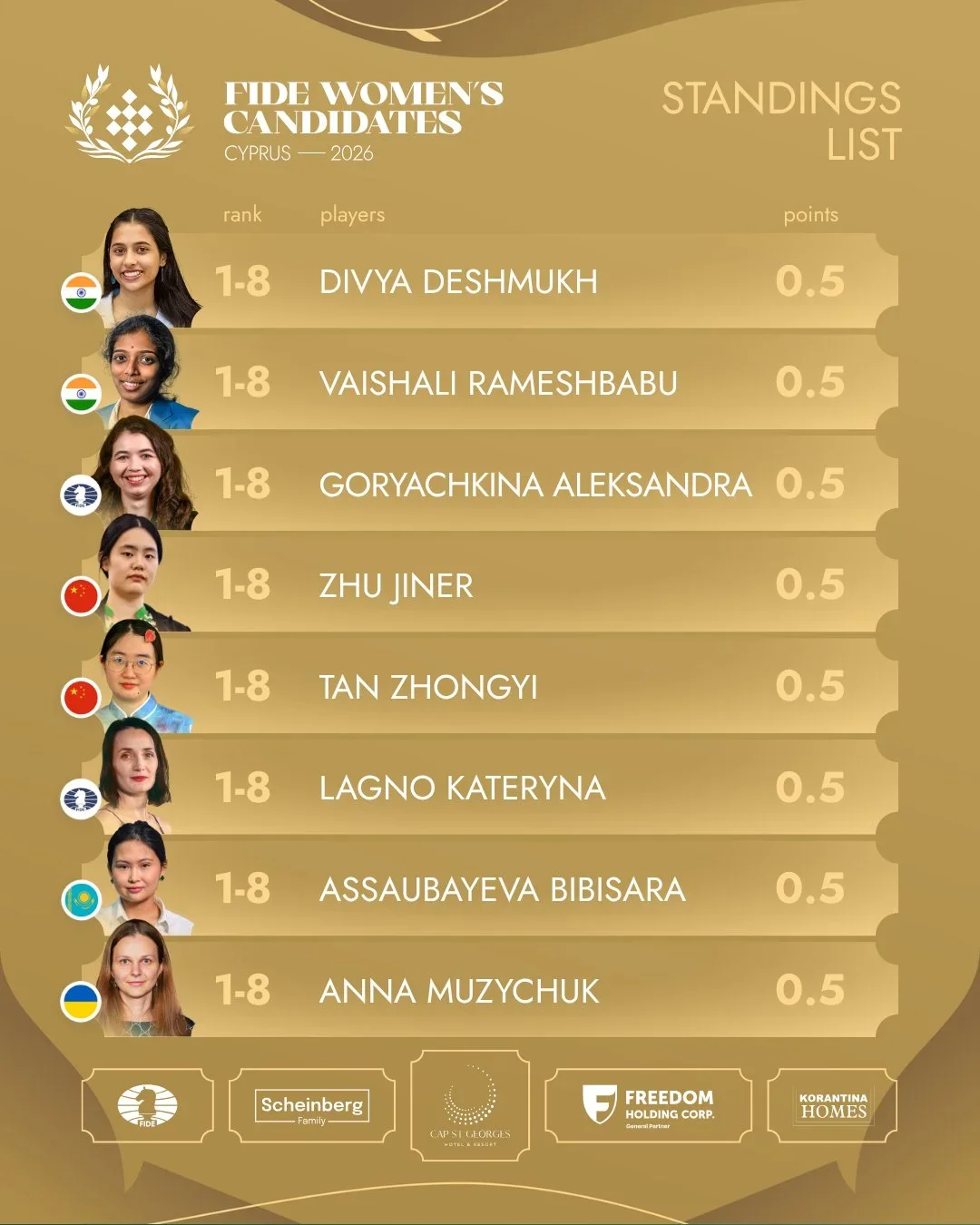
In fact, the two most fighting games were the intra-country match-ups. GM Zhu Jiner came out blazing against the 2024 Women’s Candidates winner GM Tan Zhongyi, going as far as essaying a (correct!) knight sac to gain a dangerous initiative.
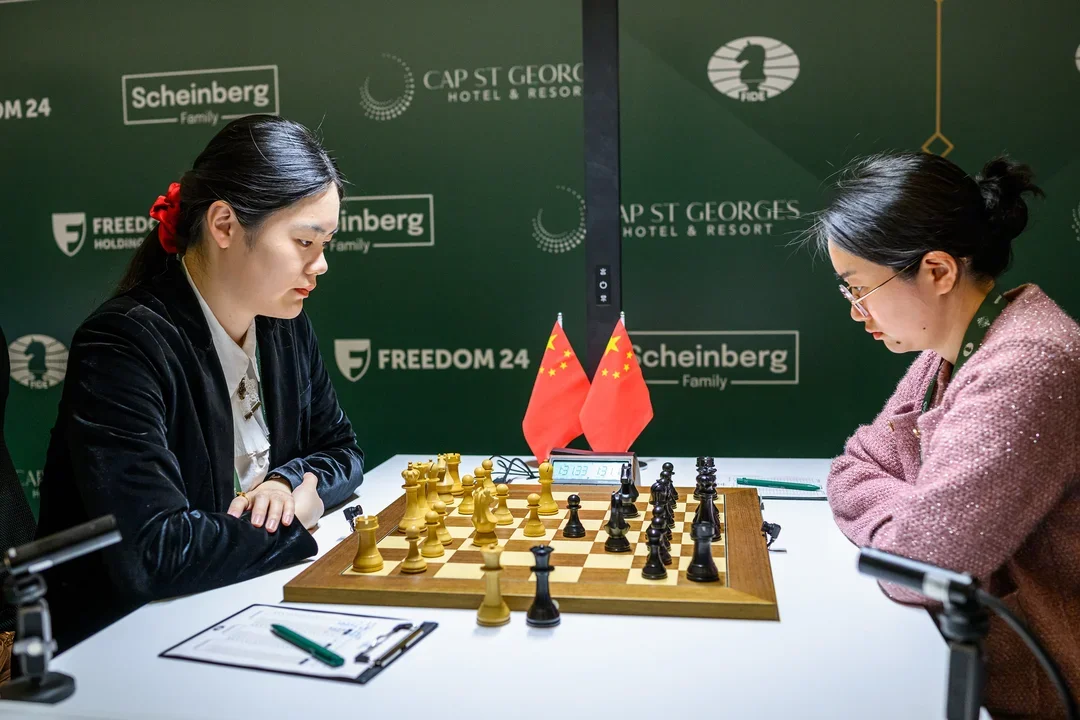
But there was never a concrete win, and Tan was able to maintain her composure to hold the draw.
Russian GM Aleksandra Goryachkina was likewise pushing against GM Kateryna Lagno, except, in her game, there actually was a winning sequence at one point. But Goryachkina missed it, settling for a more modest advantage that she was never able to convert.
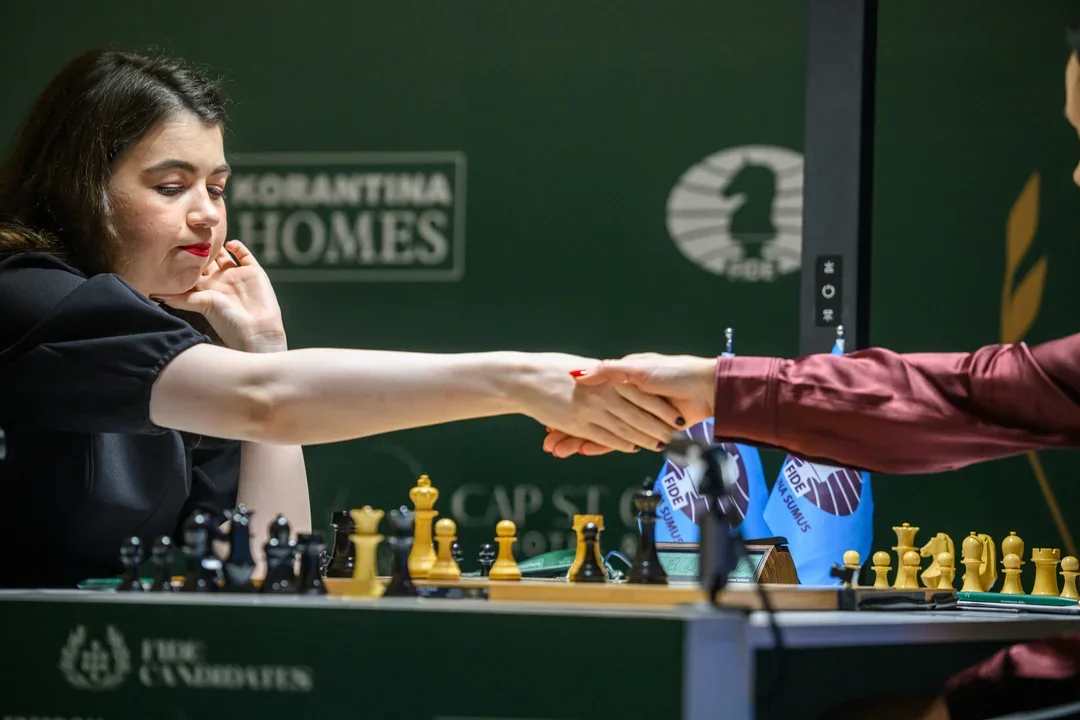
Finally, GM Bibisara Assaubayeva had some chances against India’s GM Vaishali Rameshbabu but, likewise, was unable to convert.

One thing to keep in mind is the two tournaments do feature different time controls. According to the Open Regulations, players begin with 120 minutes a side and no increment until move 41. But the Women’s Regulations stipulate that players shall begin with 90 minutes apiece and a 30-second increment beginning on the first move. Both tournaments award 30 minutes of bonus time to each player after move 40.
Round 2 is currently underway, with games beginning daily at 8:45 a.m. EDT. Play continues with Round 3 on Tuesday and Round 4 on Wednesday before the event’s first rest day on Thursday.
Fear not! This is the only round of the event I am reporting on and annotating myself. We have a fantastic line-up of guest commentators ready to go, beginning with IM Robert Shlaykhtenko for the next two rounds.
*As a note: there are two Indian players in the Women’s event, but they were not paired against each other in Round 1. Why? Because pairings were decided before a third Indian player, GM Humpy Koneru, announced that she was withdrawing, so her replacement — Ukrainian GM Anna Muzychuk — was paired against India’s GM Divya Deshmukh.
Quick Links
Round-by-Round Coverage on Chess Life Online


Categories
Archives
- October 2026 (9)
- September 2026 (27)
- August 2026 (28)
- July 2026 (36)
- June 2026 (32)
- May 2026 (30)
- April 2026 (33)
- March 2026 (27)
- February 2026 (24)
- January 2026 (24)
- December 2025 (27)
- November 2025 (29)
- October 2025 (39)
- September 2025 (27)
- August 2025 (29)
- July 2025 (43)
- June 2025 (25)
- May 2025 (24)
- April 2025 (29)
- March 2025 (29)
- February 2025 (20)
- January 2025 (24)
- December 2024 (34)
- November 2024 (18)
- October 2024 (35)
- September 2024 (23)
- August 2024 (27)
- July 2024 (44)
- June 2024 (27)
- May 2024 (31)
- April 2024 (51)
- March 2024 (34)
- February 2024 (24)
- January 2024 (26)
- December 2023 (29)
- November 2023 (26)
- October 2023 (37)
- September 2023 (27)
- August 2023 (37)
- July 2023 (47)
- June 2023 (33)
- May 2023 (37)
- April 2023 (45)
- March 2023 (37)
- February 2023 (28)
- January 2023 (31)
- December 2022 (23)
- November 2022 (32)
- October 2022 (31)
- September 2022 (19)
- August 2022 (39)
- July 2022 (32)
- June 2022 (35)
- May 2022 (21)
- April 2022 (31)
- March 2022 (33)
- February 2022 (21)
- January 2022 (27)
- December 2021 (36)
- November 2021 (34)
- October 2021 (25)
- September 2021 (25)
- August 2021 (41)
- July 2021 (36)
- June 2021 (29)
- May 2021 (29)
- April 2021 (31)
- March 2021 (33)
- February 2021 (28)
- January 2021 (29)
- December 2020 (38)
- November 2020 (40)
- October 2020 (41)
- September 2020 (35)
- August 2020 (38)
- July 2020 (36)
- June 2020 (46)
- May 2020 (42)
- April 2020 (37)
- March 2020 (60)
- February 2020 (38)
- January 2020 (45)
- December 2019 (34)
- November 2019 (35)
- October 2019 (42)
- September 2019 (45)
- August 2019 (56)
- July 2019 (44)
- June 2019 (35)
- May 2019 (40)
- April 2019 (48)
- March 2019 (61)
- February 2019 (39)
- January 2019 (30)
- December 2018 (29)
- November 2018 (51)
- October 2018 (45)
- September 2018 (29)
- August 2018 (49)
- July 2018 (35)
- June 2018 (31)
- May 2018 (39)
- April 2018 (31)
- March 2018 (26)
- February 2018 (33)
- January 2018 (30)
- December 2017 (26)
- November 2017 (24)
- October 2017 (30)
- September 2017 (30)
- August 2017 (32)
- July 2017 (27)
- June 2017 (32)
- May 2017 (26)
- April 2017 (37)
- March 2017 (28)
- February 2017 (30)
- January 2017 (27)
- December 2016 (29)
- November 2016 (24)
- October 2016 (32)
- September 2016 (31)
- August 2016 (27)
- July 2016 (24)
- June 2016 (26)
- May 2016 (19)
- April 2016 (30)
- March 2016 (37)
- February 2016 (27)
- January 2016 (33)
- December 2015 (25)
- November 2015 (23)
- October 2015 (16)
- September 2015 (28)
- August 2015 (28)
- July 2015 (6)
- June 2015 (1)
- May 2015 (2)
- April 2015 (1)
- February 2015 (3)
- January 2015 (1)
- December 2014 (1)
- July 2010 (1)
- October 1991 (1)
- August 1989 (1)
- January 1988 (1)
- December 1983 (1)