

My Journey to Italy
I spent years dreaming about having the opportunity to play chess on a global stage. I imagined what it would feel like to see the American flag next to my board as I played against world-class chess players, gaining so much knowledge about chess. I pictured hearing dozens of languages being spoken in a single room as I traded contact information with players from countries I had only heard of from playing Sporcle’s Countries of the World Quiz.
This June, that dream became a reality when I represented the United States at my first ever World Youth Chess Championship (WYCC) in Italy. I’ve seen just how far chess can take you: looking across the board becomes looking across the world. It’s hard to believe that the game I grew up playing with friends after school had provided me with the opportunity to become a global citizen.
Breaking Through Plateaus and Embracing The Journey:
Like many other players, my chess journey started at local tournaments. Nothing special. However, those weekends eventually became state championships, national events, and countless hours of studying openings and analyzing games. Just a year ago, I was stuck in a frustrating plateau where progress felt impossibly slow. Breaking through that wall only made the reward on the other side all the more joyous and satisfying.
Qualifying for the U.S. team, carrying my US Chess chess set, and wearing the official Team USA jacket onto my flight filled me with pride. There were many tournaments where I wondered whether I would actually keep getting better at all, but those doubts taught me something every chess player eventually needs to understand: Progress rarely happens in a straight line.
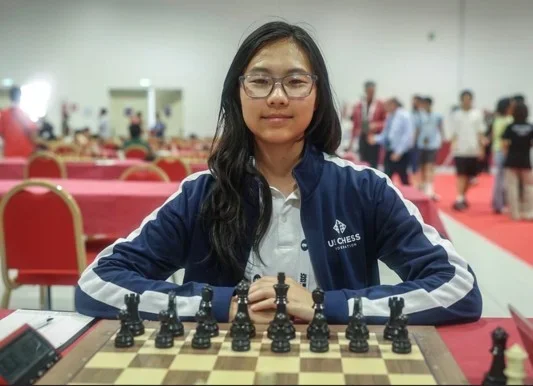
Some readers might be wondering why someone who didn’t finish on the podium is writing about the WYCC. I’m writing because I want to share the tournament from the perspective of a player who is still developing — a volatile player whose games are still filled with mistakes, wild evaluation swings, and horribly embarrassing blunders. It’s a view defined by learning, mistakes, and above all, gratitude.
Landing in Italy and Starting Round Nerves
After we all landed in the ancient, beautiful city of Rome, we had to take a three-hour shuttle ride to the hotel — the Serena Majestica — located in the scenic beach town of Montesilvano. Although it was a steaming hot, long, and jet-lagged night, the fatigue faded the moment I connected with my fellow U.S. teammates over a dinner of classic Italian food.
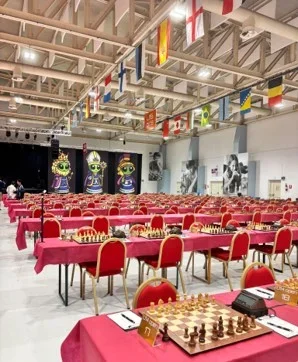
The next day, the tournament was already under way. When I walked into the playing hall, I sensed the buzz of excitement and nerves radiating from everywhere. I had never seen such a massive, formal, and decorated playing hall in my life! As I wandered over to my table where I was playing a girl from Germany, I caught smiles and waves from girls in my section and it made me feel like I belonged, even though my hometown was 4,300 miles away.
A Game To Remember
All but one of my 11 opponents were higher rated than me. In fact, six of them were titled players. With a 1765 FIDE rating, I entered the Under-16 Girls section seeded 69th out of 107 players. I expected to be paired up regularly, but not necessarily this often. I finished with a solid score of 4½/11 despite my tough pairings, which made my performance even more satisfying.
I loved the challenge that this tournament posed to my chess ability! Every round brought a new flag next to my opponent’s name, a new language on the other side of the board, and a completely different playing style on it.
Because of my opening preparation, I managed to get out of the opening smoothly in most of my first few games, holding positions against several higher-rated players. Every game took longer than three hours, and every game had many interesting and critical moments. Nearly every round, I sat down knowing I would need to play some of my best chess simply to stay in the game. Rather than feeling discouraged however, I found this motivating.
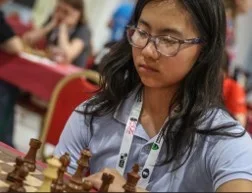
What challenged me most was learning how to reset. Along with all the other mentally exhausting factors that come with playing chess, this tournament added on the factor of stamina. After every round, no matter the result, another pairing was waiting for me after dinner, with the next game waiting around the corner. It felt nonstop, especially as the fatigue began to build up.
Of all eleven rounds, one game will always stay with me a bit more than the others. It wasn’t my highest-rated opponent, nor a game I played with a high accuracy, but it was my longest, and it captured everything I loved about the experience.
After that crazy win, my Slovenian opponent and I shared a wonderful conversation about the game and our cultures. Throughout the next rounds, we kept checking in on each other, exchanged contacts at the closing ceremony, and now we text almost everyday!
Fueled in part by that win from Round 3, I continued to play well, reaching a 3/6 score before the rest day. As the tournament continued, I started getting tired and my previously stable openings became inconsistent. I made some seriously mysterious, silly mistakes and blunders from the opening.
I finished the tournament off poorly with three tough losses all caused by my lack of understanding in the opening. I ended right around my initial seeding, and, even though the end wasn’t a “happy ever after”, I still finished with a performance rating of 1888 and gained over 60 FIDE rating points.
Rest Day, Gelato, and Lifelong Friends
Of course, the tournament wasn’t only about chess. Between rounds, Team USA bonded together over post-game analyses, team photos, bughouse, and even birthday celebrations.
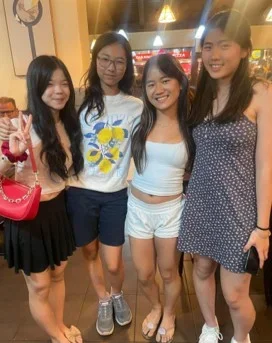
My friends and I — shoutout WCM Whitney Tse, Summer Loh, and Audrey Zhou — and I explored the beach, woke up at 5:00 AM to see the sunrise, shared many scoops of gelato, went to the pool and waterslides, hung out on the swings in the playground, accompanied each other through all the meals, and watched shows together.

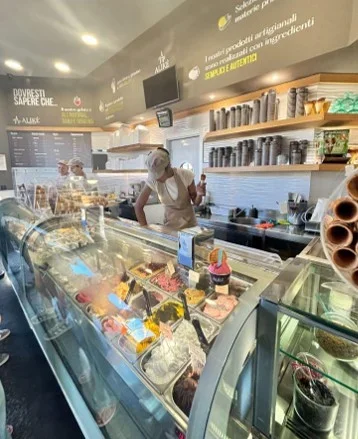

Everyone from team USA supported each other wholly through every high and low, and it was such a motivating environment to be in. We were experiencing something incredibly special together.
Ending Reflections and Note To Readers
The WYCC was an unforgettable experience to say the least. It reminded me that chess is so much more than ratings, trophies, or even individual games. It’s a community that reaches far beyond my usual local clubs and weekend tournaments.
Perhaps the greatest lesson I brought home wasn’t a new opening idea or tactical pattern, but a new perspective. Improvement shouldn’t be measured by the rating beside your name or where you finish in the standings, it should be measured by the courage to keep showing up and showing out, the humility to learn from stronger players, and the friendships you make along the way.
If you're a chess player reading this and wondering whether you’ll ever have the opportunity to compete internationally, I hope you’ll keep believing that you can. Every titled player was once a beginner. Every member of Team USA started at local tournaments. Every dream of representing your country begins with one lesson, one game, and one decision to keep on going.
You don’t have to be the highest-rated player in the room to belong in the room. I certainly wasn’t. But if you’re willing to work hard, stay curious, and continue learning from every game, chess can take you farther than you ever imagined.
As I flew home from Italy, I wasn’t just bringing back scoresheets and souvenirs, I was bringing back new friendships, unforgettable experiences, and a renewed love for a game that has shaped so much of my ordinary life. This may have been my first WYCC, but I hope it won’t be my last. And whether your dream is to play internationally, represent your state nationally, or simply improve your rating locally, I hope you’ll keep chasing it. After all, you never know where those 64 squares might take you.


Categories
Archives
- October 2026 (7)
- September 2026 (27)
- August 2026 (28)
- July 2026 (36)
- June 2026 (32)
- May 2026 (30)
- April 2026 (33)
- March 2026 (27)
- February 2026 (24)
- January 2026 (24)
- December 2025 (27)
- November 2025 (29)
- October 2025 (39)
- September 2025 (27)
- August 2025 (29)
- July 2025 (43)
- June 2025 (25)
- May 2025 (24)
- April 2025 (29)
- March 2025 (29)
- February 2025 (20)
- January 2025 (24)
- December 2024 (34)
- November 2024 (18)
- October 2024 (35)
- September 2024 (23)
- August 2024 (27)
- July 2024 (44)
- June 2024 (27)
- May 2024 (31)
- April 2024 (51)
- March 2024 (34)
- February 2024 (24)
- January 2024 (26)
- December 2023 (29)
- November 2023 (26)
- October 2023 (37)
- September 2023 (27)
- August 2023 (37)
- July 2023 (47)
- June 2023 (33)
- May 2023 (37)
- April 2023 (45)
- March 2023 (37)
- February 2023 (28)
- January 2023 (31)
- December 2022 (23)
- November 2022 (32)
- October 2022 (31)
- September 2022 (19)
- August 2022 (39)
- July 2022 (32)
- June 2022 (35)
- May 2022 (21)
- April 2022 (31)
- March 2022 (33)
- February 2022 (21)
- January 2022 (27)
- December 2021 (36)
- November 2021 (34)
- October 2021 (25)
- September 2021 (25)
- August 2021 (41)
- July 2021 (36)
- June 2021 (29)
- May 2021 (29)
- April 2021 (31)
- March 2021 (33)
- February 2021 (28)
- January 2021 (29)
- December 2020 (38)
- November 2020 (40)
- October 2020 (41)
- September 2020 (35)
- August 2020 (38)
- July 2020 (36)
- June 2020 (46)
- May 2020 (42)
- April 2020 (37)
- March 2020 (60)
- February 2020 (38)
- January 2020 (45)
- December 2019 (34)
- November 2019 (35)
- October 2019 (42)
- September 2019 (45)
- August 2019 (56)
- July 2019 (44)
- June 2019 (35)
- May 2019 (40)
- April 2019 (48)
- March 2019 (61)
- February 2019 (39)
- January 2019 (30)
- December 2018 (29)
- November 2018 (51)
- October 2018 (45)
- September 2018 (29)
- August 2018 (49)
- July 2018 (35)
- June 2018 (31)
- May 2018 (39)
- April 2018 (31)
- March 2018 (26)
- February 2018 (33)
- January 2018 (30)
- December 2017 (26)
- November 2017 (24)
- October 2017 (30)
- September 2017 (30)
- August 2017 (32)
- July 2017 (27)
- June 2017 (32)
- May 2017 (26)
- April 2017 (37)
- March 2017 (28)
- February 2017 (30)
- January 2017 (27)
- December 2016 (29)
- November 2016 (24)
- October 2016 (32)
- September 2016 (31)
- August 2016 (27)
- July 2016 (24)
- June 2016 (26)
- May 2016 (19)
- April 2016 (30)
- March 2016 (37)
- February 2016 (27)
- January 2016 (33)
- December 2015 (25)
- November 2015 (23)
- October 2015 (16)
- September 2015 (28)
- August 2015 (28)
- July 2015 (6)
- June 2015 (1)
- May 2015 (2)
- April 2015 (1)
- February 2015 (3)
- January 2015 (1)
- December 2014 (1)
- July 2010 (1)
- October 1991 (1)
- August 1989 (1)
- January 1988 (1)
- December 1983 (1)