

Silver Knights Chess Academy is a sponsor for this weekend’s National K-12 Grade Championships in Spokane, WA. The online academy has taught thousands of students of all grade and rating levels, and its students include 11 state scholastic champions. In this article, journalist and Silver Knights coach Emily Maxwell shares the history of how the academy became what it is today and what it means to its students.
Keep an eye out for their booth in the skittles room in Spokane to learn more about the academy, get free game analysis, and a free trial month of online academy lessons for all participants. Plus, join Adam Weissbarth on Sunday, Dec. 14 in Room 401B for From Munchkin to Master: How to help your child take the next step, a free lecture on developing young talent. Current Silver Knights students can also stop by the team room for additional coaching from an on-site IM.
The Academy Goes Digital
When the pandemic shuttered schools and community centers in the spring of 2020, Silver Knights Chess Academy (SKCA) founders Adam and Daniel Weissbarth faced a major dilemma. Their company had been running scholastic chess clubs and tournaments across the Baltimore-Washington metro area for more than a decade — how could they keep it afloat when students and coaches could no longer gather in person?
Enter SKCA’s online Chess Academy, a unique offering that brought the after-school club experience into the virtual world. Though it initially felt like a risk, the program’s design eventually paid off.
“Daniel and Luke [Everett], with a little help from some of the earliest coaches, were really creative and entrepreneurial with how they approached it,” Adam Weissbarth said of the program’s inception. “Against all odds, they figured out a way to make it a good experience for the kids.”
Each week, students could attend a lesson taught by an experienced coach and participate in an in-class tournament against their peers, allowing them to continue their chess education from home. Within a matter of months, so many students had signed up for classes that the Weissbarths had to hire additional coaches to meet demand, and by the spring of 2025, young players from all 50 states and six continents had passed through the Academy’s virtual classrooms. Eleven of these students became state scholastic champions this year, and several more earned their first titles.
Hosting online classes gave SKCA the opportunity to do something it couldn’t with its hundreds of in-person programs: provide small group instruction tailored for students of every skill level, especially those who had outgrown their school clubs and wanted to progress to more advanced lessons. Whether a student has never seen a chess board before or is one of the highest rated players in their age group, Silver Knights has a class, curriculum, and coach to suit their needs.
To cover this broad spectrum of familiarity with the game, the Academy hosts between 110 and 120 classes per week across its nine class levels. Intermediate and advanced classes are the most popular, with six levels available and around 20 timeslots on offer for each; students in its three beginner levels have nearly 30 total options to choose from, and members of the Elite Academy — the Academy’s two most advanced levels — have seven.
Coach and IM Adarsh Tripathi thinks this structure is a major component of what makes the Academy a success. “There’s a bit of everything for everyone, which ensures that students are challenged appropriately without being overwhelmed,” Tripathi said. “The semi-private format, mix of lessons and game analysis, and the way the program fits every type of student — from someone who wants a fun extracurricular activity to the seriously ambitious kids — make teaching incredibly smooth.”
More Than A Lecture!
Wisconsin State Champion Ojas Sahoo has been part of the online program for nearly a year and believes it’s had an impact on his chess. He takes classes through SKCA’s Elite Academy, which was designed for competitive tournament players with US Chess ratings above 1400 and is coached exclusively by GMs Johan Hellsten, Lazaro Bruzon, and Ruben Felgaer. “It’s a really good academy. It gives you lots of opportunities,” Sahoo said. “The classes are a good length, and you get to do all sorts of puzzles and games. They help with learning new tactics and being able to solve them faster. Also, with the [in-class] tournaments, you get to play against people your rating.”
Brian Dai, a fellow Elite Academy student who’s currently ranked #8 under 8 in the U.S., also enjoys the dynamic structure of his classes. “I like that it’s not just a lecture. There’s also practice involved every week.” He credits getting to face off against his classmates with helping him improve as a player. “When I’ve played National Master Will Moorhouse, I’ve learned a lot from him.” Dai credits those games with Moorhouse for helping with some of his proudest wins, including the below game against another master, which he annotated:
Student Si Hao Huang studies under GM Lazaro Bruzon and FM Gustavo Cadena and has seen his US Chess rating increase significantly since joining the program: between October 2024 and October 2025, it jumped from 906 to 1787. “They help me improve. I’ve learned a lot from their classes,” he said of his coaches. Huang’s mother, Pink, values the encouragement and feedback both coaches give her son.
“They talk about different classical games and analyze students’ games so they can learn from each other,” Pink said. “They give him more confidence to do his next tournament and next game.”
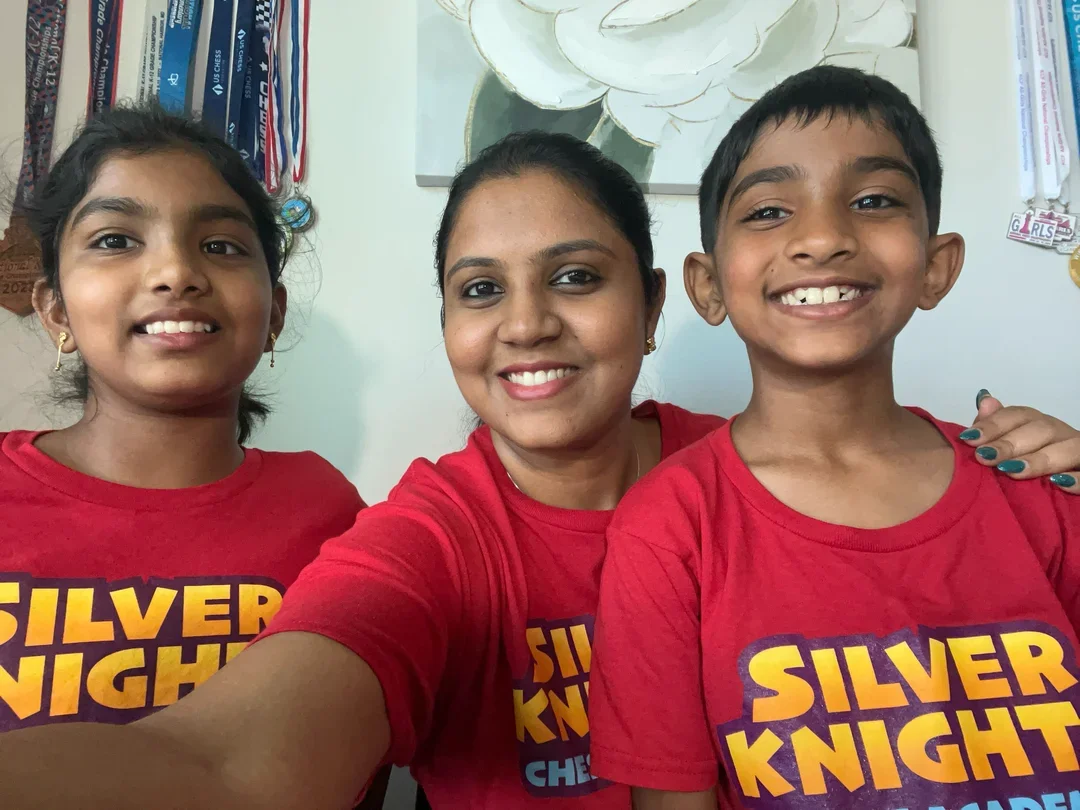
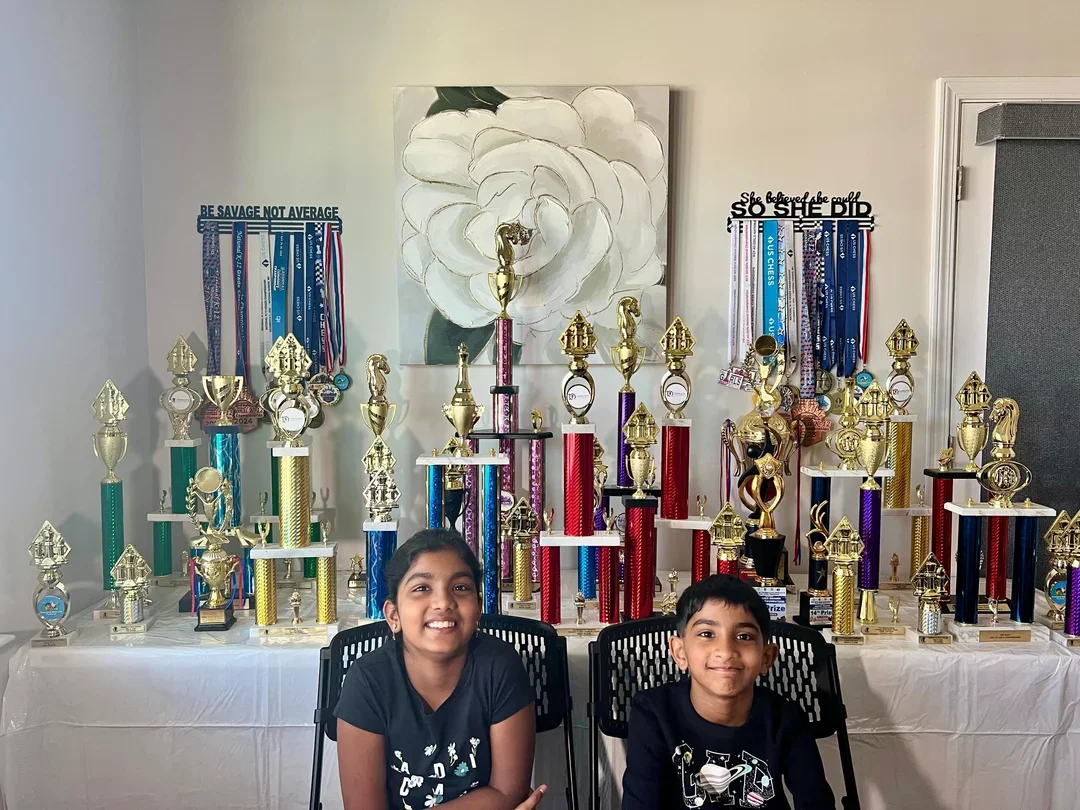
For students, parents, and coaches alike, flexibility and range are the online Academy’s biggest assets. Coach and WFM Uthra Pakkirisamy, who works with the Academy’s intermediate and advanced students, gets to experience the program from both the instructor and parent perspectives: her daughter Diya, the 2025 South Carolina Girls Champion, and son Druv are both students. She appreciates the support provided by SKCA to its coaches — a sentiment shared by coaches Will Osborne and WCM Rachelle-Mari Voges — but she especially likes how easy they make it for parents to fit classes and other activities into their busy schedules.
“It’s really good on the parents’ side,” Pakkirisamy said. “I love the flexibility of scheduling.” The Academy has an open scheduling system and doesn’t penalize families for missing classes; If they register for a particular class time but fail to make it, they can simply re-register for another timeslot later in the week without facing any additional fees.
The ease of access offered by the program has been especially beneficial to students from areas that lack over-the-board opportunities for scholastic players. “I was looking for chess and trying to learn more as a parent, and being that we live more remote, we didn’t have a state chess association yet,” said Lindsey Taylor, who struggled to find places for her son David to learn and play within reasonable distance of their home in Alaska. After coming across a parent webinar about the program, she signed David up for classes; he now studies under GM Hellsten in the Elite Academy.
“It’s been really helpful for me. I look forward to doing the classes every week,” David said. “I like it when we analyze games. I can bring my own games and [GM Hellsten] says what I need to work on and the mistakes that I made.” His favorite lesson was an analysis of one of GM Hellsten’s tournament games, which was a study on how to trap an opponent’s pieces. “It was pretty cool that I could use [the concepts] he did in the games that I played.”
One of WFM Pakkirisamy’s students participated in lessons all the way from Australia. “He took classes at 3:00 a.m. local time, but he was always showing up and saying, ‘I’m so excited to be here!’”
The First Rule of Book Club…
In addition to the weekly classes included in the Academy’s membership plans, students eager to engage with more chess content can attend the program’s array of complimentary bonus activities. One of the most popular offerings is Book Club with Coach Luke Everett, where the group examines concepts, puzzles, and positions from a selected title before playing games. While months may be spent working through a particular book, students aren’t required to pick up their own copy to participate.
“The first rule of Book Club is that you don’t have to buy the book,” Everett joked. Instead, the goal is to get kids interested in the world of chess books and the resources that can be found in them. This fall, the group has been exploring WIM Natasha Regan and Matt Ball’s Zwichenzug!; previous selections have included works by GM Judit Polgar and GM Hellsten, among others.
For additional gameplay, students can join Tactics Tuesday with IM Dorsa Derakhshani, which includes an arena tournament in the latter half of each meeting, or the Saturday Morning Social, where kids can gather to hang out, talk chess, and participate in friendly games. Unlike standard classes, which are capped at eight students, bonus activity attendance can reach as high as 40-50 students.
WFM Pakkirisamy appreciates that the Academy’s classes offer students the chance to build community. “They allow kids to talk to other kids from all over the world and share their excitement about chess,” she said. Charles Cong, a student from Texas who loves to solve IM Derakhshani’s tactical puzzles, names the social aspect as his favorite part about being a member of the Academy. “I like that I make a lot of friends,” he said.
Maryland State Champion Shlok Srivastava is also a big fan of the Academy’s bonus activities. Though he regularly attends Tactics Tuesday and Book Club, his favorites are the Grand Prix tournaments held each Thursday as part of the Coach’s Choice sessions. “There’s a short lesson, and then you get to play games for a long time,” he said. “I like that because you get to practice for your chess tournaments.”
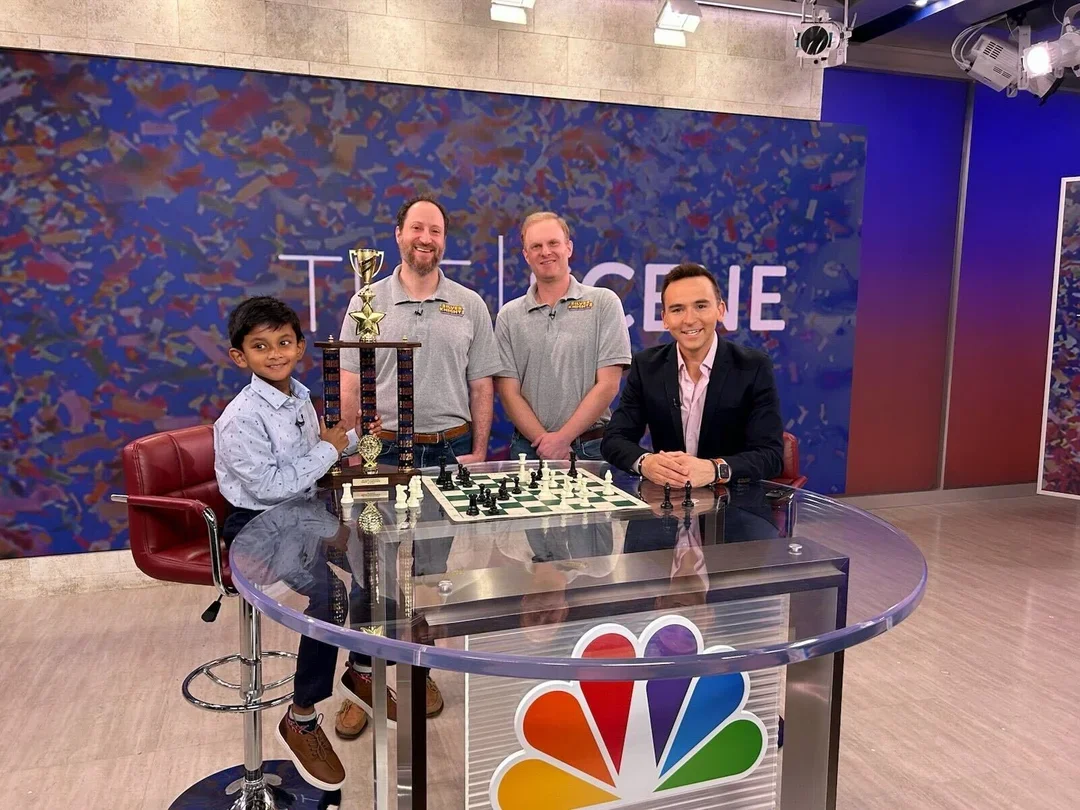
Srivastava first joined SKCA as an in-person student at his school chess club, but once it became clear that he was no longer being challenged enough by the lesson material, his coach suggested his parents enroll him in the online program instead. “We are really satisfied with Silver Knights and the way they take so much interest in helping kids like Shlok make chess their own game,” said his father Anup. “As parents, we do not have any prior experience with chess, so we think Silver Knights provides a great package for kids to thrive in this tough environment. They give you a platform for kids like Shlok to transition to higher goals.”
From the Classroom to the Tournament Hall
Anup Srivastava also appreciates the offline support SKCA provides its online students. “When I took Shlok to Nationals at the National Harbor last year, Silver Knights had breakout rooms where we got to interact with a coach and Shlok got his games analyzed. These things play a very important part.”
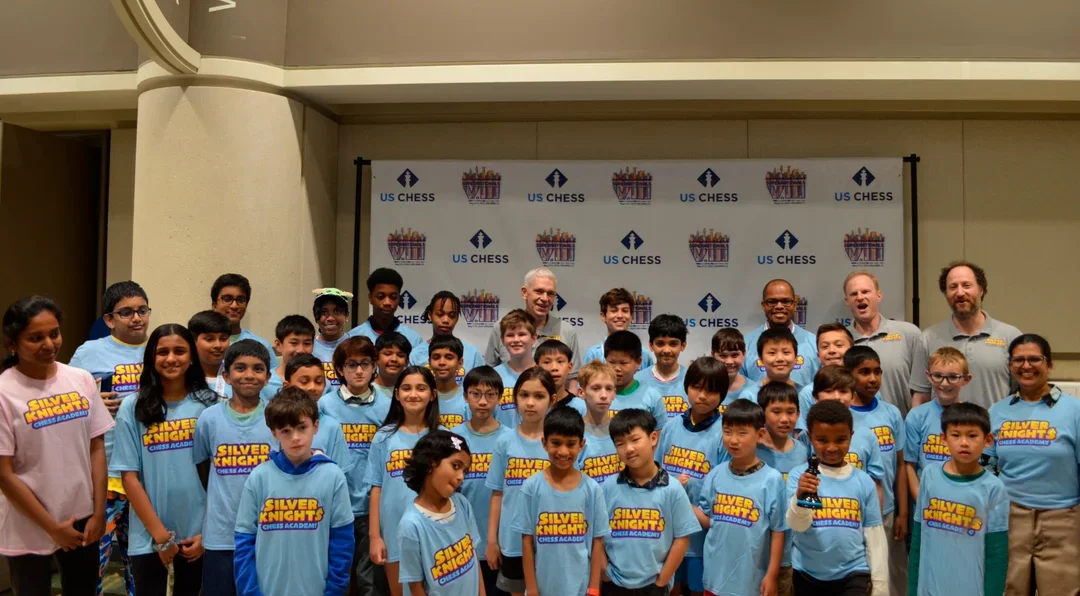
At this year’s SuperNationals VIII, SKCA set up a similar space: a team room where students could mingle with peers and coaches between rounds, get feedback on their play, and blow off steam. For several students, it was the first time they’d ever interacted with their classmates or coaches in person.
“The kids spent the weekend hanging out, and it was kind of this magical experience,” founder Adam Weissbarth said on a recent episode of the “Perpetual Chess” podcast. “They know each other’s favorite openings and have played [each other] before but never met, so it was really fun to see them meet and their parents get to meet.”
Another unique opportunity the Academy offers its students is the chance to attend special sessions with all-star GMs like Magnus Carlsen, Judit Polgar, and Anish Giri, where kids have the opportunity to ask questions, get advice, and participate in short games. At an event with Carlsen, Diya Pakkirisamy asked him if he had ever cried after a tournament loss.
“He was quiet for a long time, then said, ‘It’s okay to cry after you lose, but we learn something from our losses,’” WFM Pakkirisamy said. Diya also had a chance to play a game against GM Giri and ask for his thoughts on a variation of the Vienna that she’d been working on; he provided a number of insights she found helpful.
IM Tripathi, who grew up competing against grandmasters like Praggnanandhaa and Gukesh, remembers this moment fondly. “Can you imagine?! A world-class super grandmaster directly answering your specific question? I think the impact of something like this — to hear from your heroes — provides motivation that simply cannot be quantified. It's absolutely amazing.”
Shlok Srivastava’s mother Gita agrees. “Shlok has always looked forward to these sessions,” she said. “One time, I remember we were traveling and he wanted to attend one, so he just put headphones on to attend the session in the car. For kids, the ultimate goal in chess is becoming a GM, and when they get to interact with someone who has reached that pinnacle, I think it’s really motivating for them to keep going. At this age, it’s more important to keep them motivated than to win everything.”
Student Anisha Chaudry, who looks up to female GMs like Judit Polgar and Divya Deshmukh, has also participated in several of these events. “I got to see Anish Giri and ask him some questions, and I also got to see Judit Polgar. I got to know more about her and how her games work, and what openings are stronger and stuff. For Judit, what I like about her is that she likes to attack, and Divya, she doesn’t give up. She just keeps playing and playing no matter what.”
Chaudry has benefitted from the Academy’s curriculum structure, which offers nine different class levels that cover a wide spectrum of skill and intensity. She started as a beginner last year and has since progressed to the advanced levels, where she’s coached by WFM Pakkirisamy.
“Silver Knights makes chess fun with all of those tactics and all of those fun things you get to do. We have good coaches, and the classes are really fun with all the quizzes and stuff,” Chaudry said. “You feel really good when you get them correct. I’ve learned more and more since I’ve moved up levels. I also get to study my coach’s games and how they play, so I get to know them more.”
As this year draws to a close, SKCA has one more big event on its books: the 2025 National K-12 Grade Championships, which the company is sponsoring. Coaches Will Osborne and IM Derakhshani will be on hand to assist students and analyze games, and founder Adam Weissbarth is slated to deliver a talk for parents on Sunday, December 14. Click here for more information about the tournament, including a full schedule of each day’s events.


Categories
Archives
- October 2026 (7)
- September 2026 (27)
- August 2026 (28)
- July 2026 (36)
- June 2026 (32)
- May 2026 (30)
- April 2026 (33)
- March 2026 (27)
- February 2026 (24)
- January 2026 (24)
- December 2025 (27)
- November 2025 (29)
- October 2025 (39)
- September 2025 (27)
- August 2025 (29)
- July 2025 (43)
- June 2025 (25)
- May 2025 (24)
- April 2025 (29)
- March 2025 (29)
- February 2025 (20)
- January 2025 (24)
- December 2024 (34)
- November 2024 (18)
- October 2024 (35)
- September 2024 (23)
- August 2024 (27)
- July 2024 (44)
- June 2024 (27)
- May 2024 (31)
- April 2024 (51)
- March 2024 (34)
- February 2024 (24)
- January 2024 (26)
- December 2023 (29)
- November 2023 (26)
- October 2023 (37)
- September 2023 (27)
- August 2023 (37)
- July 2023 (47)
- June 2023 (33)
- May 2023 (37)
- April 2023 (45)
- March 2023 (37)
- February 2023 (28)
- January 2023 (31)
- December 2022 (23)
- November 2022 (32)
- October 2022 (31)
- September 2022 (19)
- August 2022 (39)
- July 2022 (32)
- June 2022 (35)
- May 2022 (21)
- April 2022 (31)
- March 2022 (33)
- February 2022 (21)
- January 2022 (27)
- December 2021 (36)
- November 2021 (34)
- October 2021 (25)
- September 2021 (25)
- August 2021 (41)
- July 2021 (36)
- June 2021 (29)
- May 2021 (29)
- April 2021 (31)
- March 2021 (33)
- February 2021 (28)
- January 2021 (29)
- December 2020 (38)
- November 2020 (40)
- October 2020 (41)
- September 2020 (35)
- August 2020 (38)
- July 2020 (36)
- June 2020 (46)
- May 2020 (42)
- April 2020 (37)
- March 2020 (60)
- February 2020 (38)
- January 2020 (45)
- December 2019 (34)
- November 2019 (35)
- October 2019 (42)
- September 2019 (45)
- August 2019 (56)
- July 2019 (44)
- June 2019 (35)
- May 2019 (40)
- April 2019 (48)
- March 2019 (61)
- February 2019 (39)
- January 2019 (30)
- December 2018 (29)
- November 2018 (51)
- October 2018 (45)
- September 2018 (29)
- August 2018 (49)
- July 2018 (35)
- June 2018 (31)
- May 2018 (39)
- April 2018 (31)
- March 2018 (26)
- February 2018 (33)
- January 2018 (30)
- December 2017 (26)
- November 2017 (24)
- October 2017 (30)
- September 2017 (30)
- August 2017 (32)
- July 2017 (27)
- June 2017 (32)
- May 2017 (26)
- April 2017 (37)
- March 2017 (28)
- February 2017 (30)
- January 2017 (27)
- December 2016 (29)
- November 2016 (24)
- October 2016 (32)
- September 2016 (31)
- August 2016 (27)
- July 2016 (24)
- June 2016 (26)
- May 2016 (19)
- April 2016 (30)
- March 2016 (37)
- February 2016 (27)
- January 2016 (33)
- December 2015 (25)
- November 2015 (23)
- October 2015 (16)
- September 2015 (28)
- August 2015 (28)
- July 2015 (6)
- June 2015 (1)
- May 2015 (2)
- April 2015 (1)
- February 2015 (3)
- January 2015 (1)
- December 2014 (1)
- July 2010 (1)
- October 1991 (1)
- August 1989 (1)
- January 1988 (1)
- December 1983 (1)