

The air in the Times Square Marriott Marquis was ionized with anxiety on January 3 and 4 for the New York Metro Scholastic Chess Championships. Children carrying chess bags were whooshed pneumatically to their respective playing halls in the hotel’s famous glass elevators as 1,438 players from kindergarten through 12th grade moved with stone-faced focus, dutifully dragging coteries of parents, coaches, and all manner of extended family as they flooded nine floors of premium conference space in Midtown Manhattan.
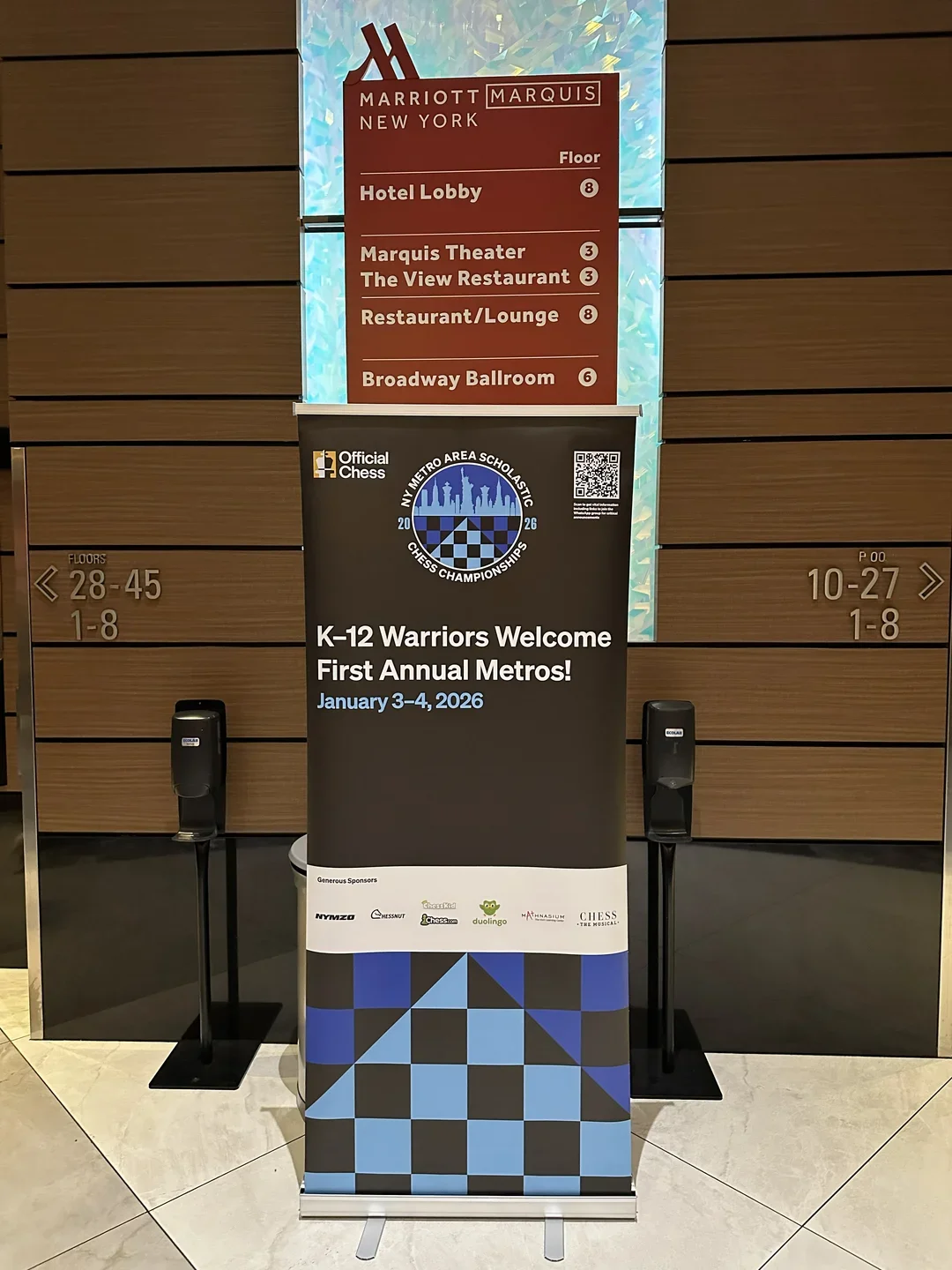
For their part, new organizer Official Chess sustained the buzz of potential from its first press release, to its Instagram page, right up to the very minute of the tournament’s kickoff. But now, it was time to put up.
Anyone who’s ever been to a major chess tournament, scholastic or otherwise, knows that the devil is in the details. The image of parents lying on hotel floors waiting as hour three of their kid’s game turns to hour four is one that most chess players know well. The reliability of text notifications. The supply of soap and toilet paper in the bathrooms. The availability of chess supplies. These (or the lack thereof), along with a thousand other pieces of minutiae, are often the areas where parents and players' complaints lie.
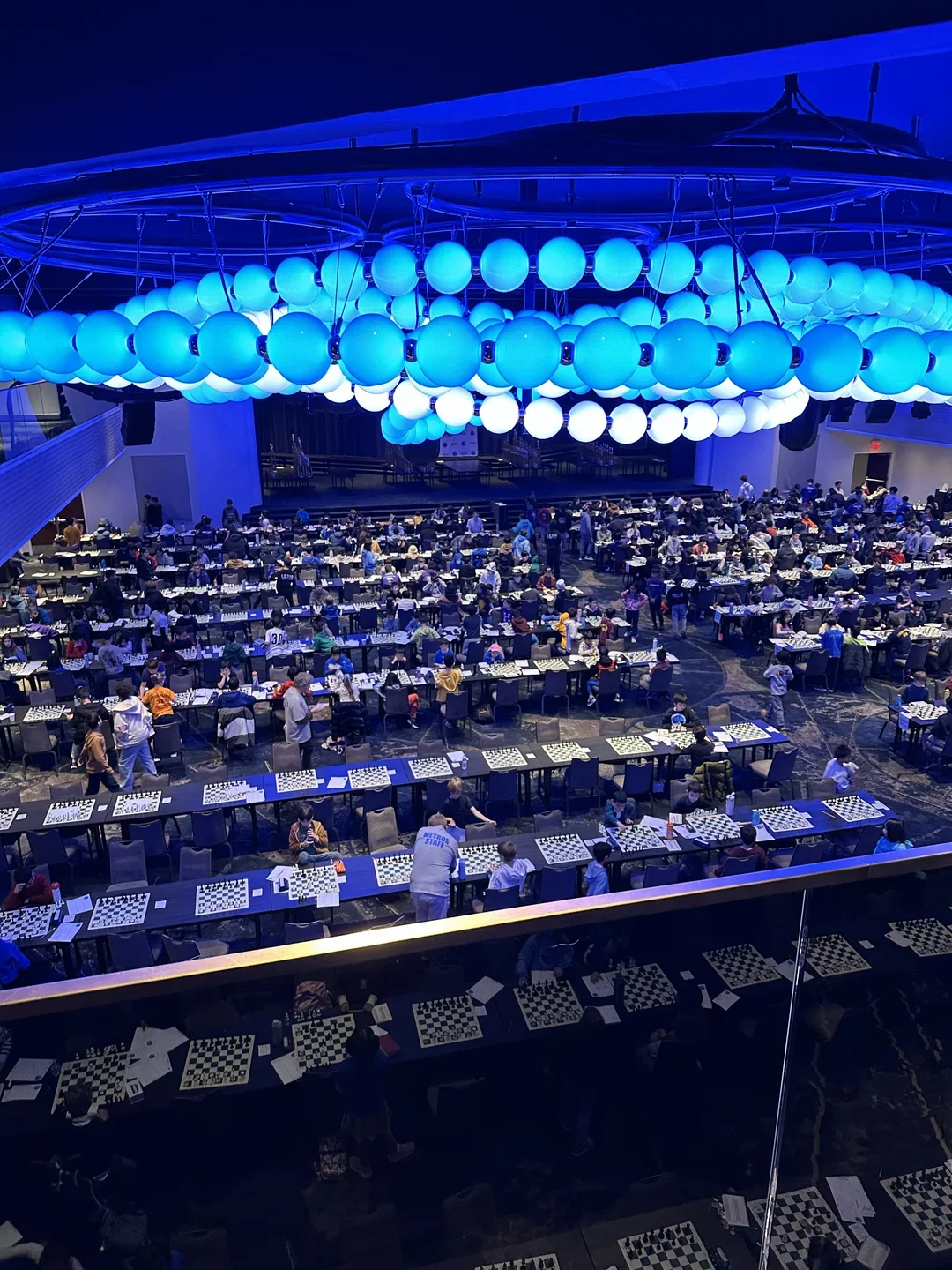
From the onset it was clear that, at the very least, the art of spectacle had been reintroduced to the New York City scholastic chess scene. There were booths set up by shockingly robust sponsors like language-learning giant Duolingo, Broadway hit Chess: The Musical, and chess stars like New Jersey’s GM Abhimanyu Mishra. The parents' waiting area was spacious and full of seats. And Mark Kurtzman’s bookstore was replete not just with chess books, but with best-sellers appropriate for all skill and age levels.
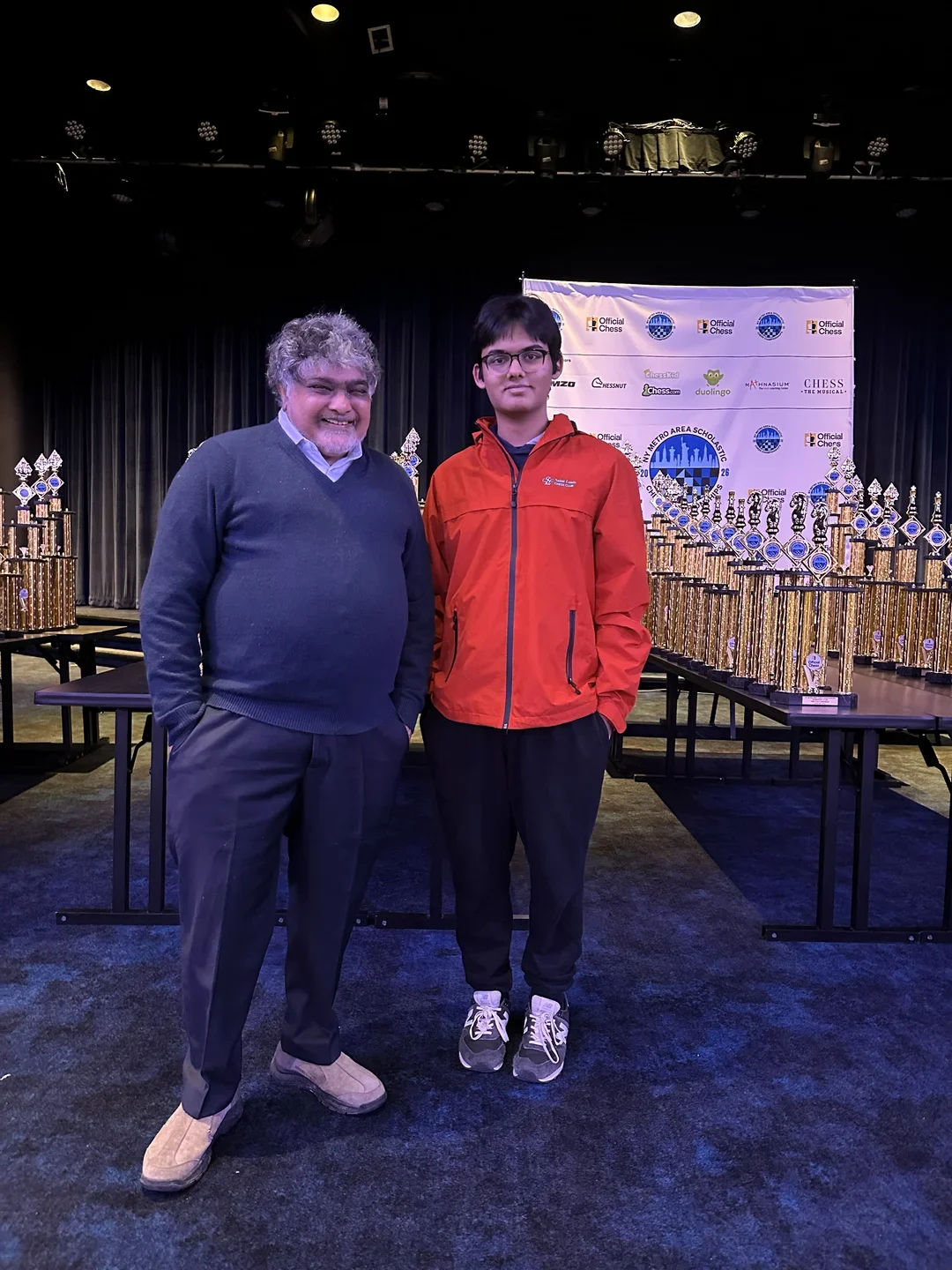
I, myself, had a student playing in the tournament, and I remember remarking to his parents upon arrival that “this looks to be the best run major tournament I’ve ever seen, let’s see how they do once the rounds starts.”
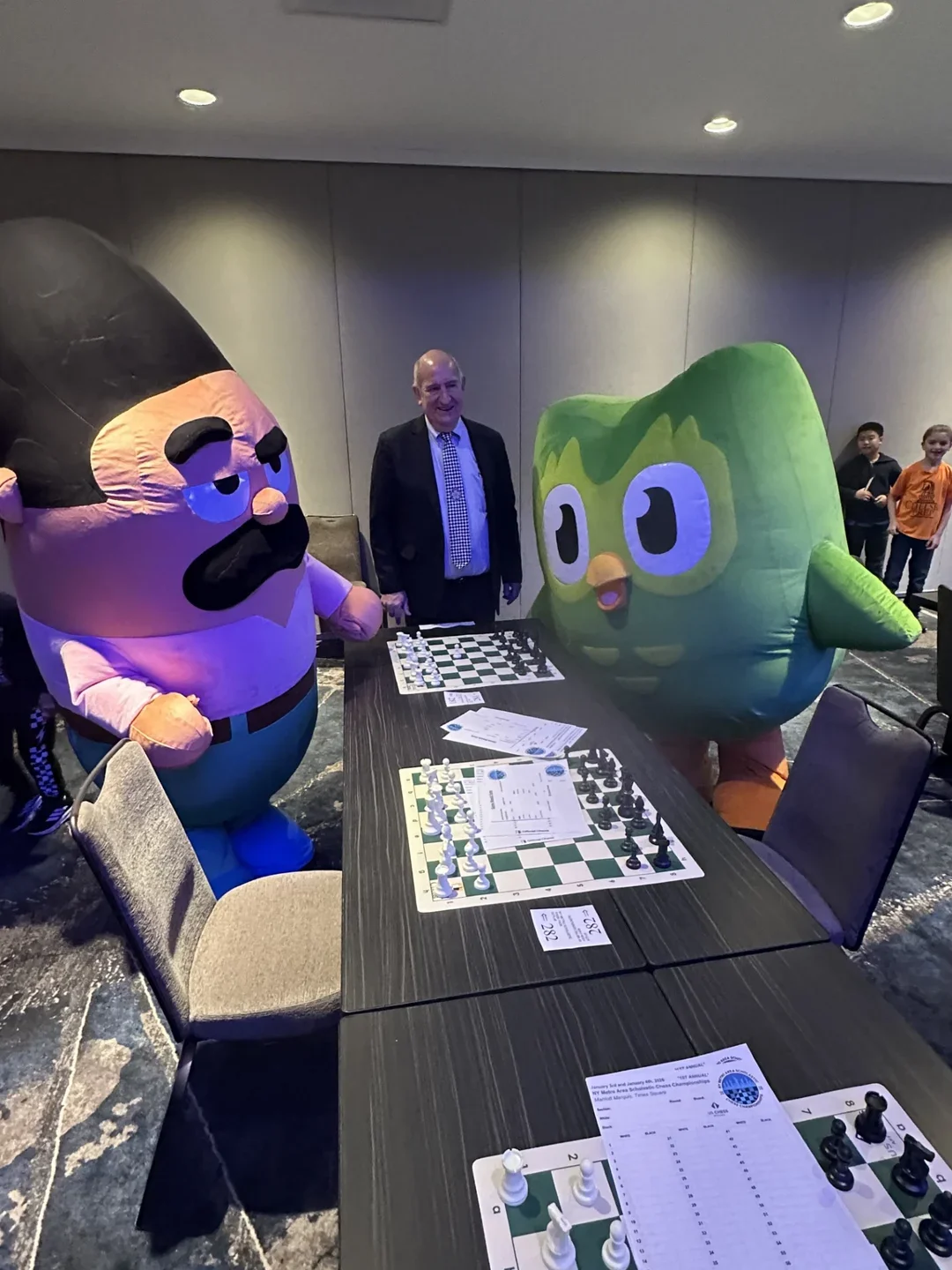
A cynic by nature, I was floored by the organization of it all. The rounds were punctual, the TDs masterfully directed traffic, and the kids were having a blast playing skittles games on sleek Nymzo boards and hanging out with Duolingo’s giant (and somewhat terrifying) anthropomorphic owl mascot.
Other celebrity sightings included FM Mike "FunMaster" Klein — Chief Chess Officer for ChessKid, who also sponsored the event — and popular chess streamer and influencer JulesGambit, both of whom were a hit with the kids before the event even started.


One might think that this standard would drop as the tournament went on, but no. The drum beat on with military efficiency, which in retrospect makes sense since chief TD NTD/IA David Hater is a retired colonel. From tip to tail, the show went off without a hitch.
As for formatting, the tournament consisted of five championship sections: K-1, Primary (K-3), Elementary (K-5), Junior High (K-8), and High School (K-12), along with their respective under sections, giving players of all levels a chance to compete for trophies.
All standings can be found here, and results are also available on MUIR.
In the High School section, FM Bryan Enming Lin took clear first with a 5½/6 score, and Lin’s Hunter College Campus School finished as the top team with a 19½/24 composite score from its top four players. Lin’s third-round win is included below:
Four players tied for first in the Junior High section with 5½/6 scores. In tiebreak order: WCM Alice Chovanec, Armaan Jain, Warren Liang, and Leqi Han. Chovanec’s top tiebreaks were due in part to her last-round win over the only player to enter the final round with a 5/5 score:
Hunter College Campus School again won the top team prize, this time with a blistering 21/24 score that included Co-Champions Liang and Han as well as two more players — WCM Arabella Fang and Kenji Goto — who tied for fifth with 5/6 scores. Chovanec’s Trinity School finished second with an 18/24 score.
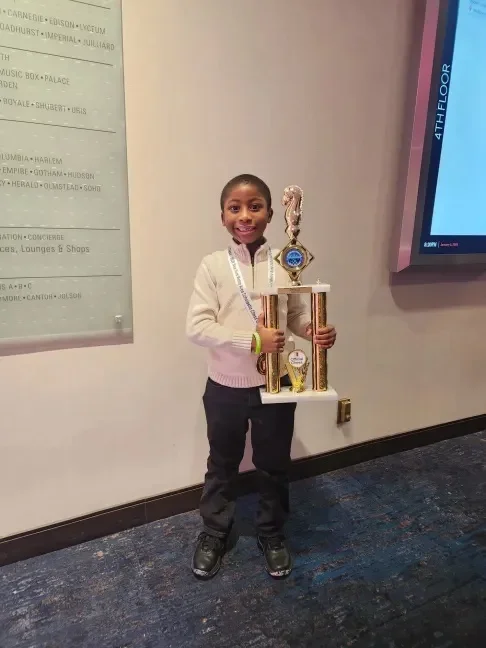
In the Elementary section, four players again tied for first with 5½/6 scores. In tiebreak order: Kevin Xu, Aarav Singh, Isaac Noah Lui, and Melanie Liang. No Co-Champions were on the winning PS 130K The Parkside School team, which posted a 17½/24 score to finish a full point ahead of Hunter College Campus School.
Max Mulholland took clear first in the Primary section with an unblemished 6/6 record, essaying games full of teachable moments for his K-3 peers:
Three teams tied for first in the Primary with 15½/24 scores. In tiebreak order: PS130K The Parkside School, Saddle Rock Elementary School, and PS 130M Hernando De Soto.
Finally, in the K-1 section, Andrew Sirya’s 6/6 score put him an entire point ahead of the five players tied for second. Speyer Legacy School won the team prize with a 16/24 score.
The "under" sections also boasted a faster time control for kids who weren’t quite ready to play grueling classical chess. The choice to use a faster time control for these sections was one of the details the organizers focused on when designing this tournament to be accessible and inclusive for as many children and families as possible.
“I’m not a chess guy. I’m a chess dad,” Tony Seto, founder of Official Chess, stated when I called him a few days following the tournament.
“My son started again in second grade. He loves it so much, he’s so passionate.” From there he extolled the value chess has brought to his son’s life. “Chess has improved his maturity and given him a lot of confidence,” he continued.
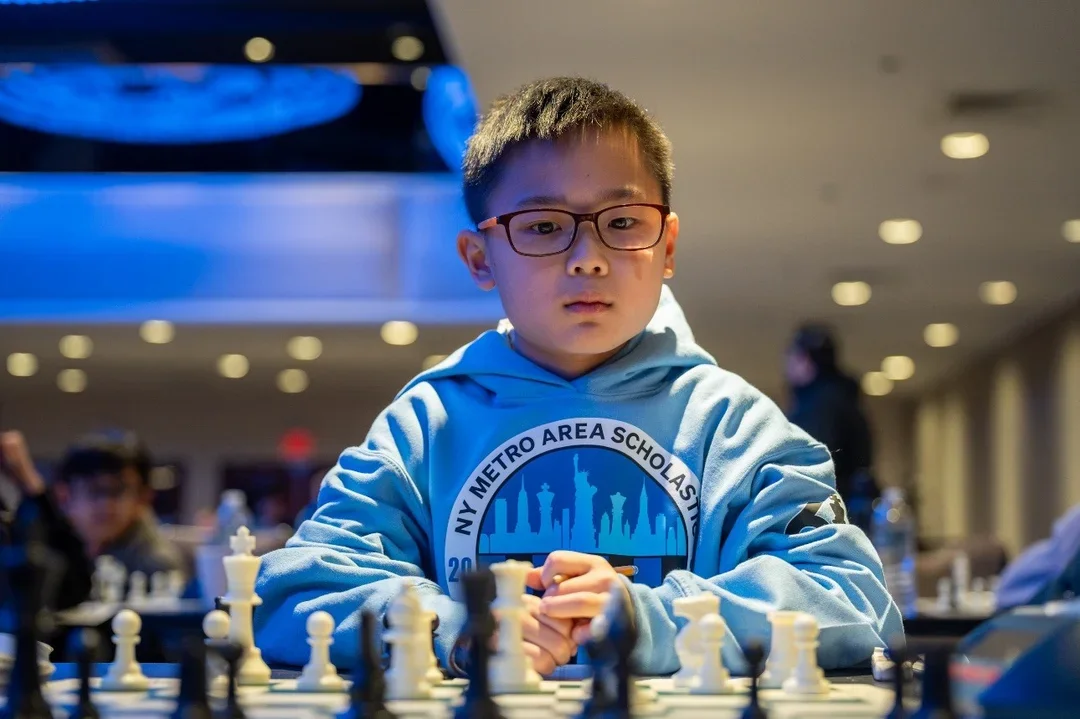
“Layer on top of that the social aspects of the community. It’s been a wonderful experience. People like David Hater and [FM] Sunil [Weeramantry] have built this high level of scholastic competition over the years. It’s so unique for kids his age. Not saying chess is the only good thing for a kid but having the apparatus of [US Chess] and these major scholastic events, there’s nothing else like it. I think it comes down to the rating system. I think it prepares kids for life. Like gosh, wins and losses still matter. Every move counts and every game counts. That’s a lot of pressure for sure so there’s a little bit of a balance there.”
At this, legendary chess educator and Tony’s chief advisor, FM Sunil Weeramantry stepped in.
“Winning and losing has to be put into perspective. It’s a mistake to compare yourself to anybody else. We teach chess at Hunter [College Campus Schools] but it’s not about turning out great chess players. It’s a process. We understand the value of the process and the kind of thinking that’s involved. Why can’t we bring that to kindergarten? Otherwise you have to wait until you engage in the sciences to get that kind of thing.”
As far as the tournament was concerned, the two were in lockstep. Weeramantry was clearly proud that his nearly 65 Hunter College Campus kids dominated the field (winning two team titles in championship sections, and finishing second in a third), but he seemed most excited at the tournament being back in New York for the first time since Covid. “Both of my kids grew up on this tournament,” he said. “Obviously you know Hikaru, but my older son also won national championships before moving on from chess. It’s an important tournament for the city. There were almost 1450 kids and school wasn’t even in session.”
Seto was more pensive. “My parents came over as immigrants in the 70s with nothing,” he said. “If I had played growing up, my mom probably would have slapped me in the face if I suggested going down to Orlando to play chess. My son is lucky. We hop on a plane and travel to play chess. But there are thousands of kids in New York who love chess who are probably in the same situation [I was]. The fact is it’s just not possible for these kids who love chess as much as my son. Most kids aren’t in the same situation.” As someone who does a lot of chess work in underserved communities, this sentiment struck a chord with me.
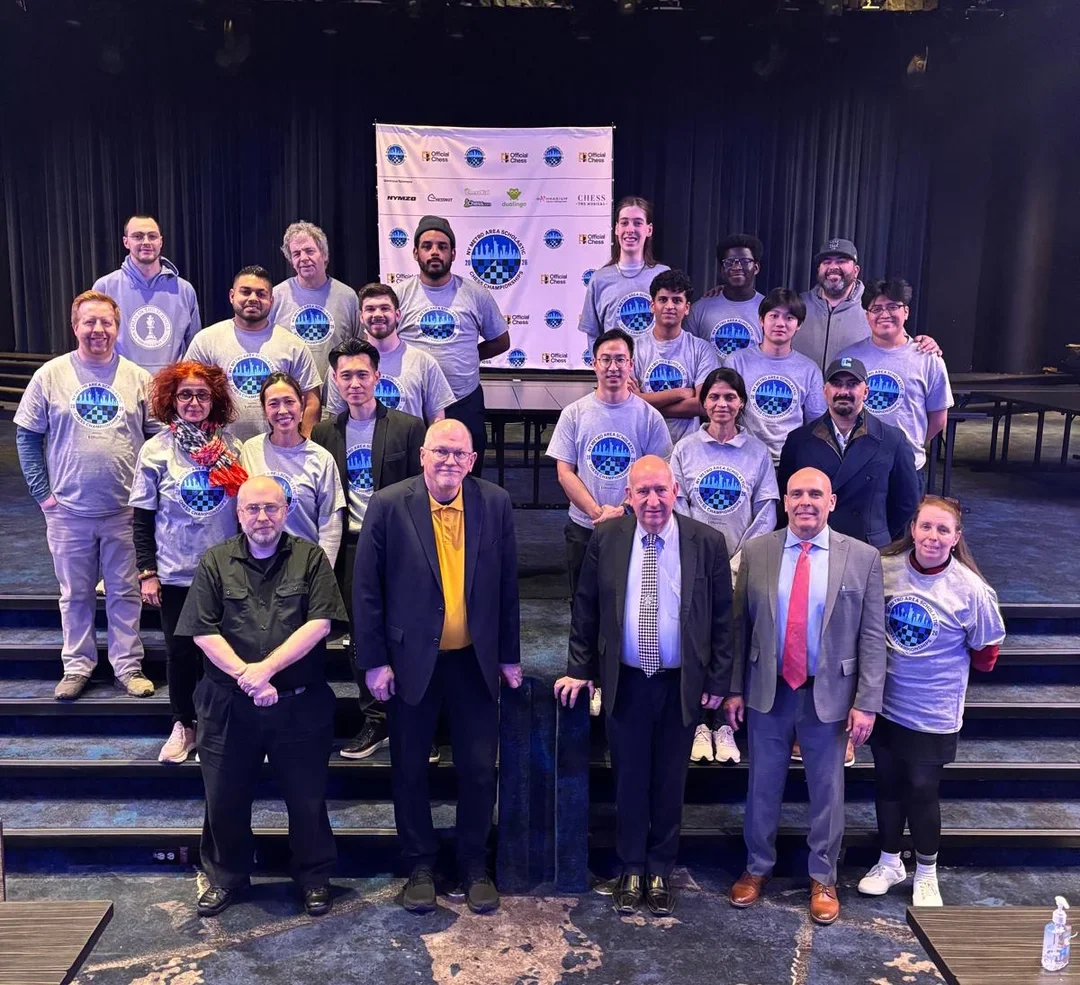
I recall toward the end of the tournament I had a question about the location of the trophy ceremony and I asked someone I assumed was a TD. It turned out to be Seto. At the time he had no idea I’d be writing this article. I simply complimented him on a job well done and he modestly gave credit to others while giving me a lovely five-minute spiel, all while simultaneously directing traffic in five different directions. When I called him a few days later, it somehow felt as though I were talking to an old friend.
When Seto says lofty things like “I want to eliminate the debate between chess being a game and a sport. Great infrastructure will make it a sport,” you get the feeling that concrete plans are already in motion. When he says, as many have said before, that chess needs to go after serious corporate sponsors, you can’t help but imagine him in a boardroom with Rolex or Mercedes or whatever other prestige brand is currently representing Pro Tennis or F1. A breath of fresh air in chess, Seto is quick to pass credit onto his advisors and tournament directors, saving none for himself, but to quote his confidant Weeramantry: “It’s all for the kids, [but] Tony cut the checks. He’s the one who made it happen.”
To this Seto simply laughed, “Time is just as valuable as money. People believed, not in me, but that this would be good for the kids.” Based on last weekend’s turnout and reception, this sentiment is hard to argue with.
"But Neot Doron-Repa was instrumental in helping me from the beginning," Seto added. "My son has only been playing chess for a couple of years so I’m really new into the world. There was another parent (Neot) who has been a chess parent for many years and from the beginning helped give me the confidence that this was a good initiative."
Seto also wanted to be sure to include his gratitude for Chess in the Schools, Elizabeth Spiegel, The Right Move, ChessNYC, and Tri-State Chess, saying that, "They were also supportive from the very beginning, when I had zero registrations."
Seto has confirmed that his organization’s goal is to run the tournament yearly. It would seem that the United States’ premier chess city once again has a scholastic championship worthy of its reputation.


Categories
Archives
- October 2026 (15)
- September 2026 (27)
- August 2026 (28)
- July 2026 (36)
- June 2026 (32)
- May 2026 (30)
- April 2026 (33)
- March 2026 (27)
- February 2026 (24)
- January 2026 (24)
- December 2025 (27)
- November 2025 (29)
- October 2025 (39)
- September 2025 (27)
- August 2025 (29)
- July 2025 (43)
- June 2025 (25)
- May 2025 (24)
- April 2025 (29)
- March 2025 (29)
- February 2025 (20)
- January 2025 (24)
- December 2024 (34)
- November 2024 (18)
- October 2024 (35)
- September 2024 (23)
- August 2024 (27)
- July 2024 (44)
- June 2024 (27)
- May 2024 (31)
- April 2024 (51)
- March 2024 (34)
- February 2024 (24)
- January 2024 (26)
- December 2023 (29)
- November 2023 (26)
- October 2023 (37)
- September 2023 (27)
- August 2023 (37)
- July 2023 (47)
- June 2023 (33)
- May 2023 (37)
- April 2023 (45)
- March 2023 (37)
- February 2023 (28)
- January 2023 (31)
- December 2022 (23)
- November 2022 (32)
- October 2022 (31)
- September 2022 (19)
- August 2022 (39)
- July 2022 (32)
- June 2022 (35)
- May 2022 (21)
- April 2022 (31)
- March 2022 (33)
- February 2022 (21)
- January 2022 (27)
- December 2021 (36)
- November 2021 (34)
- October 2021 (25)
- September 2021 (25)
- August 2021 (41)
- July 2021 (36)
- June 2021 (29)
- May 2021 (29)
- April 2021 (31)
- March 2021 (33)
- February 2021 (28)
- January 2021 (29)
- December 2020 (38)
- November 2020 (40)
- October 2020 (41)
- September 2020 (35)
- August 2020 (38)
- July 2020 (36)
- June 2020 (46)
- May 2020 (42)
- April 2020 (37)
- March 2020 (60)
- February 2020 (38)
- January 2020 (45)
- December 2019 (34)
- November 2019 (35)
- October 2019 (42)
- September 2019 (45)
- August 2019 (56)
- July 2019 (44)
- June 2019 (35)
- May 2019 (40)
- April 2019 (48)
- March 2019 (61)
- February 2019 (39)
- January 2019 (30)
- December 2018 (29)
- November 2018 (51)
- October 2018 (45)
- September 2018 (29)
- August 2018 (49)
- July 2018 (35)
- June 2018 (31)
- May 2018 (39)
- April 2018 (31)
- March 2018 (26)
- February 2018 (33)
- January 2018 (30)
- December 2017 (26)
- November 2017 (24)
- October 2017 (30)
- September 2017 (30)
- August 2017 (32)
- July 2017 (27)
- June 2017 (32)
- May 2017 (26)
- April 2017 (37)
- March 2017 (28)
- February 2017 (30)
- January 2017 (27)
- December 2016 (29)
- November 2016 (24)
- October 2016 (32)
- September 2016 (31)
- August 2016 (27)
- July 2016 (24)
- June 2016 (26)
- May 2016 (19)
- April 2016 (30)
- March 2016 (37)
- February 2016 (27)
- January 2016 (33)
- December 2015 (25)
- November 2015 (23)
- October 2015 (16)
- September 2015 (28)
- August 2015 (28)
- July 2015 (6)
- June 2015 (1)
- May 2015 (2)
- April 2015 (1)
- February 2015 (3)
- January 2015 (1)
- December 2014 (1)
- July 2010 (1)
- October 1991 (1)
- August 1989 (1)
- January 1988 (1)
- December 1983 (1)